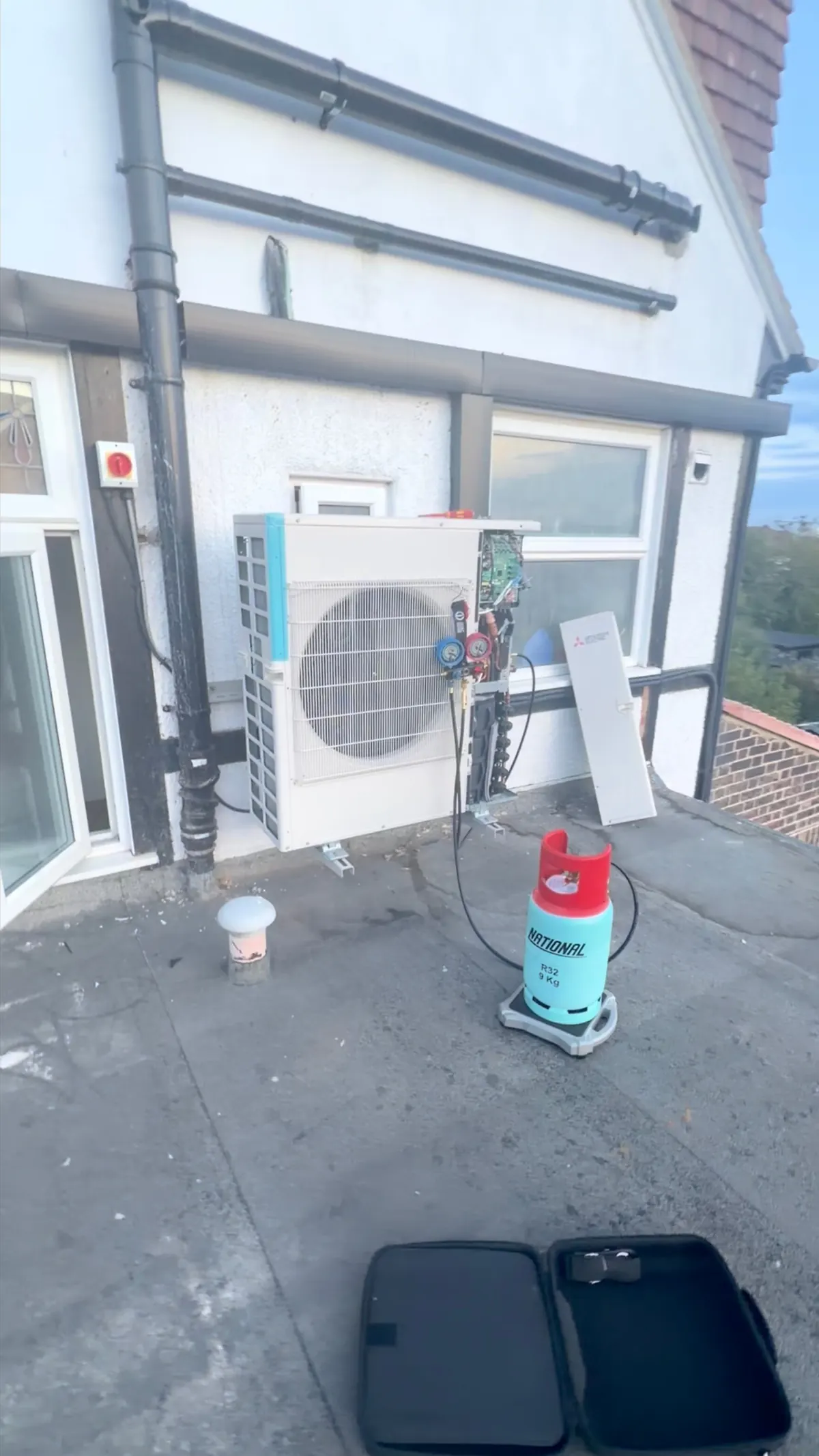
Air Conditioning Installation London
Cool rooms, fitted in a day.
A fixed price first.
We install air conditioning in London homes and flats: wall units, ceiling cassettes and multi-room systems. The survey is free, and most single rooms take one day.
Rated 5.0 on GooglePrefer to talk? 020 3393 1331
- Single room fitted from 2,400 pounds including VAT
- Free survey, usually within 48 hours
- Fixed written price before any work starts
Accredited, and fitting the brands you know











From first call to cool rooms in three steps
-
Free survey
We measure the rooms, find the outdoor position and check permission for your address.
-
A fixed written price
Units, pipework and electrics itemised. The number does not move unless the job does.
-
Fitted in a day
One room a day, tested in every mode, and shown to you before we leave.
What is in the price
- Indoor and outdoor unitsDaikin, Mitsubishi Electric or Samsung, supplied and fitted.
- 25 metres of pipeworkIn every price. After that it is £30 a metre, and only what is actually installed.
- Condensate drainRun to the outside. A pump, £150 a unit, only where a drain cannot fall.
- Electrics, certifiedConnected and certified by an NICEIC approved contractor.
- Commissioned and shown to youTested in every mode, and we show you how to use it before we leave.
- Warranty registeredSeven years on Samsung and three on Daikin Stylish, registered for you.
Your estimate
£2,400to£3,200
Supplied, fitted, commissioned and certificated. Includes VAT.
Send this on WhatsAppPrice your own install
Three taps. Rooms, size and where the outdoor unit can go are the three things that move an installation price most, and they are the three a survey confirms.
Last step: what number should we call with your fixed price?
Every figure on this site is an estimate built from the quotations we issued in 2026 and our own installation experience. It is not a quotation. The price you are given after the free survey is the price you pay.
Air conditioning we have installed
Our own jobs, each with its own page and the photographs from the day.
 Air conditioning
BR3
Beckenham
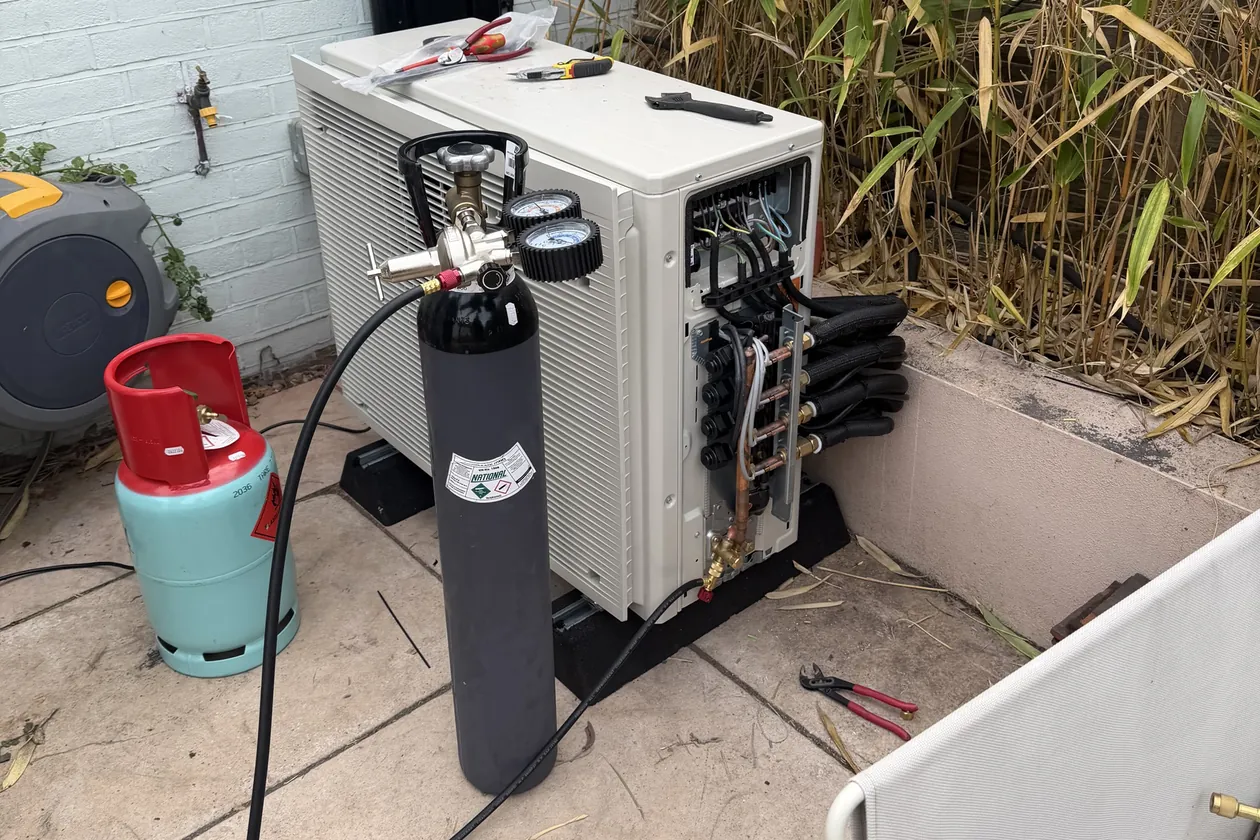
Daikin multi-split, four rooms from one outdoor unit
One outdoor unit on the rear patio serving four indoor units, with the pipework taken up the back wall in trunking beside the downpipe and pressure tested with nitrogen at 40 bar for two hours before it was charged.
Read the case study
Air conditioning
BR3
Beckenham
Daikin multi-split, four rooms from one outdoor unit
One outdoor unit on the rear patio serving four indoor units, with the pipework taken up the back wall in trunking beside the downpipe and pressure tested with nitrogen at 40 bar for two hours before it was charged.
Read the case study
 Air conditioning
CR2
South Croydon
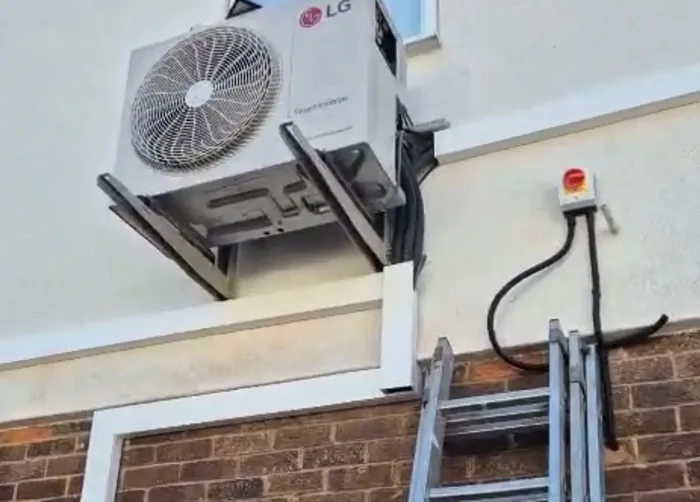
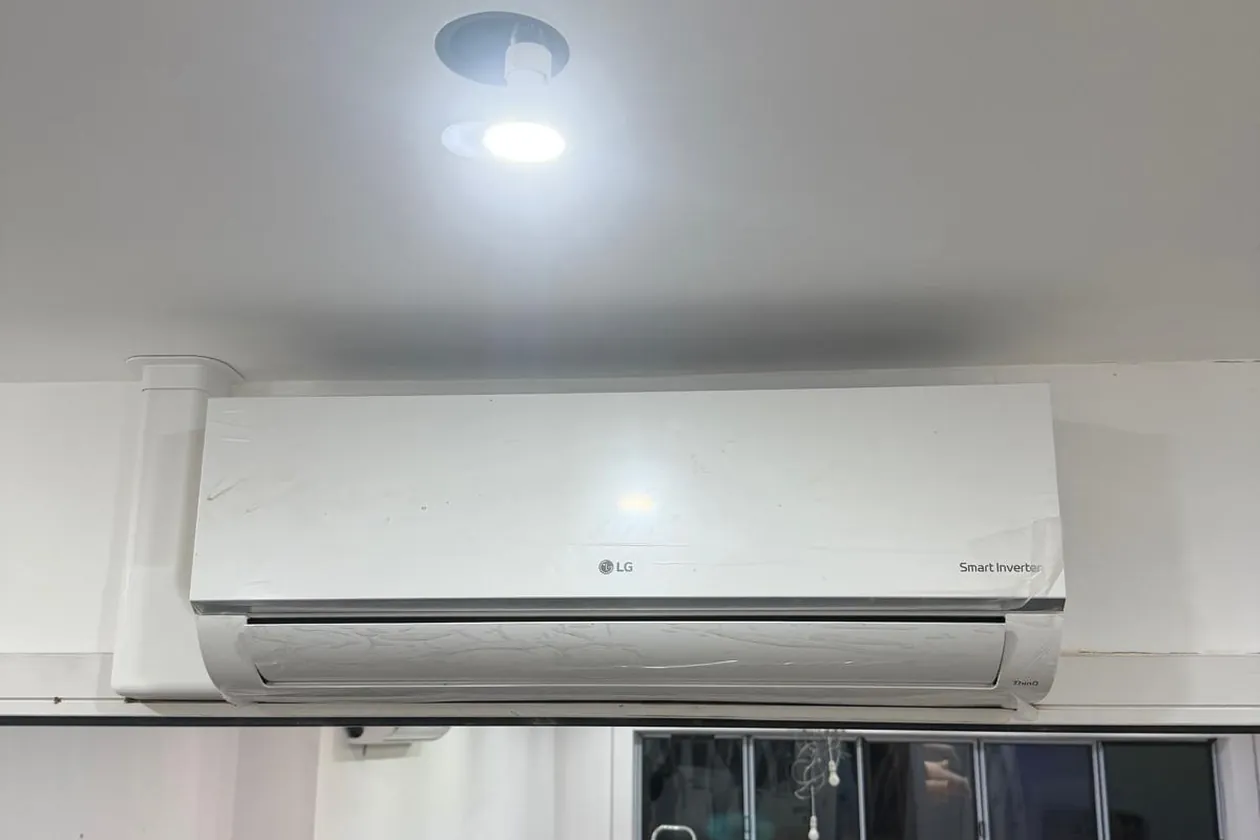
LG wall-mounted air conditioning, fitted during a renovation
A large open-plan room in a house being renovated: the lines brought down from the ceiling first, the brackets fixed over them, and the LG units lifted on high on the wall.
Read the case study
Air conditioning
CR2
South Croydon
LG wall-mounted air conditioning, fitted during a renovation
A large open-plan room in a house being renovated: the lines brought down from the ceiling first, the brackets fixed over them, and the LG units lifted on high on the wall.
Read the case study
 Air conditioning
N11
New Southgate
Daikin multi-split condenser
Wall-mounted on brackets rather than stood on the ground, which is usually what a narrow side return leaves you, and the refrigerant lines dropped in a single trunked run.
Read the case study
Air conditioning
N11
New Southgate
Daikin multi-split condenser
Wall-mounted on brackets rather than stood on the ground, which is usually what a narrow side return leaves you, and the refrigerant lines dropped in a single trunked run.
Read the case study
 Air conditioning
EN4
East Barnet
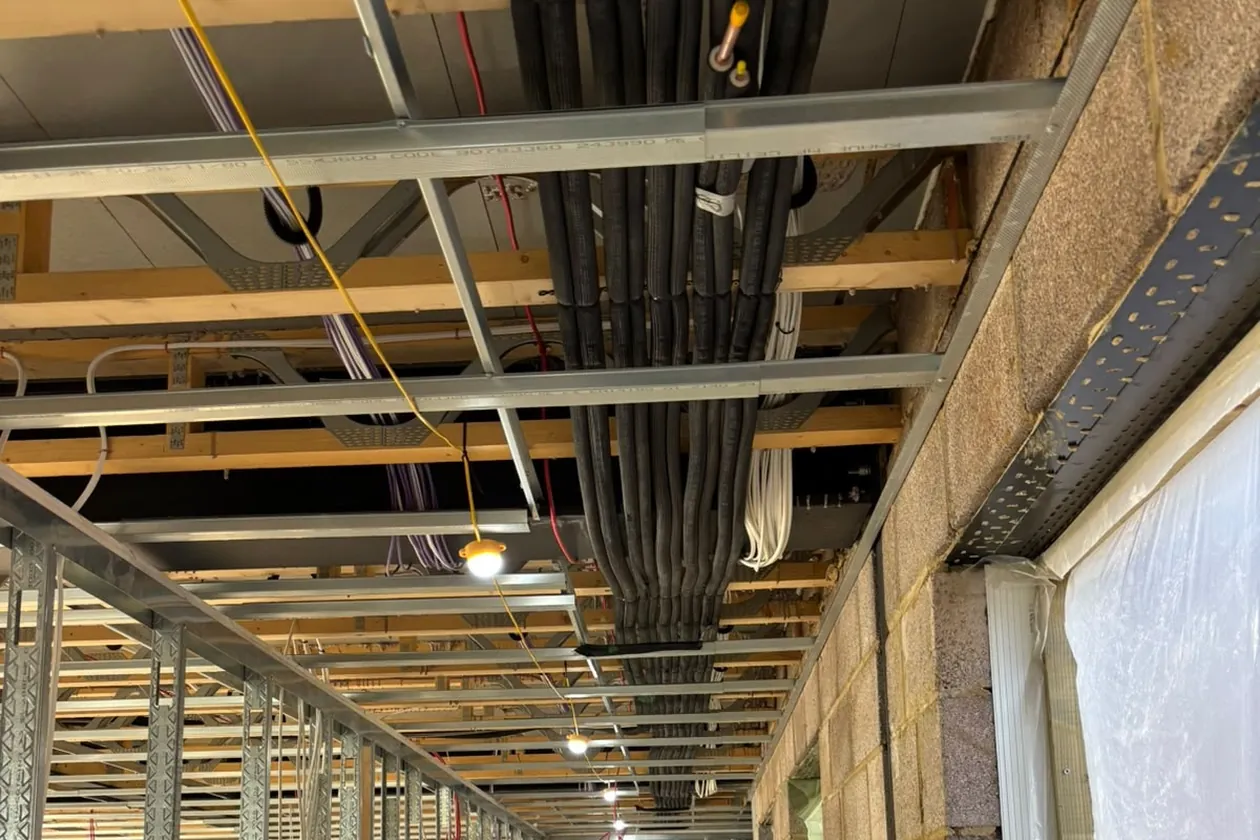
Air conditioning pipework in a new nursery, first fix
A nursery still being built: the refrigerant pipework and control cables run through the ceiling void above the corridor and down a riser between floors, tied in and sealed, before the ceilings and walls are closed.
Read the case study
Air conditioning
EN4
East Barnet
Air conditioning pipework in a new nursery, first fix
A nursery still being built: the refrigerant pipework and control cables run through the ceiling void above the corridor and down a riser between floors, tied in and sealed, before the ceilings and walls are closed.
Read the case study
The full guide: what we install, by property, and how it is priced
Air conditioning installation in London costs 2,400 to 3,200 pounds for a single room and takes one day, and in most cases it does not need planning permission.
The exceptions are real and London has more of them than anywhere else: conservation areas, listed buildings, leasehold flats and units on an elevation facing a highway. Check yours on the planning permission page before you spend anything.
What we actually install
Every system on this page is a reversible air-to-air heat pump. The same machine that cools the room in August heats it in February, and it does that by moving heat rather than making it, which is why it returns roughly three to four units of heat for every unit of electricity. Customers who buy it for two hot weeks usually end up using it most in the shoulder months.
Single split
One indoor unit, one outdoor unit, one room. This is the right answer for a bedroom, a home office or a loft conversion, and it is what most London installs are. Typical output is 2.5kW for a small bedroom, 3.5kW for a double bedroom or a small living room, and 5kW for a large through lounge.
Multi-split
Two to five indoor units on one outdoor unit. This is what a London terrace usually needs, because a rear elevation rarely has room for three separate outdoor boxes and the neighbours would notice if it did. The trade-off is that all the indoor units share one compressor, so they cannot be in heating and cooling at the same time.
Ducted and ceiling cassette
Where the room deserves not to have a plastic box on the wall. A slim ducted unit hides in a ceiling void or a bulkhead and feeds two or three grilles, and a cassette recesses flush into a suspended ceiling. Both cost more and both need the depth to exist, which is why we measure the void on the survey rather than promising it on the phone.
Where the outdoor unit goes, and why it matters more than the brand
Nine times out of ten the hard part of a London install is not the machine, it is finding somewhere legal, quiet and serviceable to put the outdoor unit. That decision drives the planning position, the noise position, the pipe length and about a third of the price.
- Side return. The best answer where it exists. Out of sight, away from bedroom windows, short pipe run.
- Rear elevation, wall-mounted. The usual answer on a terrace. Needs anti-vibration brackets and a wall that is not a bedroom party wall.
- Flat roof. Common on a rear extension. Needs a frame, feet that spread the load, and a check that the roof was built to take it.
- Ground level on slabs. Simplest and cheapest, and the easiest to service in ten years time. Needs a metre from the boundary under permitted development.
- Balcony. Usual in a flat, and usually the one that needs the freeholder to agree in writing first.
What a proper installation includes
The difference between a good install and a cheap one is invisible on day one and obvious in year three. These are the steps that cost time and that get skipped:
- Flared joints made with a torque wrench, not by feel. Over-tightened flares crack and leak refrigerant a year later.
- Nitrogen pressure test held and recorded before the system is opened.
- Vacuum to below 500 microns and a decay test. Pulling a vacuum for ten minutes and calling it done leaves moisture in the system, which turns into acid and kills the compressor.
- Weighed refrigerant charge for the actual pipe length, recorded on the commissioning sheet.
- A dedicated electrical circuit with its own RCBO and an isolator within reach of the outdoor unit.
- Condensate that actually falls all the way to its termination, with no low point holding water.
All six are on the commissioning record we hand over. If another installer will not give you that record, there is a reason.
Which rooms are worth doing
| Room | Typical output | Installed price | Notes |
|---|---|---|---|
| Single bedroom | 2.5kW | £2,400 to £3,200 | Night mode matters more than power |
| Double bedroom | 3.5kW | £2,550 to £3,500 | The most requested room in London |
| Loft conversion | 3.5kW to 5kW | £2,700 to £4,300 | Hottest room, hardest access |
| Living room | 5kW | £2,750 to £3,850 | Through lounges often need 5kW plus |
| Home office | 2.5kW | £2,400 to £3,200 | Usually the fastest payback |
| Kitchen diner | 5kW to 7kW | £2,750 to £4,400 | Cooking load pushes the size up |
Prices include the unit, installation, commissioning, electrical work and VAT. They assume a straightforward outdoor position within the 25 metres of pipework the price includes. Your fixed price is confirmed after the free survey.
What kind of property is it?
London housing decides more of an air conditioning job than the equipment does. These three come up constantly and each one changes the work in a different way.
Victorian and period
Solid walls with no cavity, lath and plaster, sash windows and cornice. Coring rather than hammering, and where the pipe can go.
Period housesTerraced
One usable elevation and a neighbour four metres away. The outdoor position decides the price.
Terraced housesThe whole house
Four to six rooms from one or two outdoor units, what to leave out, and whether to phase it.
Whole houseA leasehold flat
Two permissions rather than one, and the order that decides whether it gets expensive.
FlatsStill weighing it up?
Three decisions come up on nearly every enquiry, and the honest answer is not always the one that sells more equipment.
Split or portable
The three situations where a portable is genuinely the right buy, and why it is louder and dearer to run everywhere else.
CompareOne outdoor unit or several
Usually decided by how much outdoor wall you have, not by cost. Plus the sizing mistake that makes a multi-split the wrong choice.
CompareAir conditioning or a heat pump
Same technology, two names, and only one of them gets the 7,500 pound grant.
CompareWhat happens on a survey
An hour, nothing to sign, no deposit, and a written fixed price afterwards valid for 30 days.
Free surveyHow the install runs
Nothing is charged until the price is agreed in writing, and the price does not change unless you change the job.
Free survey
We measure the rooms, find the outdoor position, check the consumer unit has capacity and check the permission position for your address.
Fixed written price
One number. Make and model of every unit, what is included, what is not, and the lead time.
Install day
Dust sheets, core drill, brackets, pipework, electrics. Most single rooms are done and running the same day.
Commission and hand over
Pressure test, vacuum, weighed charge, certificates, warranty registration, and ten minutes showing you how to actually use it.
Installation questions
How much does it cost to install air conditioning in a London house?
One room with a wall-mounted split system is 2,400 to 3,200 pounds supplied and fitted including VAT. Two rooms on one outdoor unit is 4,300 to 5,800 pounds, and three rooms 6,400 to 8,600 pounds. A whole four-bedroom house is usually 8,400 to 11,300 pounds depending on how many outdoor units the elevation can take.
The cost is driven by access, pipe length and electrics more than by the unit itself. There is a full breakdown and a calculator on the installation cost page.
Two finished jobs with photographs: four rooms in Beckenham BR3 and three rooms in New Southgate N11.
How long does an air conditioning installation take?
One day for a single room, including pressure testing, vacuum, weighed refrigerant charge, electrical work and handover. Two days for a two or three room multi-split. Larger houses and anything needing scaffold run to three or four days.
We do not start a second property before finishing the first, so the date you are given is the date the work happens.
Do you need to drill through the wall?
Yes, one core hole of about 65mm per indoor unit, drilled at a slight fall so condensate drains outward. It is sleeved, sealed inside and out, and made good. On a solid Victorian wall we core rather than hammer, which keeps the brick face intact and keeps the dust down.
Where a customer does not want a visible pipe run on the rear elevation, we can run it internally through a cupboard, a void or a boxed corner. That is a design decision made on the survey, not on the day.
Which brands do you install?
There is a page each for the three we fit most: Daikin, Mitsubishi Electric and Samsung. There are pages for LG and Midea too, both with photographs of our own installations. We also install Mitsubishi Heavy Industries, Panasonic and Toshiba. Which one is right depends on the room and the budget rather than on brand loyalty.
Where the room is a bedroom, sound pressure at low fan speed matters more than anything on the spec sheet, and that is the number we compare when we recommend one.
What certificates do I get when the job is finished?
An electrical installation certificate or minor works certificate for the new circuit, the commissioning record with the weighed refrigerant charge and the pressure test result, the manufacturer warranty registration in your name, and the F-Gas record for the system.
Keep the commissioning record. Every manufacturer warranty claim asks for it, and most homeowners cannot find one.
Will it be noisy for my neighbours?
A modern inverter outdoor unit runs at roughly 45 to 52 decibels at one metre, which is quieter than a fridge at three metres. The permitted development noise condition is assessed under MCS 020, and it is about the level at the nearest neighbouring window rather than at your own wall.
Placement does more for noise than the unit choice does. Anti-vibration mounts, a wall away from a bedroom window, and never firing the discharge straight at a neighbouring boundary.
Free survey, fixed price, no pressure
Tell us the postcode and the rooms. We will tell you what it costs, whether you need permission, and whether it is the right job for your property.
Monday to Friday 9am to 7pm, Saturday 10am to 3pm, Sunday closed
Page updated