Whole house
air conditioning
Whole house air conditioning, every room on its own control, planned so the outside of the house carries as few units as possible.
- Free survey, and we tell you what the property will and will not take
- Fixed written price before anything starts
- Permission position checked for your address first
Prefer to talk? 020 3393 1331
Accredited, and fitting the brands you know











Air conditioning we have fitted
Our own jobs, photographed on site. Real rooms, real outdoor positions, nothing from a catalogue.
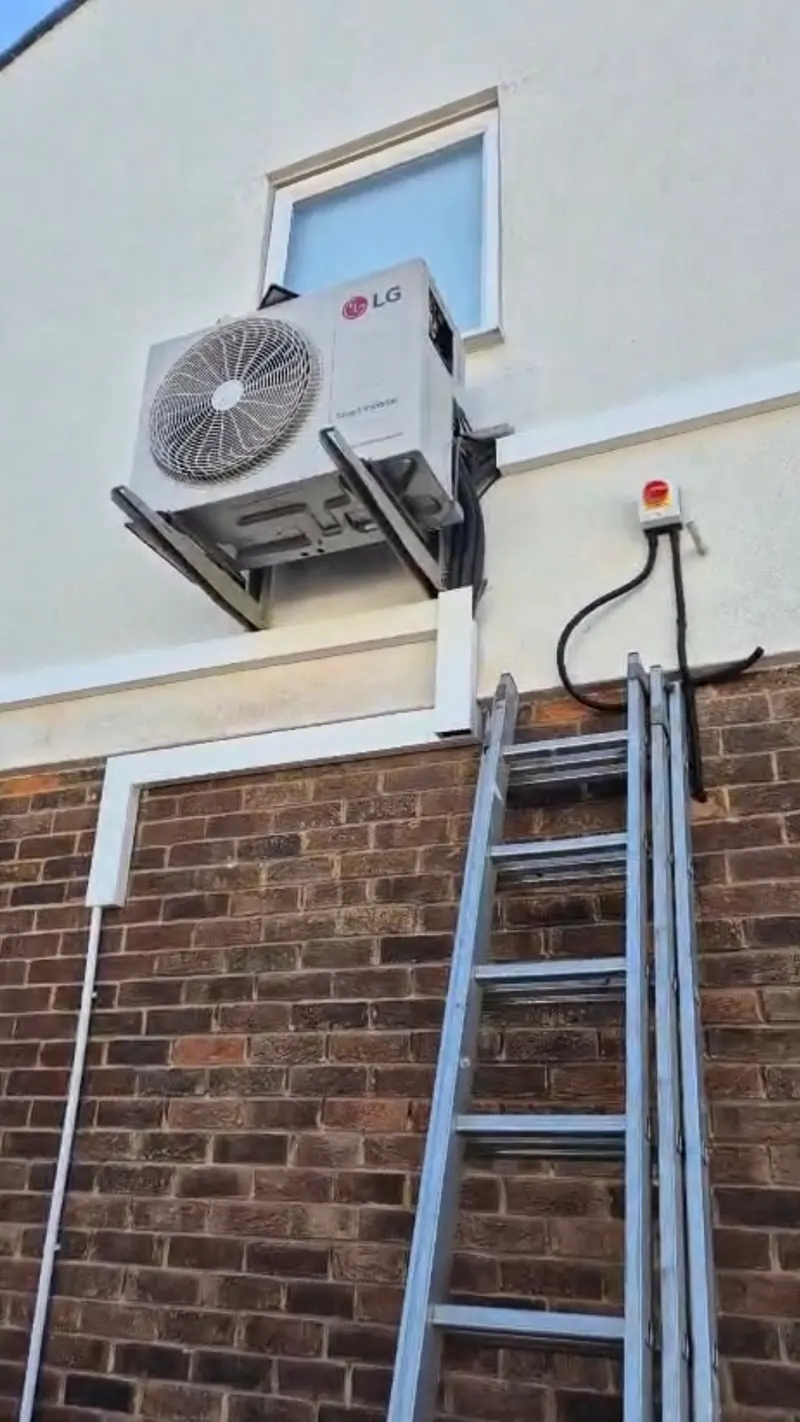 Air conditioning
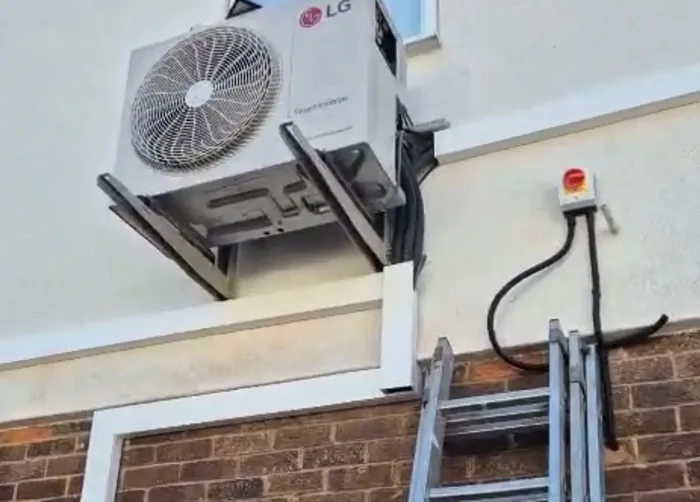
Outdoor unit on wall brackets
Above brick, isolator and cabling run tidy
Air conditioning
Outdoor unit on wall brackets
Above brick, isolator and cabling run tidy
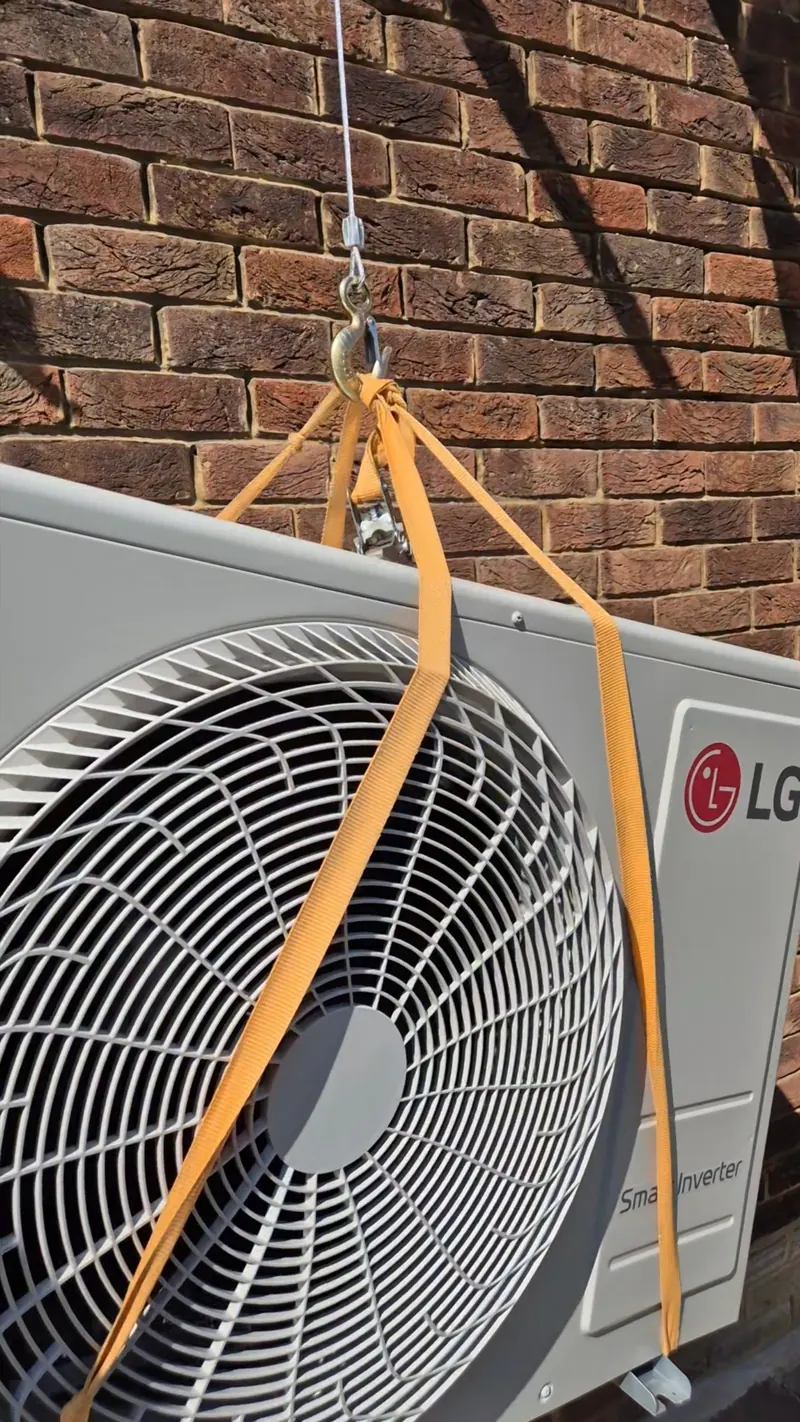 Air conditioning
Condenser going up on straps
Lifted into a wall position, no scaffold
Air conditioning
Condenser going up on straps
Lifted into a wall position, no scaffold
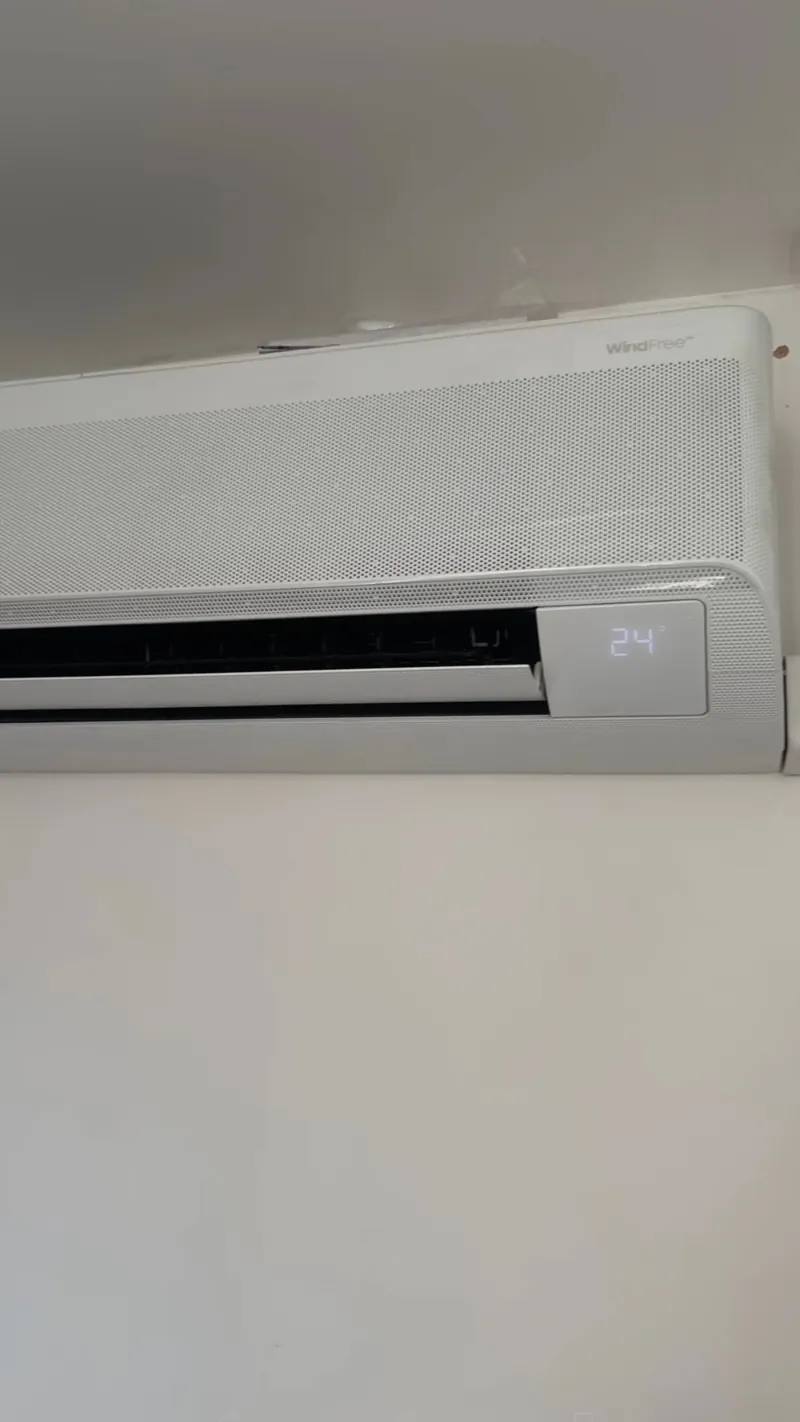 Air conditioning
Wall unit, commissioned
Set to 24 degrees and handed over
Air conditioning
Wall unit, commissioned
Set to 24 degrees and handed over
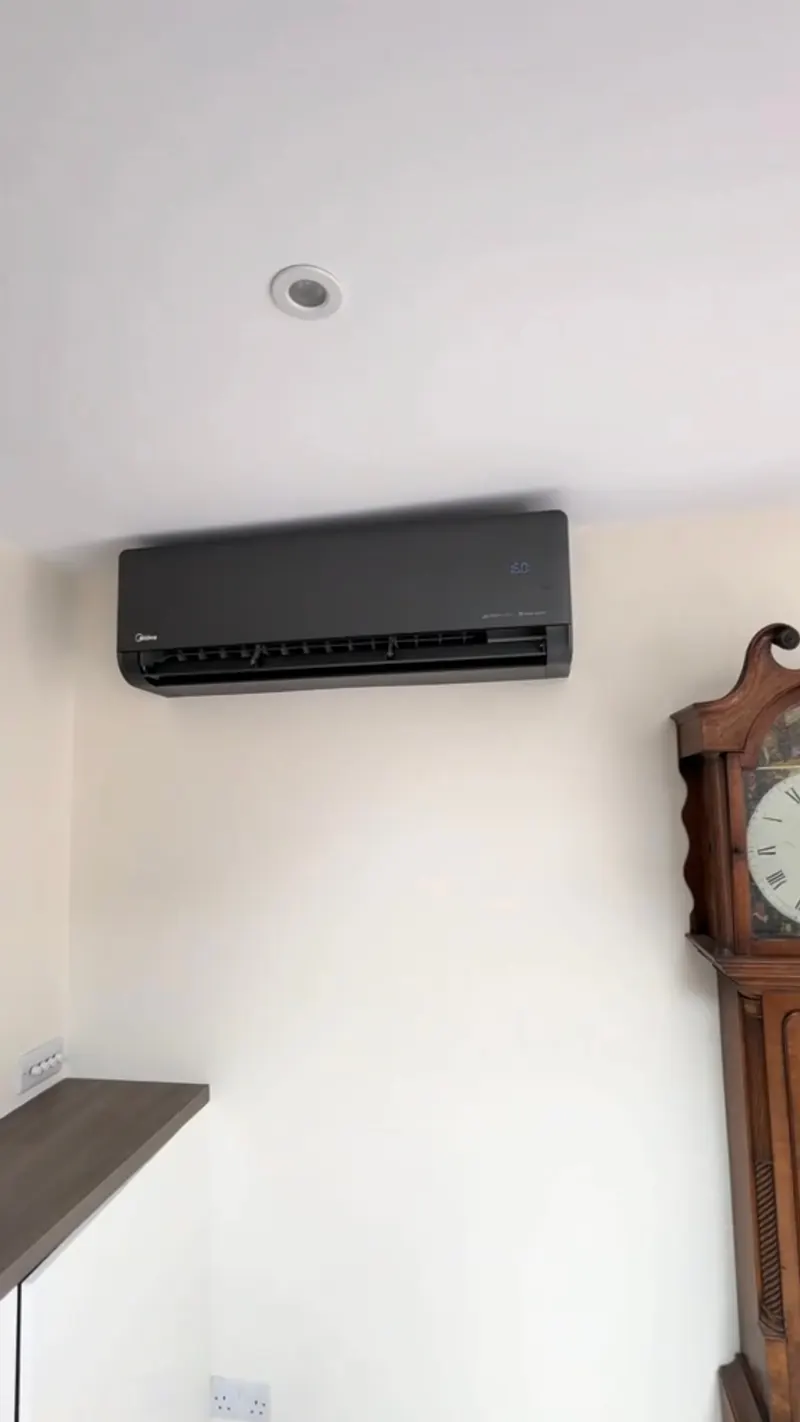 Air conditioning
Black wall unit in a sitting room
Chosen to sit with the room, not against it
Air conditioning
Black wall unit in a sitting room
Chosen to sit with the room, not against it
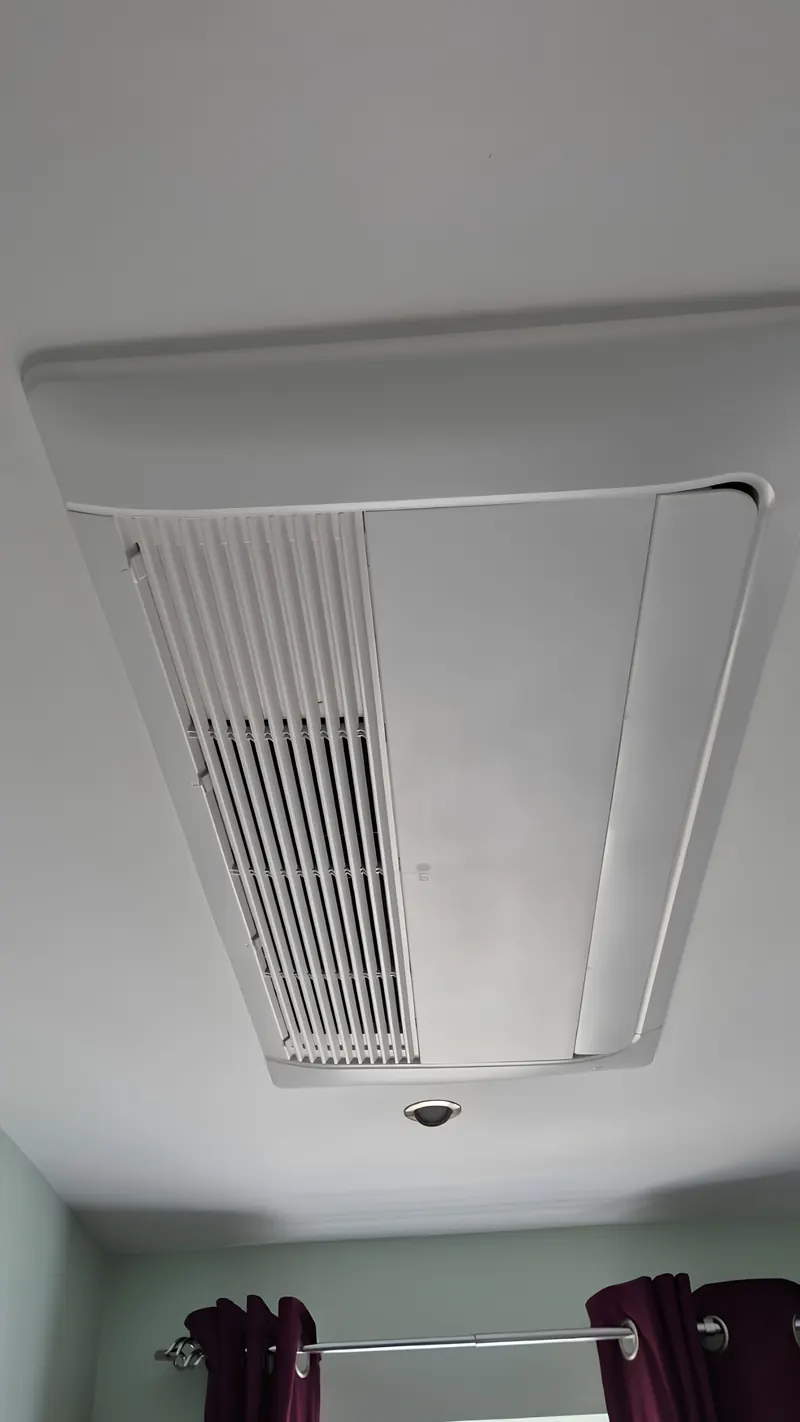 Air conditioning
Ceiling cassette
Recessed flush into the ceiling
Air conditioning
Ceiling cassette
Recessed flush into the ceiling
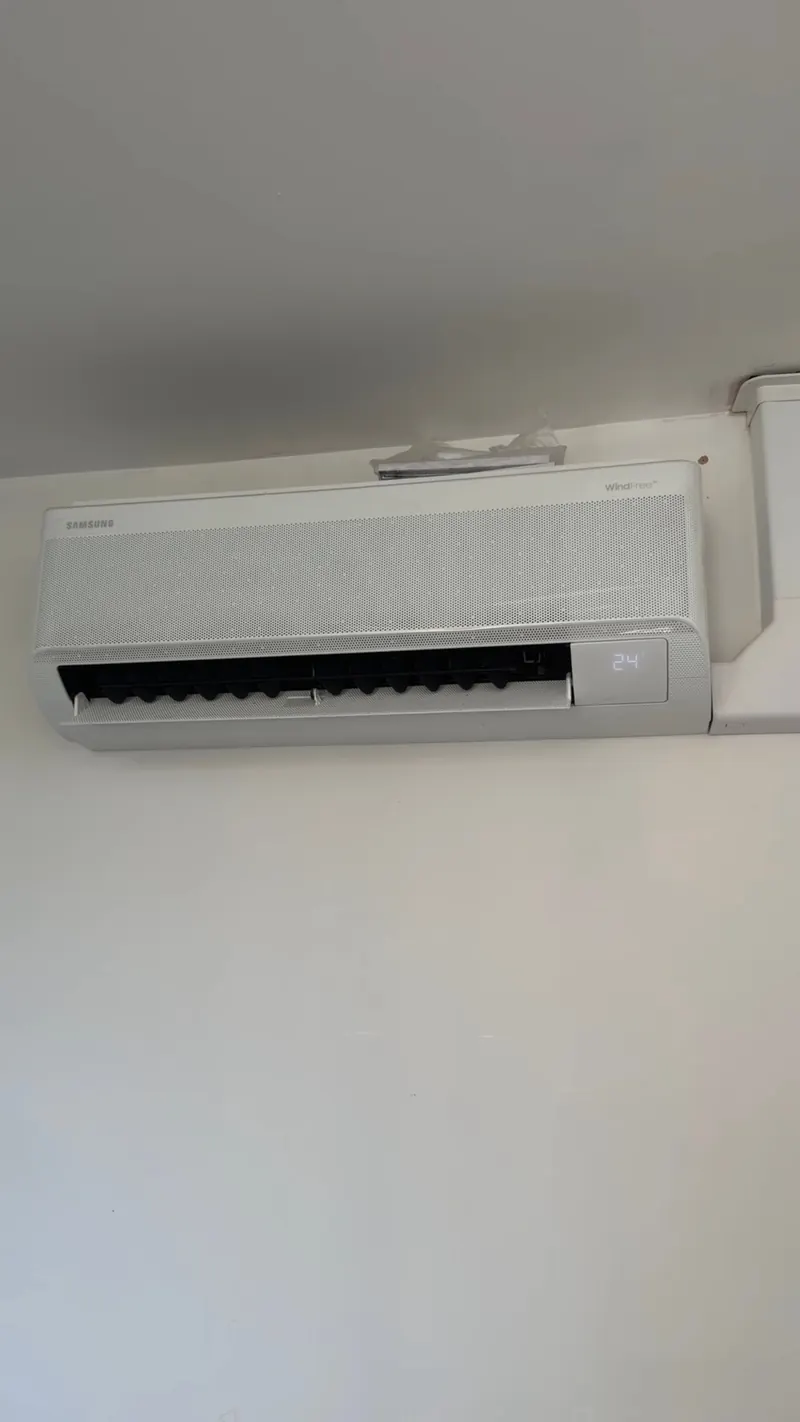 Air conditioning
Samsung Wind-Free
Cooling without a draught on the room
Air conditioning
Samsung Wind-Free
Cooling without a draught on the room
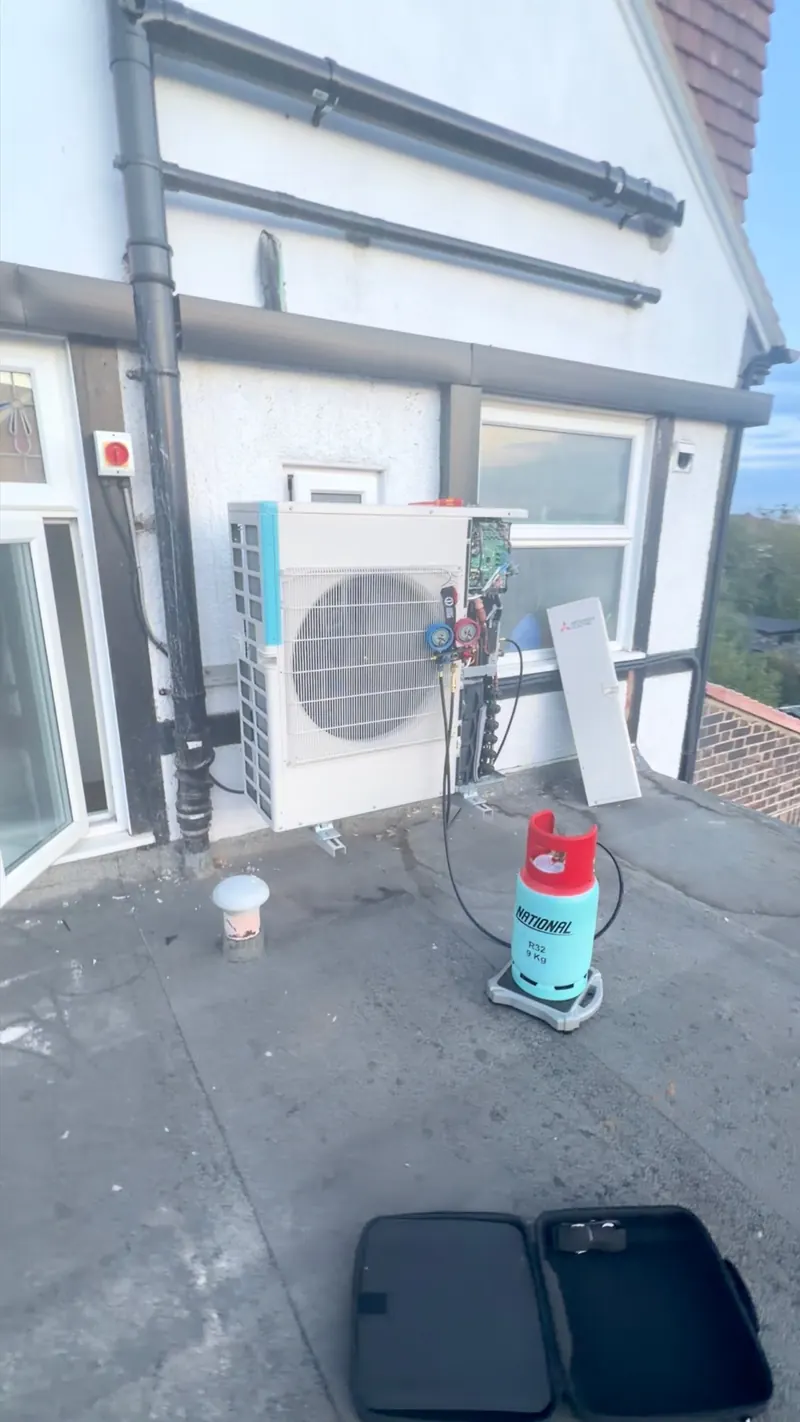 Air conditioning
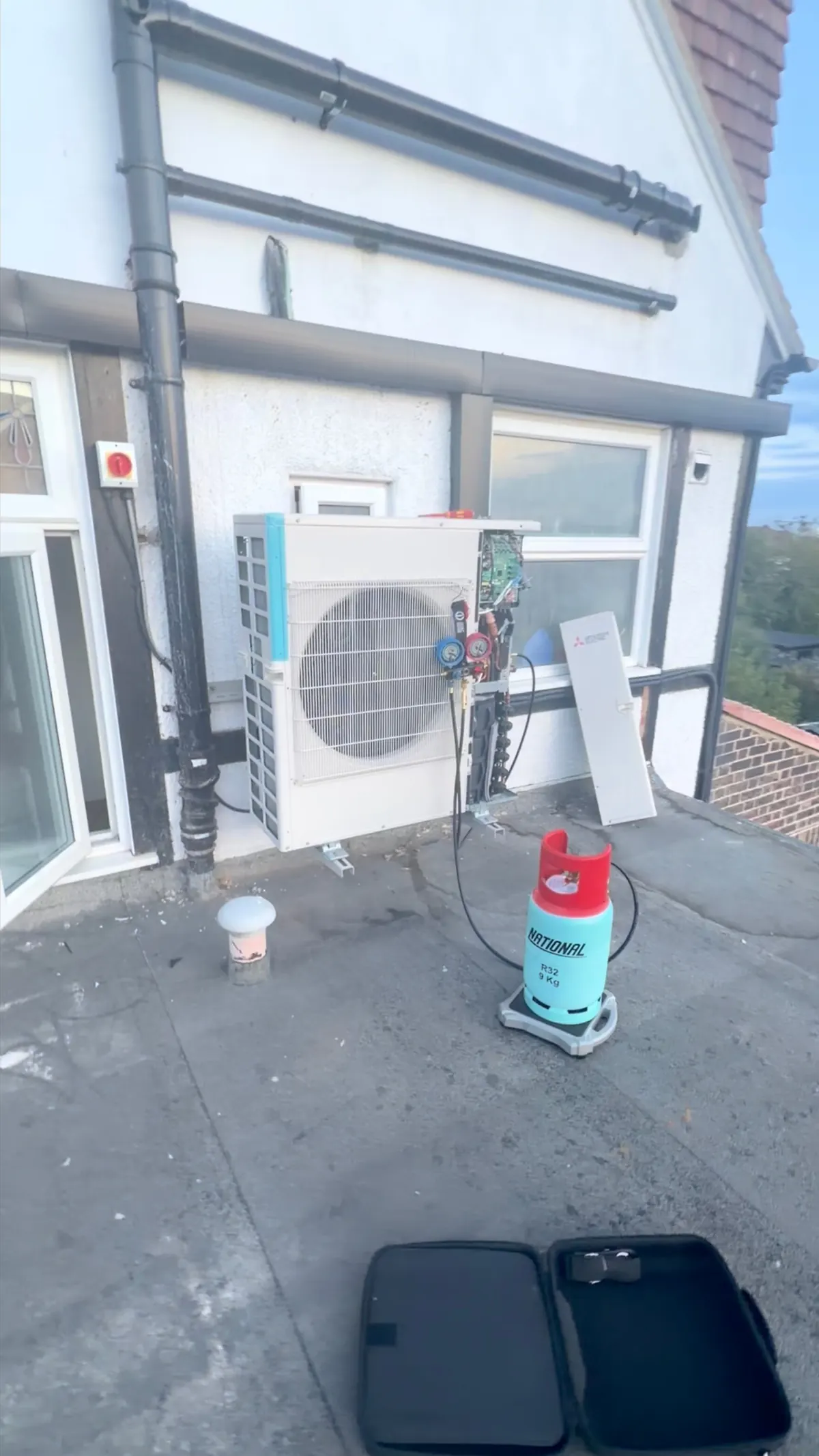
Rooftop commissioning
Pressure tested and charged on gauges
Air conditioning
Rooftop commissioning
Pressure tested and charged on gauges
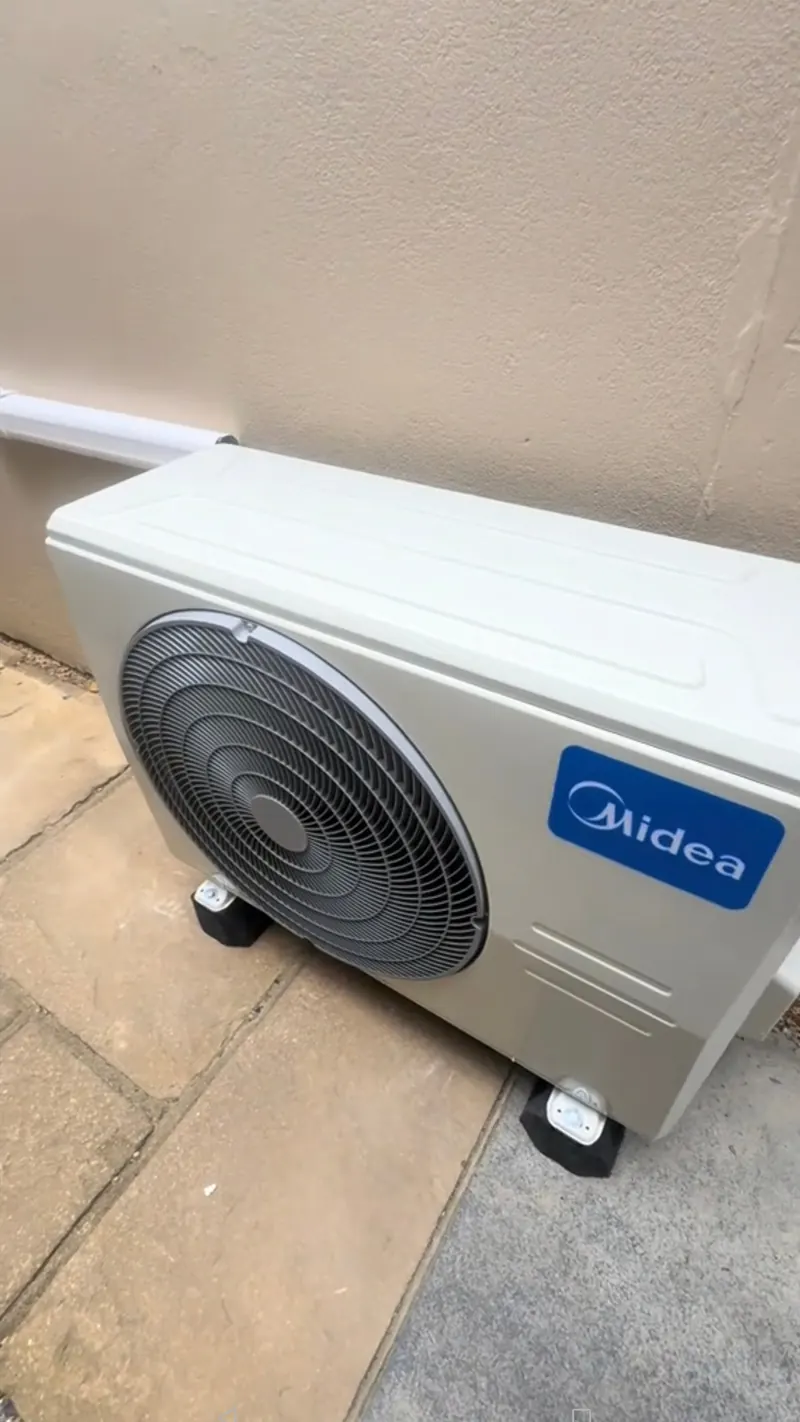 Air conditioning
Outdoor unit at ground level
On paving beside the house, easy to service
Air conditioning
Outdoor unit at ground level
On paving beside the house, easy to service
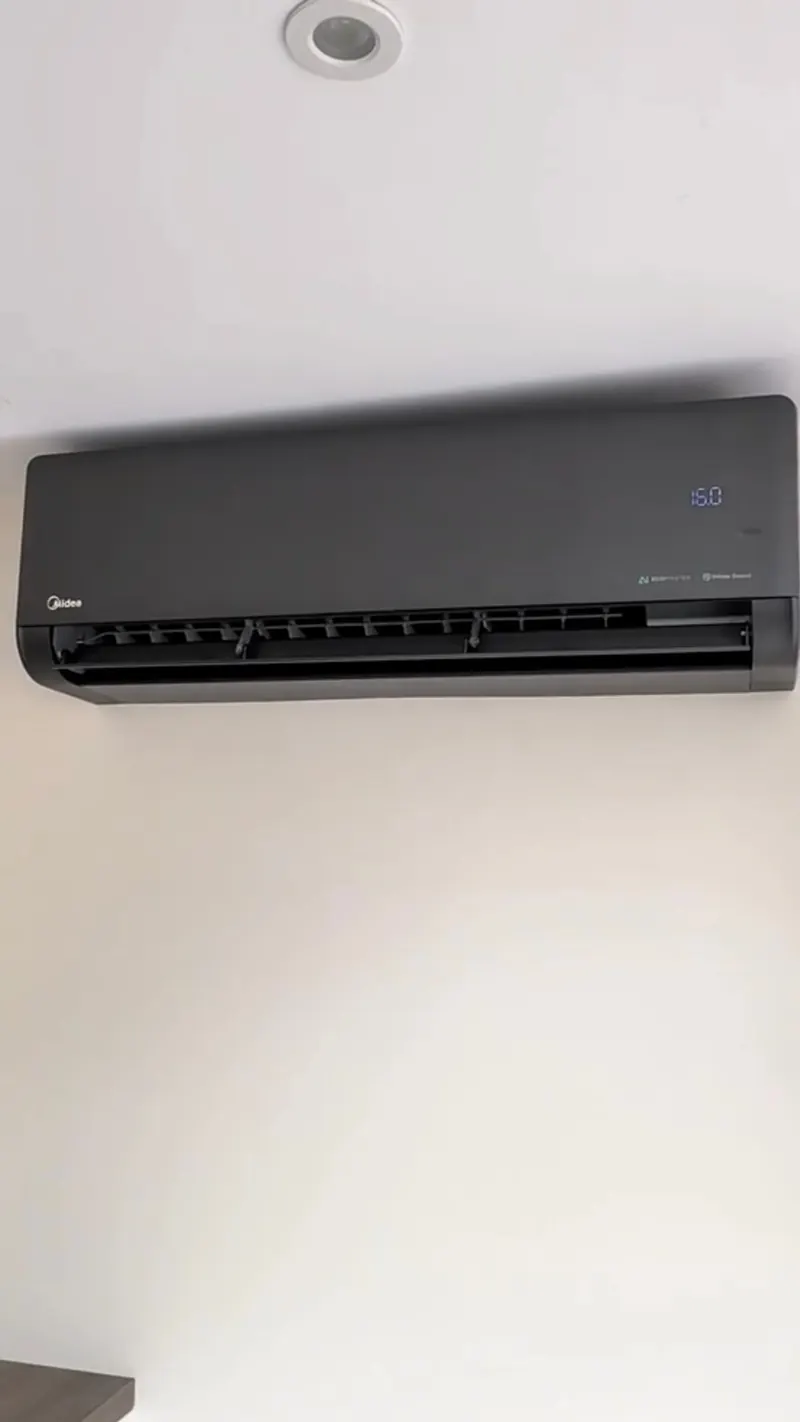 Air conditioning
Black wall unit, running
Quiet enough for a bedroom
Air conditioning
Black wall unit, running
Quiet enough for a bedroom
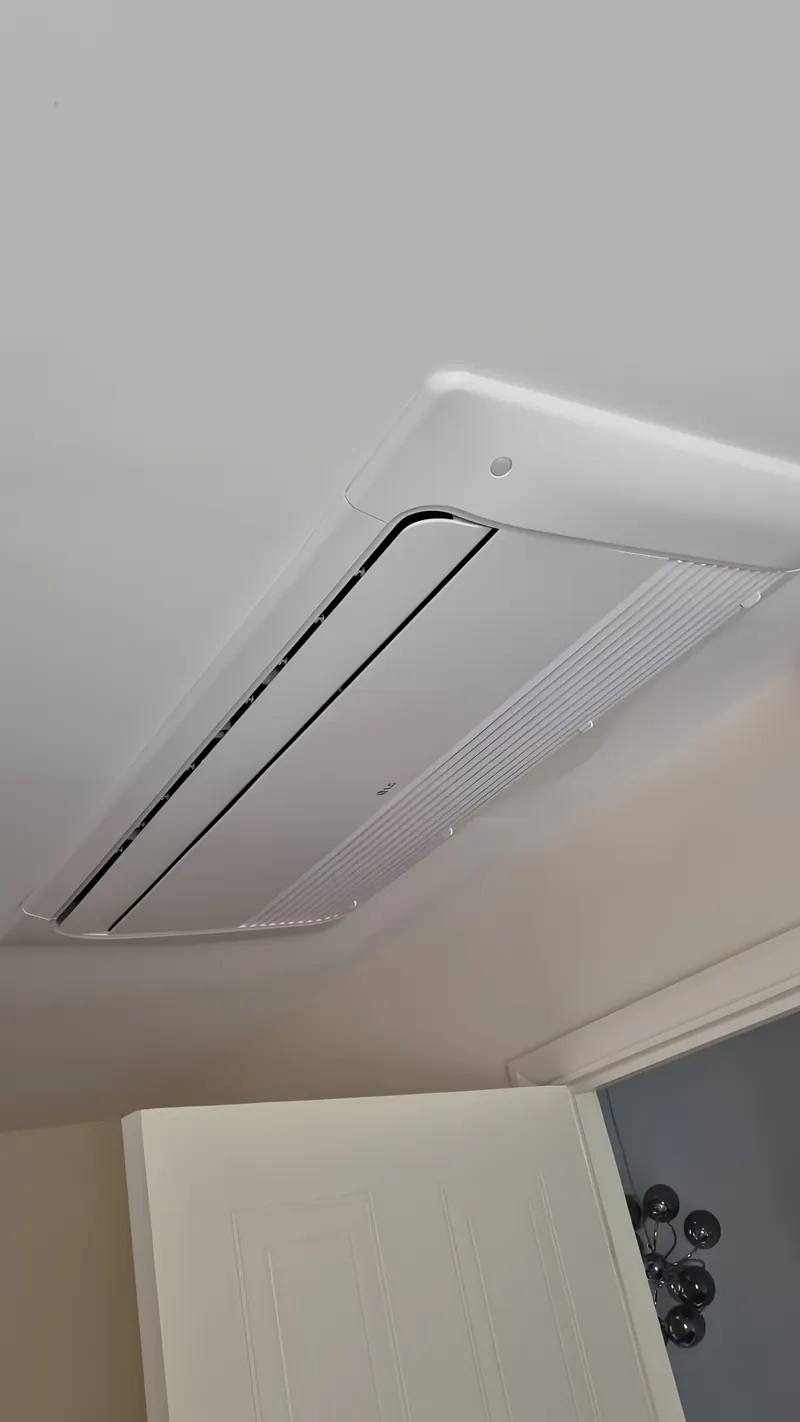 Air conditioning
One-way ceiling cassette
Only the grille shows
Air conditioning
One-way ceiling cassette
Only the grille shows
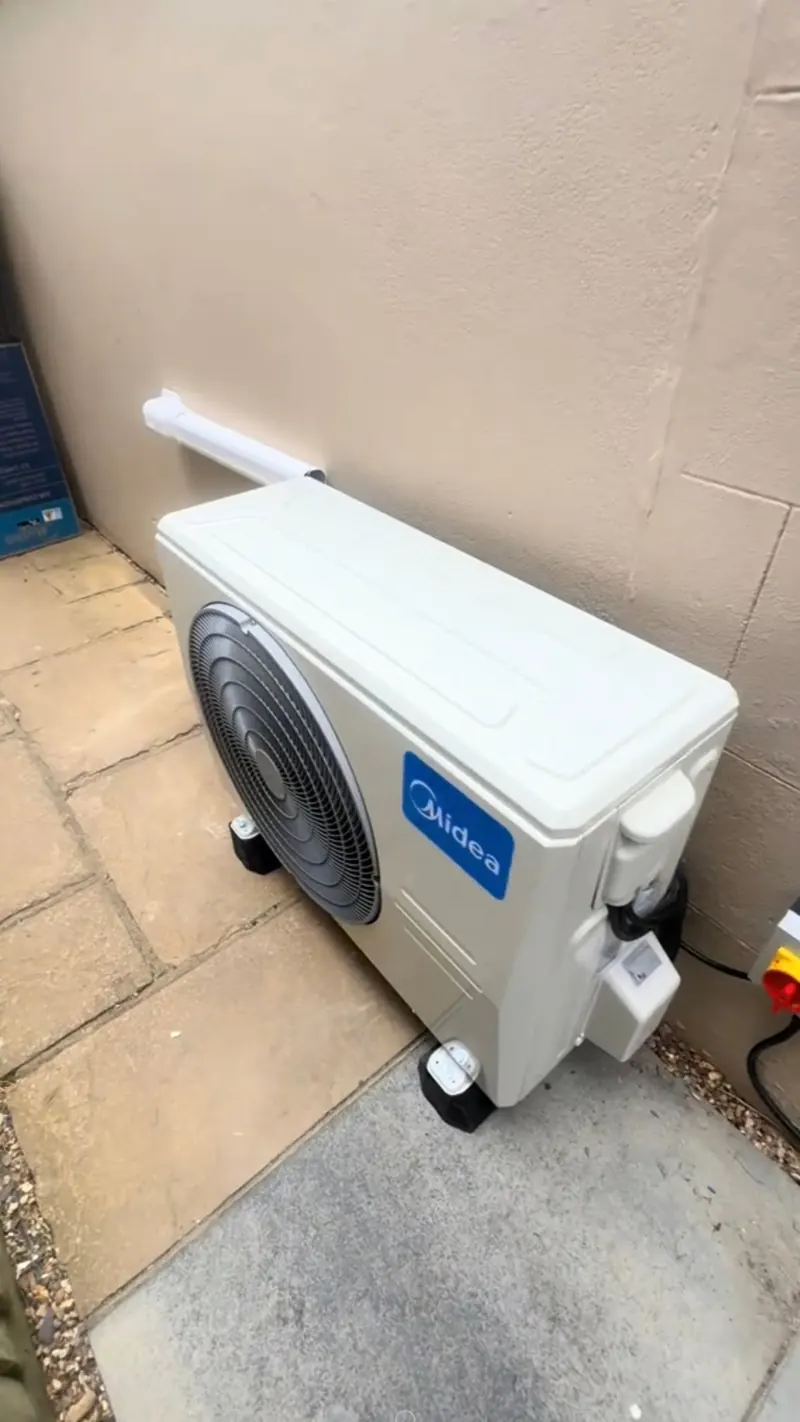 Air conditioning
Outdoor unit on paving
Against render, clear of the boundary
Air conditioning
Outdoor unit on paving
Against render, clear of the boundary
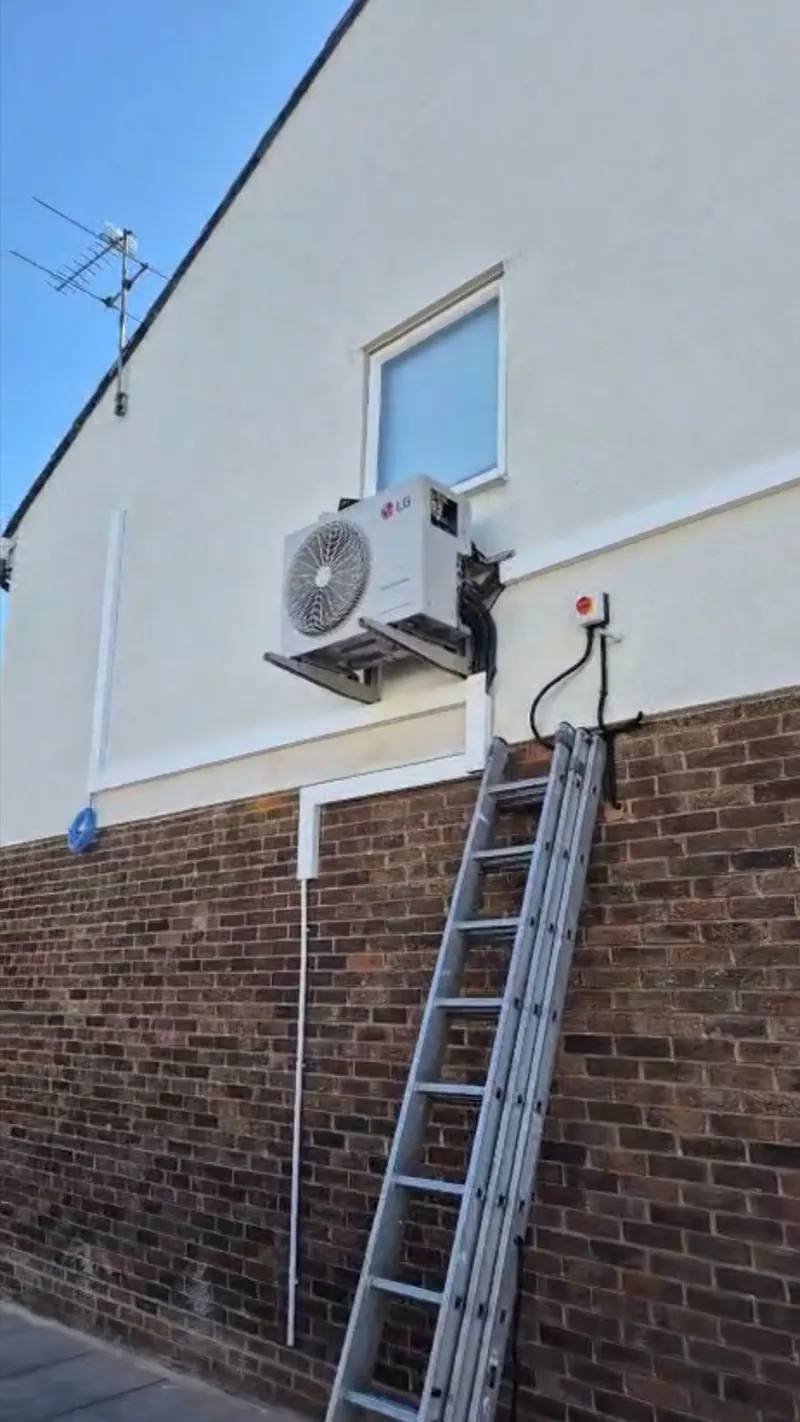 Air conditioning
Condenser high on a wall
On brackets where the ground was not an option
Air conditioning
Condenser high on a wall
On brackets where the ground was not an option
Air conditioning a whole three-bedroom London house is 8,400 to 14,000 pounds for four to five indoor units, and a four-bedroom house 10,400 to 16,700 pounds, often with two outdoor units. That is 2,100 to 2,900 pounds a room against 2,400 to 3,200 doing them singly.
Most houses do not need every room done, and the honest saving is usually in leaving two of them out rather than in negotiating the price.
Your estimate
£2,400to£3,200
Supplied, fitted, commissioned and certificated. Includes VAT.
Send this on WhatsAppPrice it for this property
Where the outdoor unit can go is the adjustment that moves a price most in this kind of property, so it is the second question.
Last step: what number should we call with your fixed price?
Every figure on this site is an estimate built from the quotations we issued in 2026 and our own installation experience. It is not a quotation. The price you are given after the free survey is the price you pay.
From first call to cool rooms in three steps
-
Free survey
We measure the rooms, find the outdoor position and check permission for your address.
-
A fixed written price
Units, pipework and electrics itemised. The number does not move unless the job does.
-
Fitted in a day
One room a day, tested in every mode, and shown to you before we leave.
Read the full guide: 7 sections, about 4 minutes
What decides the number
| Feature | What it means | Effect on the installation |
|---|---|---|
| Rooms actually used | Bedrooms and the main living space. Not landings, not bathrooms | The single biggest lever on the total |
| Outdoor unit count | One serves up to five indoor units. Six needs two | The jump from five to six rooms is a step, not a slope |
| Outdoor positions available | Two units need two places to put them | In a terrace that is often the binding constraint |
| Pipe runs | First 25 metres included, then 30 pounds a metre | A top floor room off a ground level unit is a long run |
| Electrical supply | One dedicated circuit, or more for two outdoor units | A full consumer unit adds 450 to 850 |
| Doing it during other work | Before ceilings, floors and decorating | The cheapest version of this job by a distance |
Which rooms are genuinely worth doing
Bedrooms first, and the main bedroom before any of them, because the difference between sleeping and not sleeping in a July heatwave is the whole reason most people call.
Then the room the household actually sits in during the evening, which is usually the living room or the kitchen diner. A kitchen diner is the hardest room in the house because of the cooking load and it is frequently the one that gets used most.
Then a home office, if somebody works in it every day. That is a comfort argument and also a productivity one, and it is the room where the running cost is easiest to justify.
What is rarely worth doing: landings, hallways, bathrooms, and a spare bedroom used six nights a year. Leaving three of those out of a five-room quote saves more than any amount of haggling, and the outdoor unit gets smaller as well.
One outdoor unit or two
A domestic multi-split outdoor unit typically serves up to five indoor units. Up to five rooms is one outdoor unit, one position to find, one thing for neighbours to look at and one electrical supply. Six or more means two, and the cost steps rather than sloping.
That step is worth knowing before you decide the room list, because five rooms and six rooms are not a linear difference in price. If the sixth room is a spare bedroom, leaving it out can save well over a thousand pounds.
There is a second consideration that catches people out. A large multi-split has a minimum output it can turn down to, and if you run one bedroom on its own at three in the morning while the other four are off, it can end up cycling. That is a sizing conversation at survey rather than a reason to avoid it.
Phasing it, and when that is the right call
Doing it in two phases costs more overall, because the second visit repeats the setup, the access and part of the labour. It is still frequently the right decision.
The way to phase it well is to size the outdoor unit for the final room count on the first visit and leave the ports for the rest. That costs a few hundred pounds extra now and saves a new outdoor unit later. Sizing it for phase one and adding rooms afterwards is how people end up replacing equipment that is two years old.
If there is a loft conversion or an extension coming, say so at the first survey. It is the cheapest information you can give us.
Doing it during a renovation
If the house is already being worked on, this is the moment. Pipe routes, condensate falls and the electrical supply all cost a fraction of what they cost once ceilings are closed, floors are down and rooms are decorated, and the positions available are better because nothing has been finished around them yet.
It also removes the internal-versus-external pipe route argument entirely, because everything can go internally through a floor void or a stud wall.
The trade-off is committing to the room list before living in the house. Where that is uncertain, running the pipework to a room and leaving it capped is cheap insurance.
What it costs
| Scope | System | Installed price |
|---|---|---|
| Two rooms | 2 unit multi-split | £4,300 to £5,800 |
| Three rooms | 3 unit multi-split | £6,400 to £8,600 |
| Whole 3 bed house | 4 to 5 units, one outdoor | £8,400 to £14,000 |
| Whole 4 bed house | 5 to 6 units, often 2 outdoor | £10,400 to £16,700 |
| Ceiling cassette instead of wall, per room | Where nothing should be on the wall | Add £500 to £900 |
| Consumer unit upgrade | Where the board is full | Add £450 to £850 |
Every figure on this site is an estimate built from the quotations we issued in 2026 and our own installation experience. It is not a quotation. The price you are given after the free survey is the price you pay.
Other property types
New builds
New homes are built to keep heat in, and plenty of them do it too well: big windows, airtight walls and a top floor that holds the afternoon until midnight.
New buildsListed buildings
London has tens of thousands of listed homes, offices and shops, and most of them can have air conditioning.
Listed buildingsPeriod houses
Most of inner London's housing was built before anybody imagined cooling it.
Period housesTerraced houses
A terrace gives you one usable elevation and a neighbour close enough to hear everything.
Terraced housesFlats
Two permissions rather than one, the licence pack, and the order that decides whether it is expensive.
Leasehold flatsWhole houses: common questions
How much does it cost to air condition a whole 3 bedroom house?
8,400 to 14,000 pounds for four to five indoor units on one outdoor unit, including the units, installation, commissioning, electrical work and VAT.
That is 2,100 to 2,900 pounds a room, against 2,400 to 3,200 doing them one at a time. There is a calculator that prices your actual room list on the cost page.
A four-room job with photographs: Daikin multi-split in Beckenham BR3.
Can one outdoor unit do the whole house?
Up to about five indoor units, yes, and that covers most three-bedroom houses. Six or more usually needs a second outdoor unit, and the price steps at that point rather than rising smoothly.
It is worth knowing before you fix the room list, because dropping a rarely-used room from six to five can save more than the room would have cost.
Should I do it all at once or in stages?
All at once is cheaper per room. In stages is often the right call anyway, for cash flow or because you are not sure which rooms you will use.
If you phase it, size the outdoor unit for the final room count on the first visit and leave the spare ports. Sizing for phase one and adding later is how people end up replacing a two-year-old outdoor unit.
Which rooms should I skip?
Landings, hallways, bathrooms, and any bedroom used a handful of nights a year. Those are the rooms where the payback never arrives.
We will tell you at survey which ones we would leave out. It is a smaller invoice for us and it is the advice we would want.
Free survey, and an honest answer about the building
We look at what the property will actually take before anybody quotes anything, and if the answer is that a room is not worth doing, we will say so.
Monday to Friday 9am to 7pm, Saturday 10am to 3pm, Sunday closed
Page updated