
Solar Panel Cost London
Solar panel cost priced per panel
Panels, inverter, scaffolding and certification, itemised the way our quotations itemise them.
Rated 5.0 on Google- £3,900From, five panels fitted
- £9,774A real 11 panel job with two batteries
- 0%VAT until March 2027
- £172+Per panel, supplied and fitted
Book a free survey
Four questions about the roof and the house, a price built from our own panel and battery rates, and then we book the roof survey.
Accredited, and fitting the brands you know











Roofs we have already covered
Our own solar and battery installations, photographed on the day.
 Heat pump and solar
N21
Winchmore Hill
Air source heat pump with roof-mounted solar
The panels sit across the rear pitch and the heat pump at the side of the house, which is the pairing that lets the pump run on its own generation through the middle of the day.
Read the case study
 Heat pump, solar and battery
N15
Tottenham
Air source heat pump with solar and battery storage
The whole electrical side on one wall: inverter, battery modules and every isolator in reach, with the conduit dressed in straight runs so a fault years from now can be traced without stripping the wall.
Read the case study
 Solar
SW19
Wimbledon
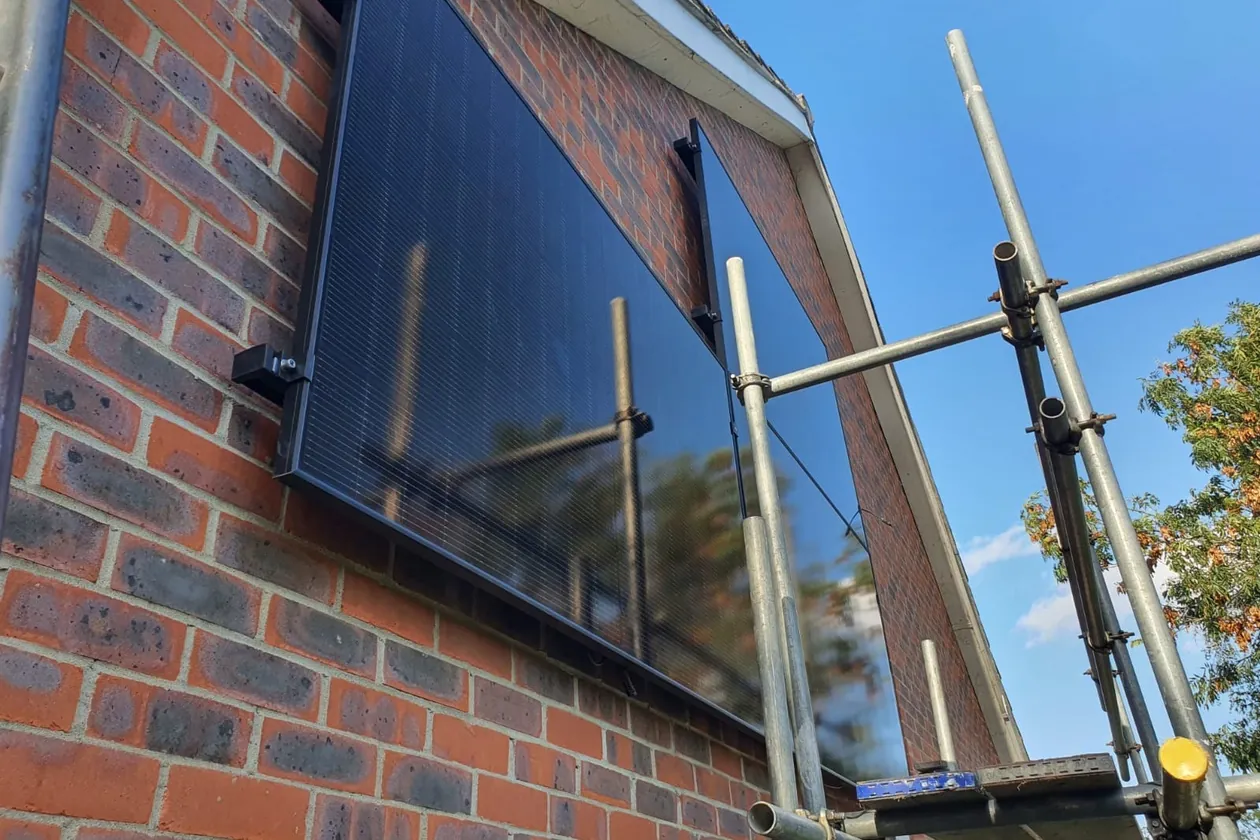
Solar panels on a brick wall and on the roof
Some panels flat against a brick wall on black rails, the rest in a row along the roof slope with bird spikes along the lower edge and every frame bonded to earth.
Read the case study
 Solar and battery
NW2
Cricklewood
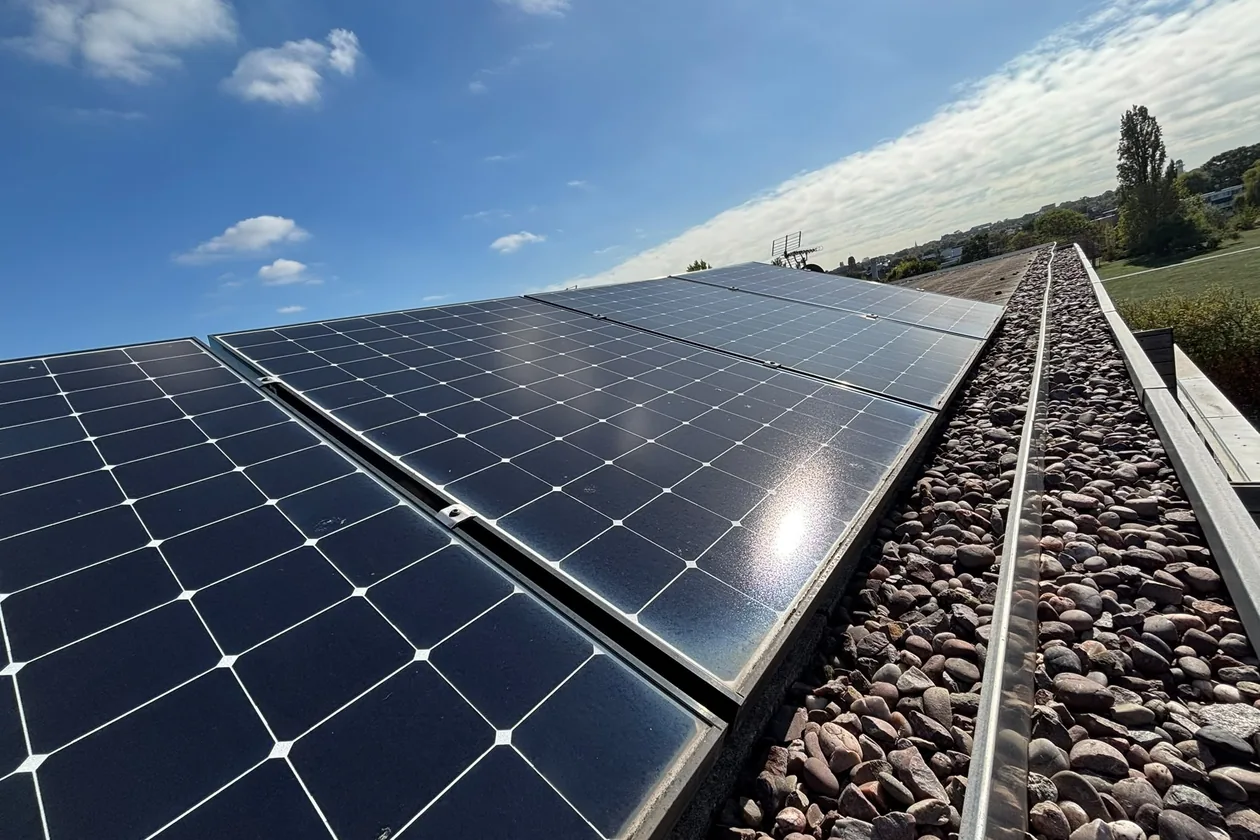
Solar panels on ballasted frames, flat roof
Low-tilt frames standing on the pebble finish of a new-build flat roof and held down by weight, so nothing is fixed through the waterproofing, with a clear strip left along the parapet to walk and work from.
Read the case study
 Solar
TW8
Brentford
Roof-mounted solar array
Two panels on the slate roof of a single-storey extension, each with its own microinverter, and bird mesh clipped round the edge so nothing can nest underneath.
Read the case study
 Solar
SE20
Anerley
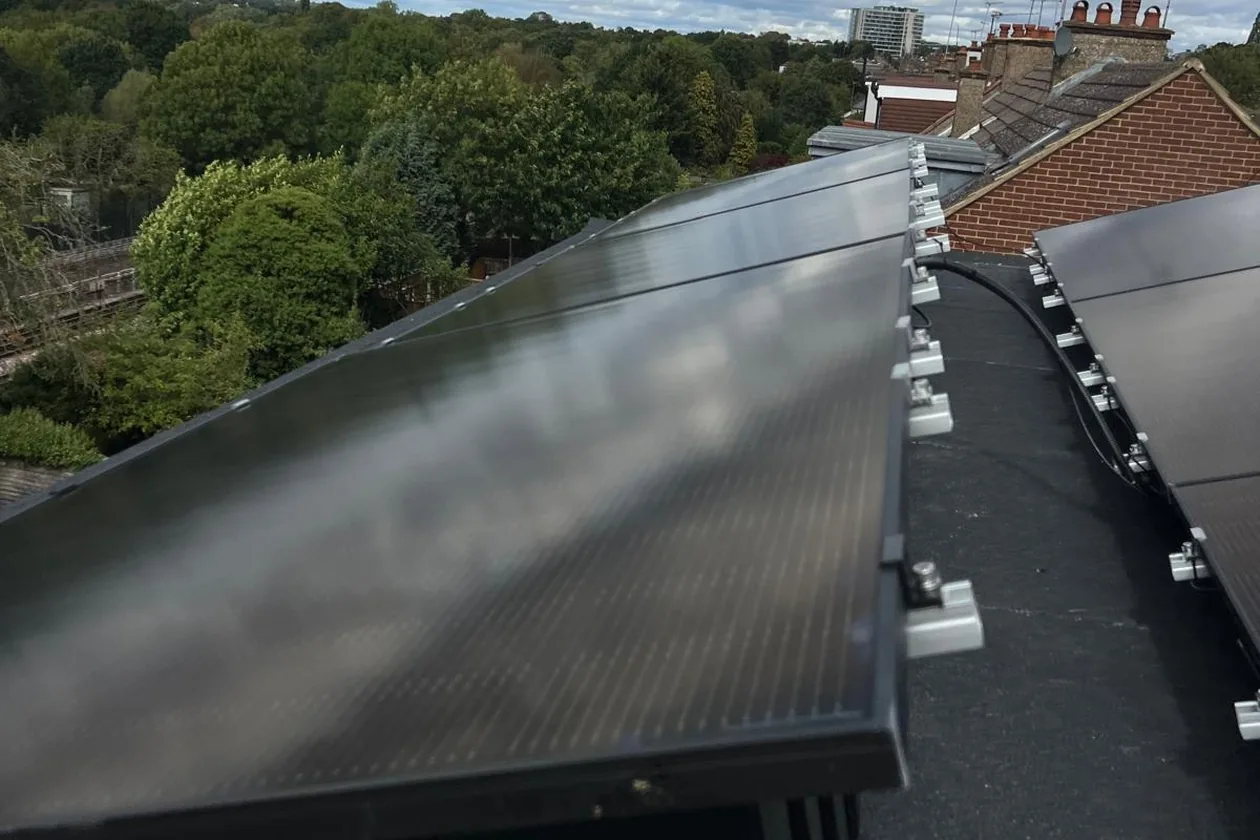
Solar panels on ballasted trays, flat roof
Six panels on the flat dormer roof, tilted on weighted trays rather than bolted down, so the roof covering is not pierced anywhere and the array still faces the sun instead of lying flat.
Read the case study
 Heat pump and battery
HP1
Hemel Hempstead
Samsung heat pump with Tesla Powerwall
Heat pump and battery on the same elevation, so the pump can be run off stored generation through the evening peak instead of off the most expensive electricity of the day.
Read the case study
 Heat pump, solar and battery
N4
Finsbury Park
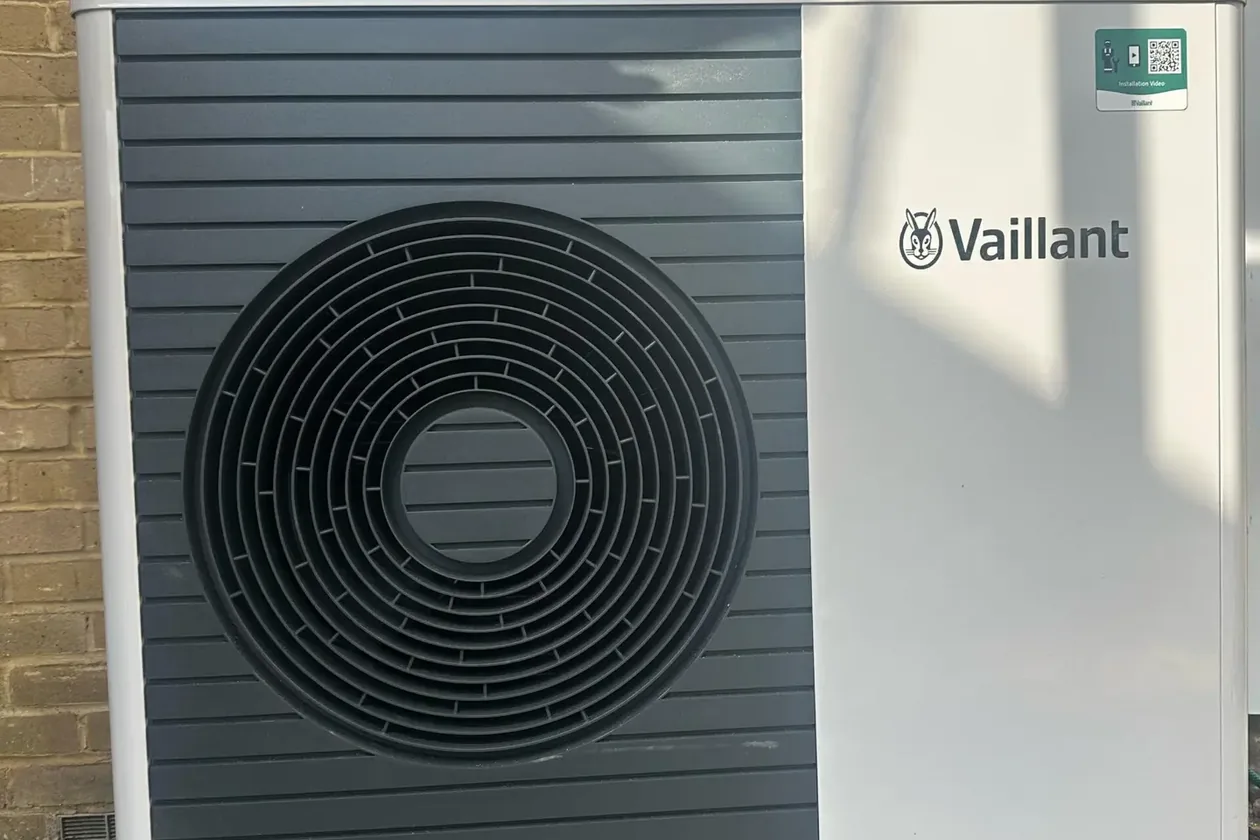
Vaillant air source heat pump with solar panels and a battery
The panels on the roof run the heat pump through the day and the battery carries it into the evening, so the house buys far less from the grid. The unit sits on raised feet against the rear wall.
Read the case study
 Solar and battery
NW2
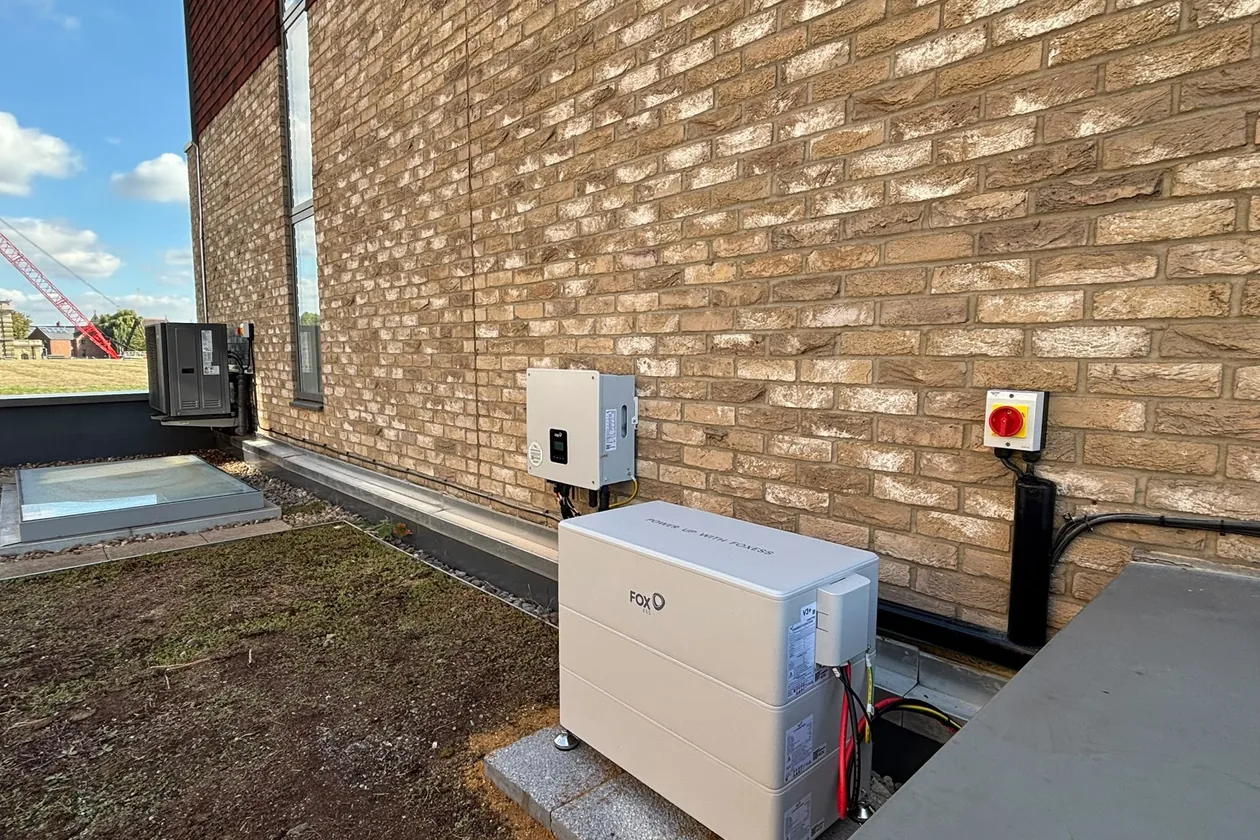
Cricklewood
Fox ESS hybrid inverter and CQ7 battery
The battery stands outside on the roof terrace on its own paving base, which these IP65 rated LFP modules are built for, with the inverter and the isolator on the wall above it and the cables dropped in one enclosed run.
Read the case study
 Solar
SE20
Anerley
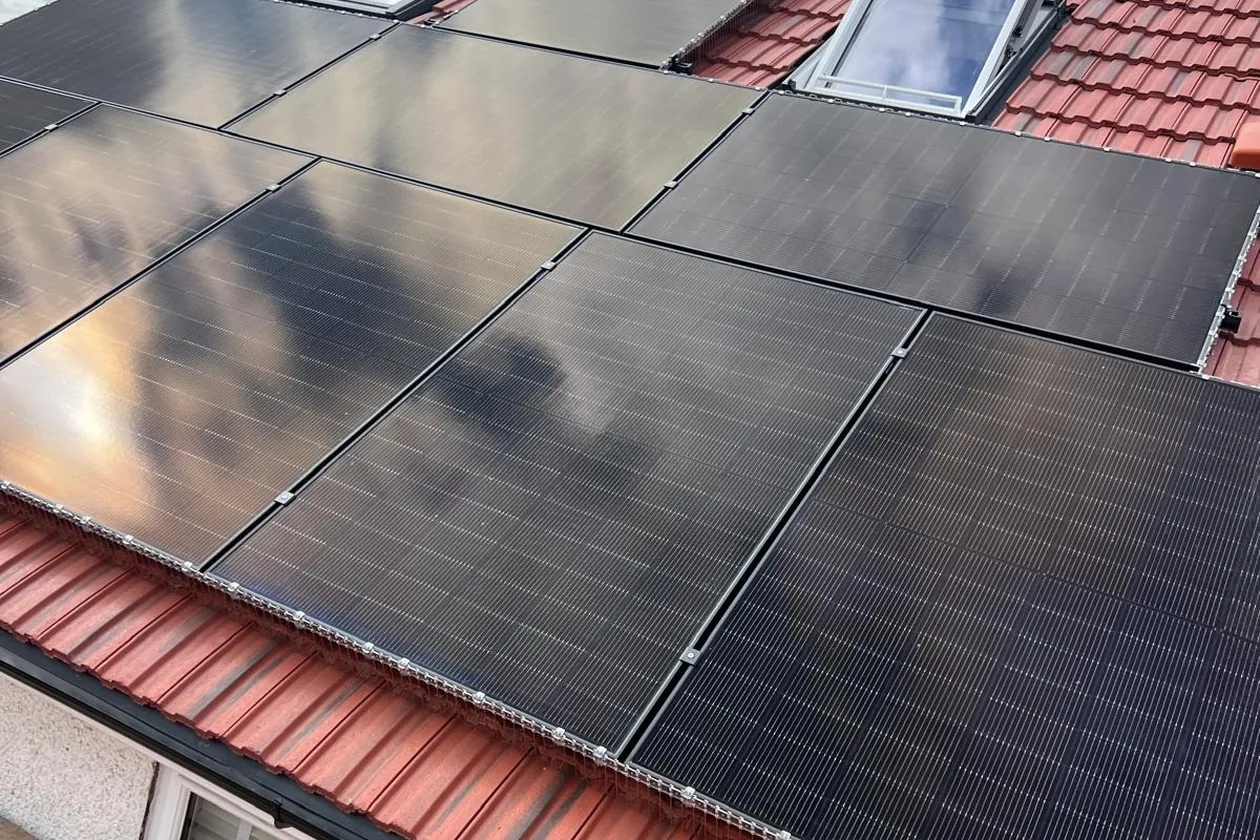
Solar panels on a tiled pitched roof
The rest of the same array on the tiled slope, laid out around the two roof windows rather than over them, so the loft rooms keep their daylight.
Read the case study
 Solar
SE20
Anerley
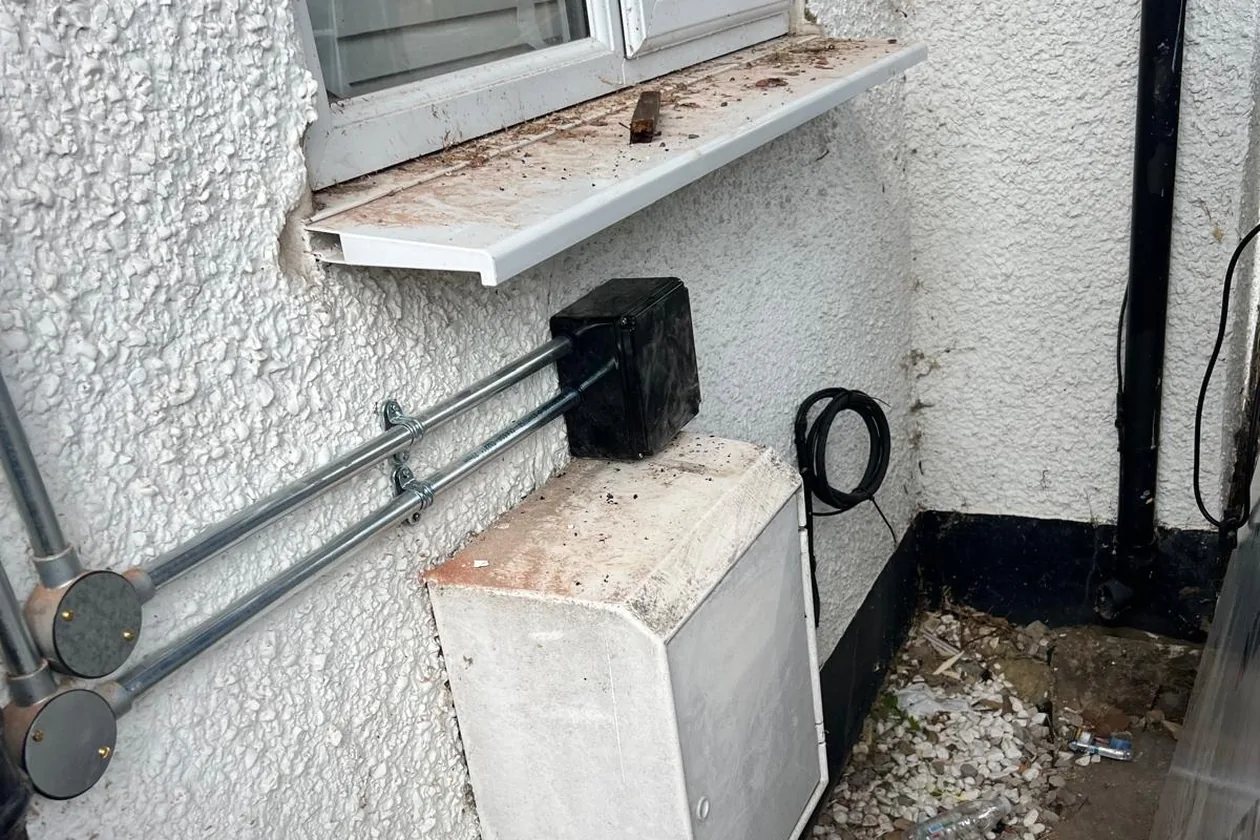
DC cabling in galvanised steel conduit
The cables from the roof brought down the rendered wall in galvanised steel conduit, clipped in straight runs into a junction box, instead of loose cable tied to the downpipe.
Read the case study
What will solar cost on your roof?
Four quick questions, then an indicative price built from the panel, inverter and battery rates on our own quotations.
Every line, at our rates: every line, at our rates
Nobody in this trade publishes this. It is the only way to tell whether a quotation is fair.
A five panel system with a string inverter is £3,900 to £5,050 installed. Eleven panels with two batteries is £9,450 to £11,750, and a real quotation at that size came to £9,774.
Panels are £72 to £90 each and fitting them is £100 to £120 each, so the cost per panel falls as the array grows and the fixed costs spread.
| Item | Goods | Fitting |
|---|---|---|
| Panel, 445 to 500 W | £72 to £90 | £100 to £120 each |
| Panel, Aiko All Black premium | £170 | Materials included in the rate |
| String inverter | £250 | £1,100 to £1,200 |
| Hybrid inverter, 5 kW | £650 to £689 | £1,100 to £1,500 |
| Three-phase inverter | £1,197 | £1,100 to £1,500 |
| Battery, 5 kWh Fox ESS EP5 | £1,050 to £1,235 | £990 to £1,100 each |
| Battery, Tesla Powerwall 3 | £7,295 | £1,500 |
| MCS certification and documentation | None | £725 to £825 |
| Scaffolding | None | £540 |
| Installation materials | £473 to £1,179 | Scales with the system |
Reconstructing three real quotations from the rates above returns £3,798, £9,774 and £9,347 against actual totals of £3,798, £9,774 and £9,347. The model is the rate card, not an approximation of it.
What the price includes. Nothing added later.
Everything below is inside the figure.
- ScaffoldingIn the figure. On a London terrace it is almost always needed, and leaving it out of the headline is how a quotation grows after you accept it.
- MCS certificationRegistration NIC-601634. It is what makes the export tariff claimable and what a mortgage valuer or a buyer's surveyor will ask for.
- Flat roofs includedA London flat roof on tilted ballasted frames gets close to a south-facing pitch, and it needs no roof penetration at all. We fit more of these than pitched arrays.
Questions people actually ask
How much does one panel actually generate?
A 460 W panel on a reasonable London roof returns roughly 390 kWh a year, so 5.1 kWp of them is about 4,335 kWh.
What that saves depends entirely on how much of it you use rather than export, which is the argument for a battery.
Is a battery worth it?
A 5 kWh battery adds about £2,040 to £2,335 and lifts self-consumption from roughly half to around three quarters.
It is worth more if you have a heat pump or air conditioning, because both shift load into the evening when the panels have stopped. See battery costs.
Why is there VAT of zero?
Installing energy saving materials in residential property is zero rated until 31 March 2027, after which it is scheduled to return to 5 per cent unless it is extended.
We are VAT registered under GB471566866 and commercial work is treated differently.
Panels, then what they power
A battery keeps the afternoon for the evening, and a heat pump is the biggest thing panels can run.


The survey is free and the written price is fixed
We measure the property, tell you what it needs and put a price in writing that does not move.
Monday to Friday 9am to 7pm, Saturday 10am to 3pm, Sunday closed
Page updated