Air conditioning in a
Victorian house
Air conditioning in Victorian and period houses, routed so the pipework disappears and the house keeps its character.
- Free survey, and we tell you what the property will and will not take
- Fixed written price before anything starts
- Permission position checked for your address first
Prefer to talk? 020 3393 1331
Accredited, and fitting the brands you know











Air conditioning we have fitted
Our own jobs, photographed on site. Real rooms, real outdoor positions, nothing from a catalogue.
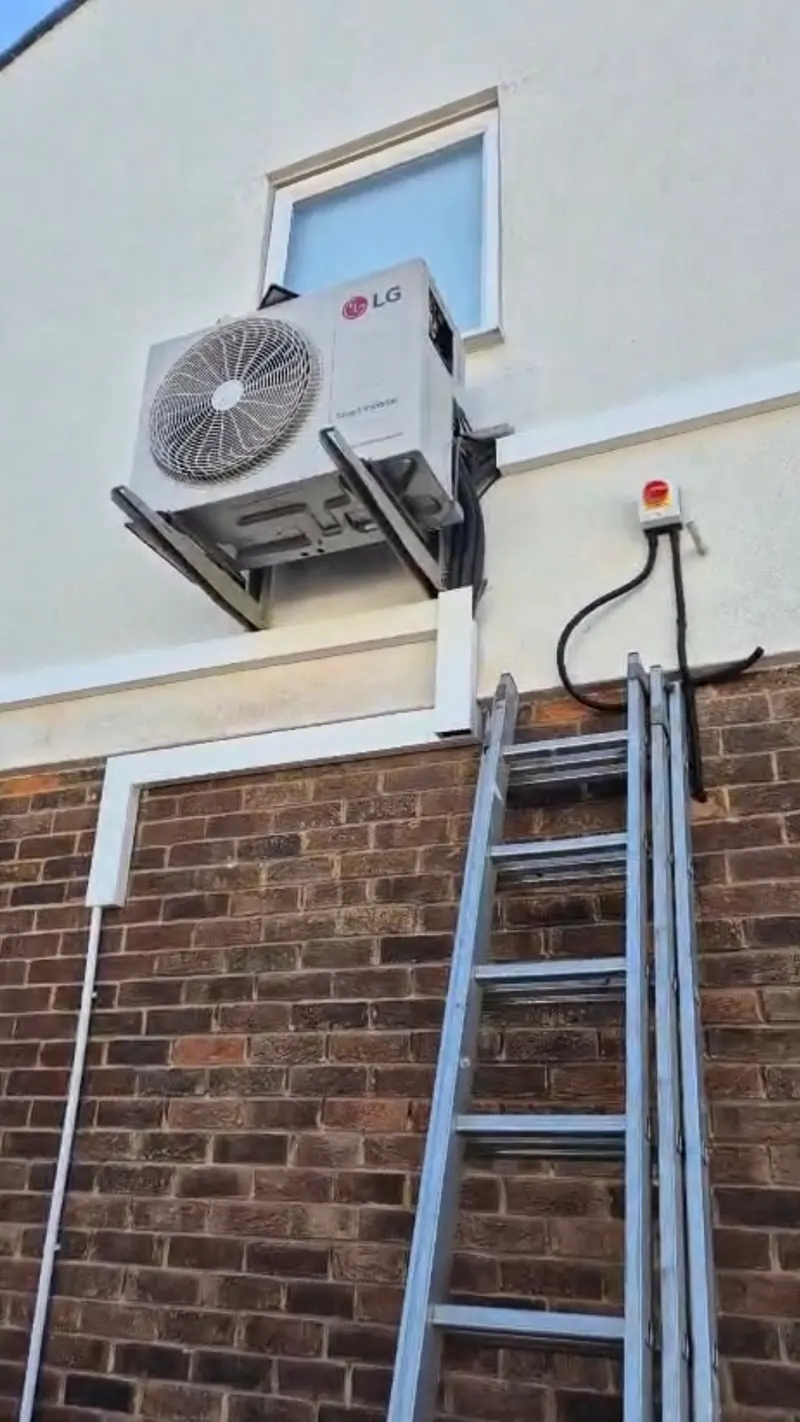 Air conditioning
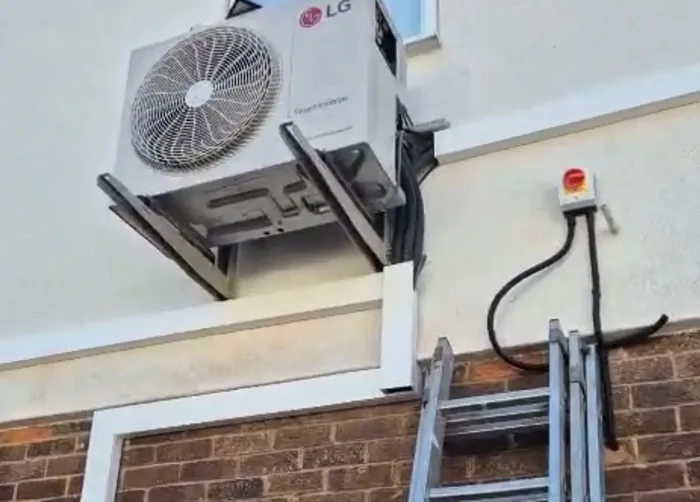
Outdoor unit on wall brackets
Above brick, isolator and cabling run tidy
Air conditioning
Outdoor unit on wall brackets
Above brick, isolator and cabling run tidy
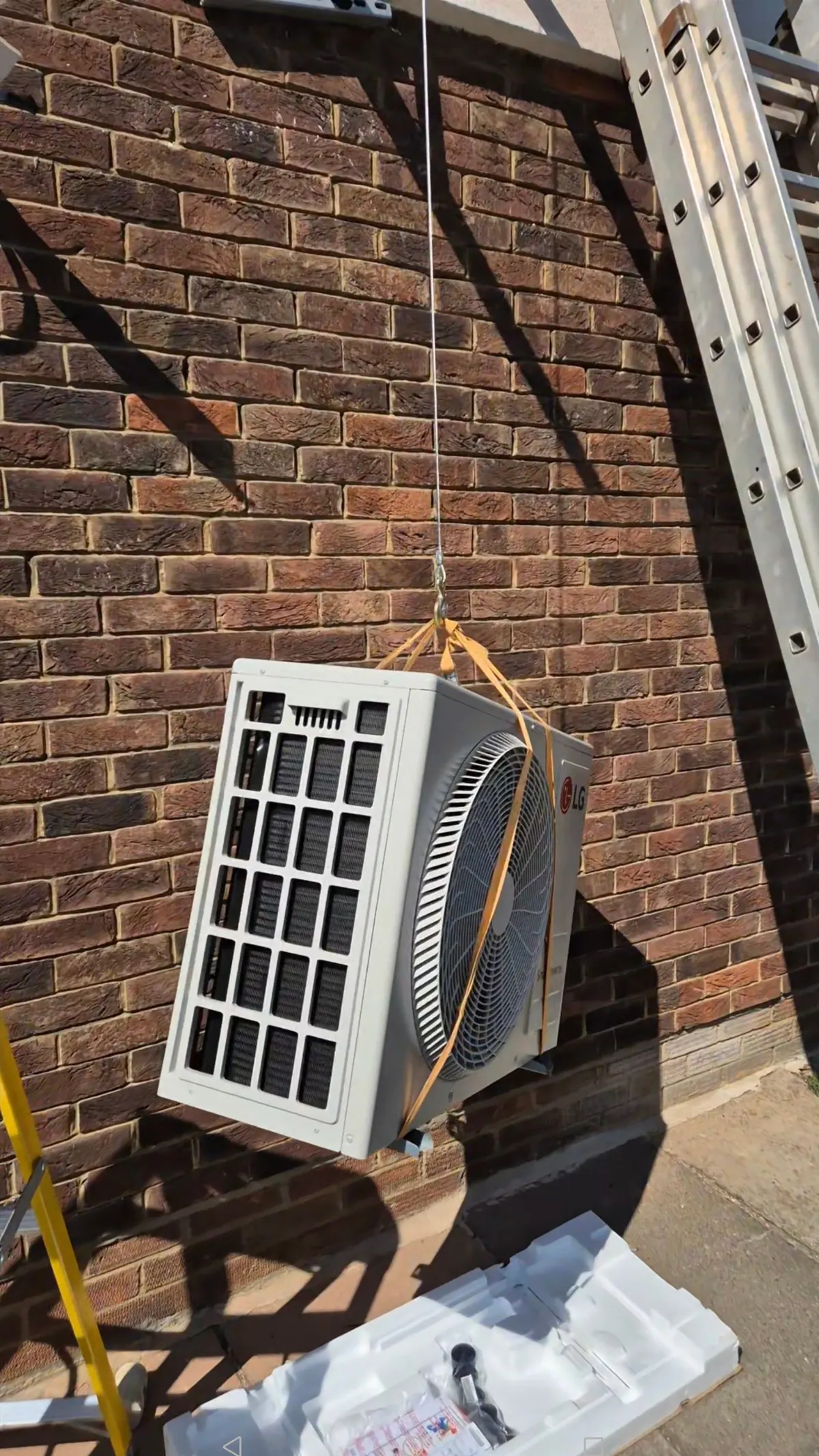
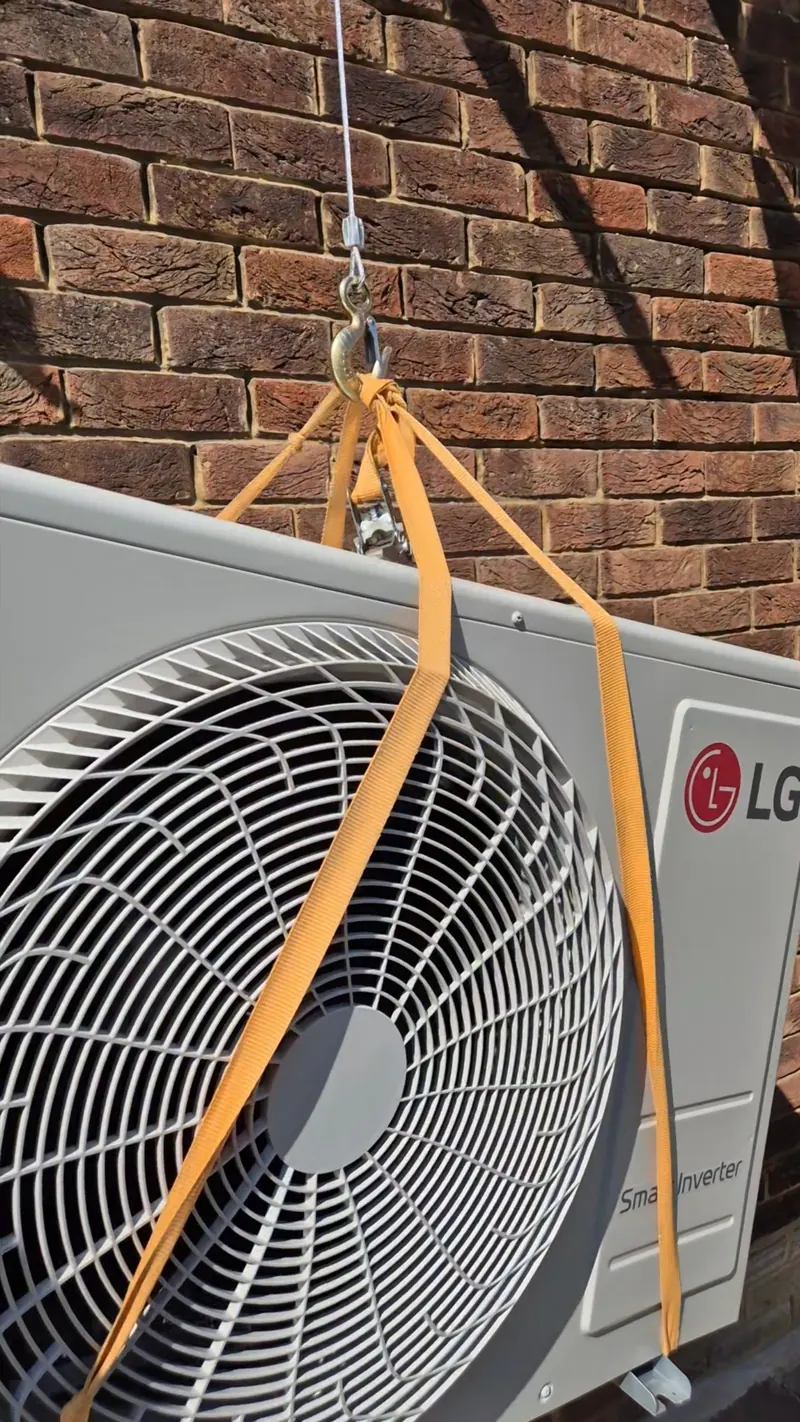 Air conditioning
Condenser going up on straps
Lifted into a wall position, no scaffold
Air conditioning
Condenser going up on straps
Lifted into a wall position, no scaffold
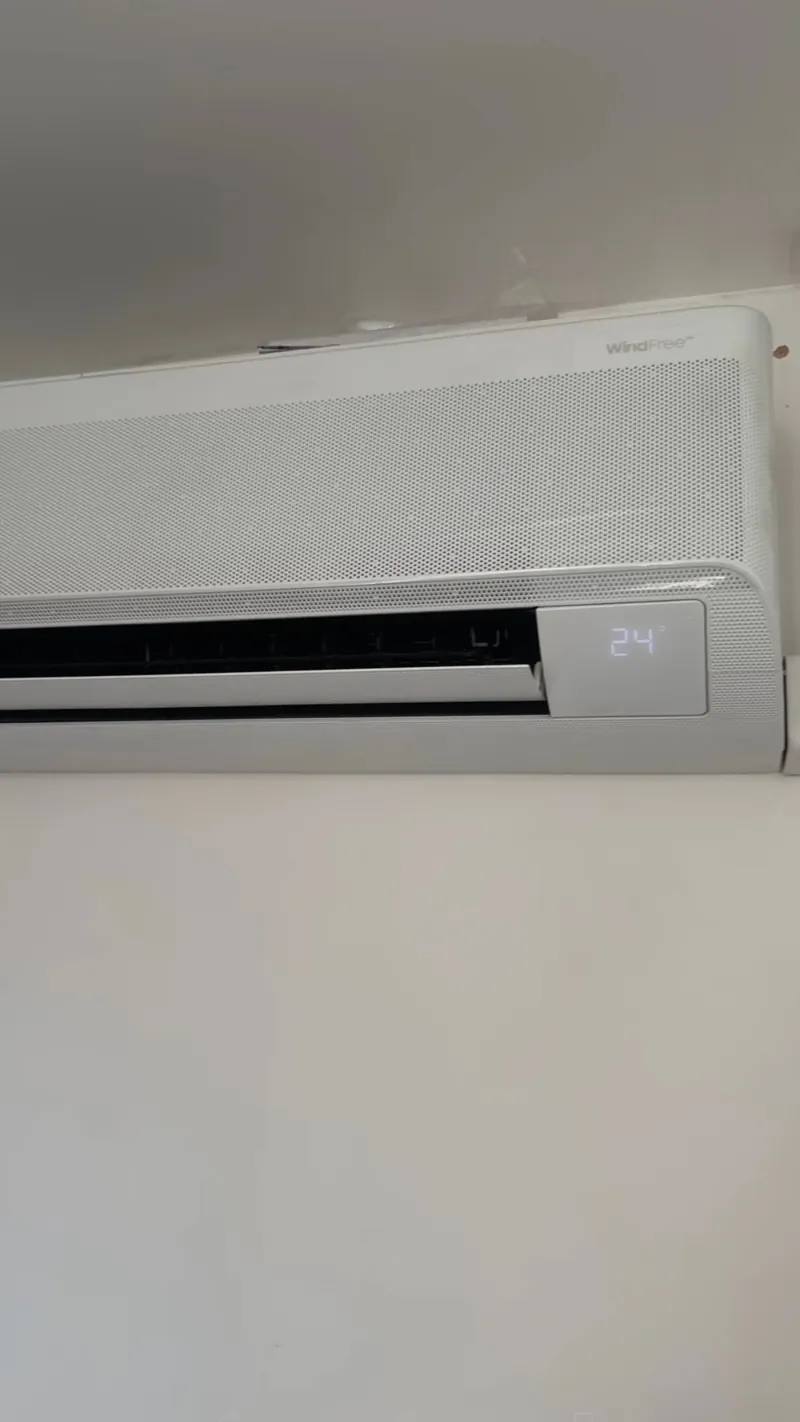 Air conditioning
Wall unit, commissioned
Set to 24 degrees and handed over
Air conditioning
Wall unit, commissioned
Set to 24 degrees and handed over
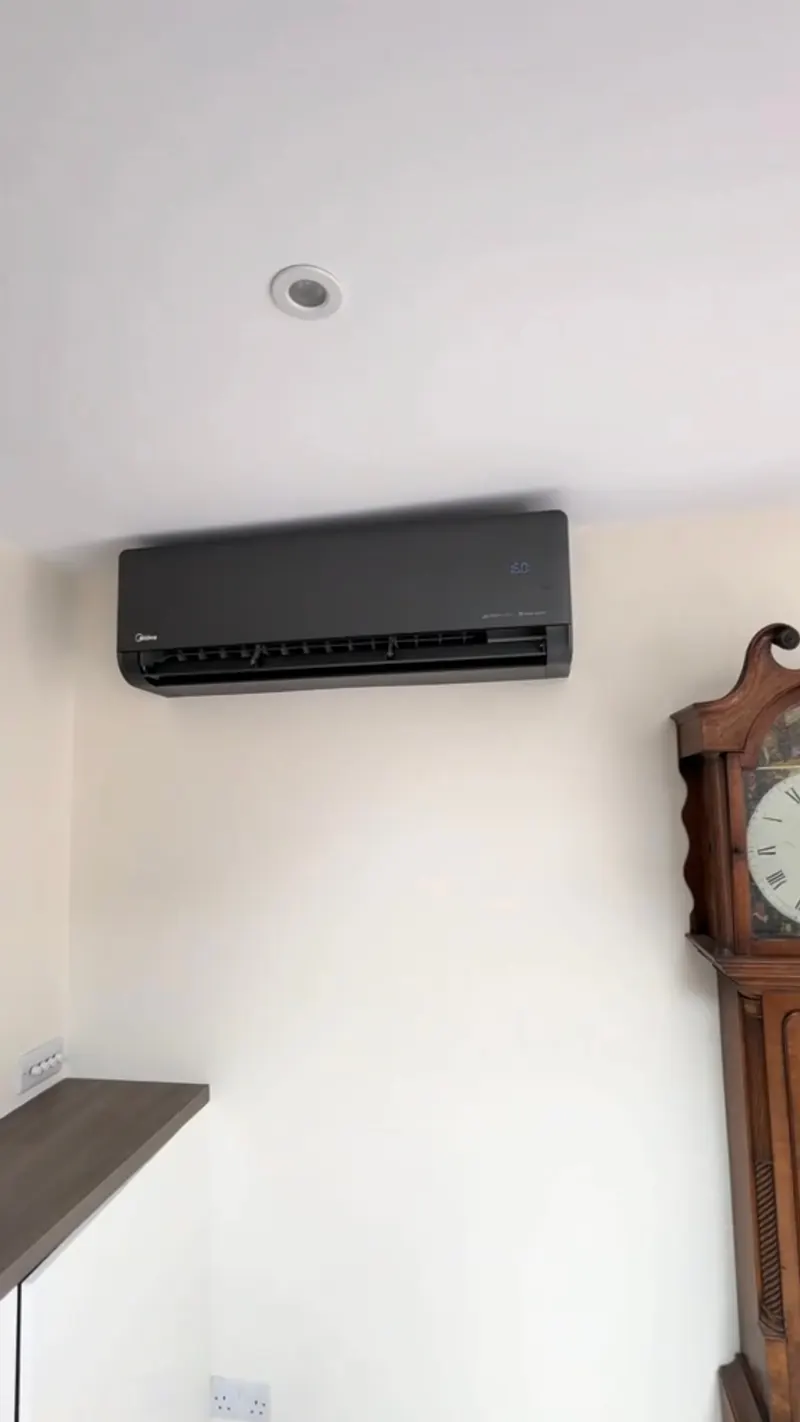 Air conditioning
Black wall unit in a sitting room
Chosen to sit with the room, not against it
Air conditioning
Black wall unit in a sitting room
Chosen to sit with the room, not against it
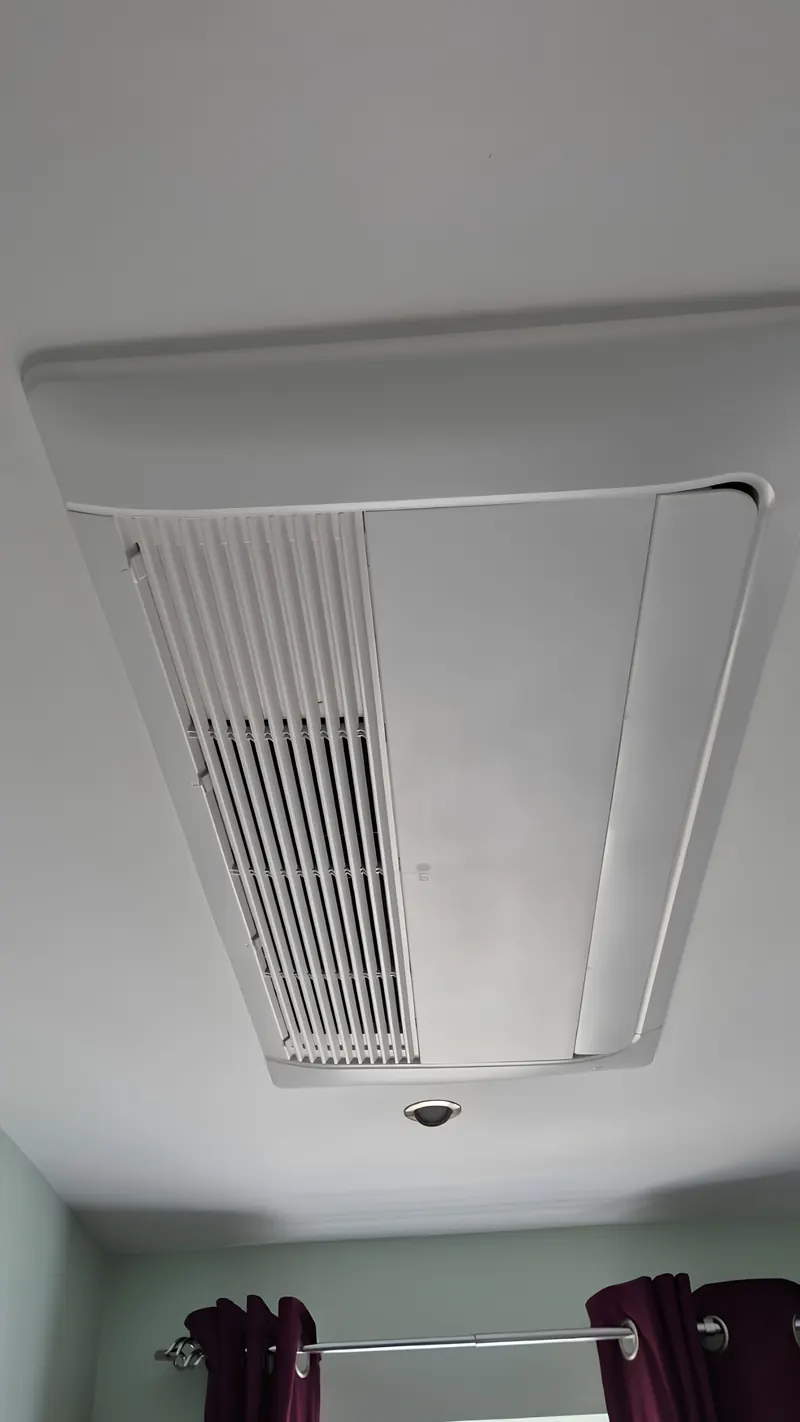 Air conditioning
Ceiling cassette
Recessed flush into the ceiling
Air conditioning
Ceiling cassette
Recessed flush into the ceiling
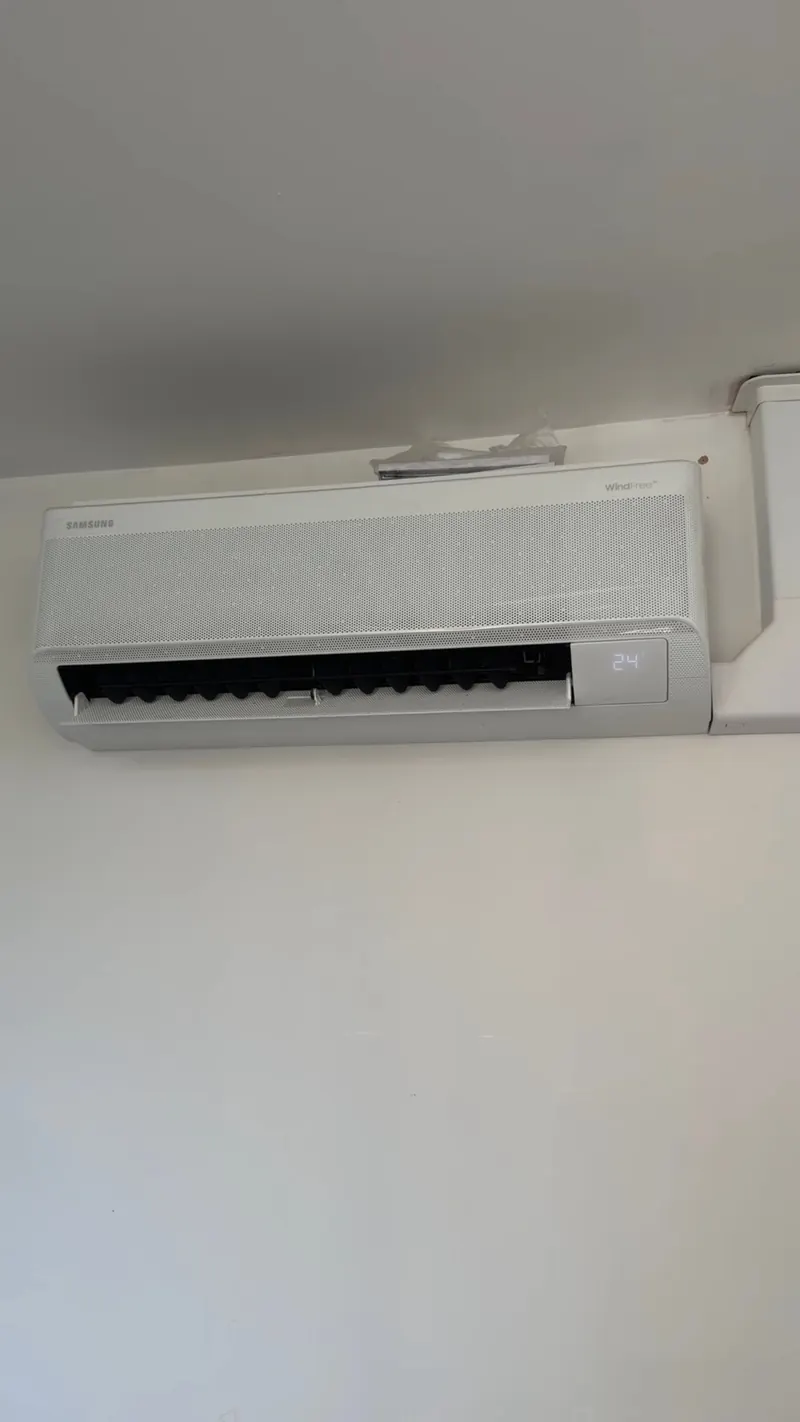 Air conditioning
Samsung Wind-Free
Cooling without a draught on the room
Air conditioning
Samsung Wind-Free
Cooling without a draught on the room
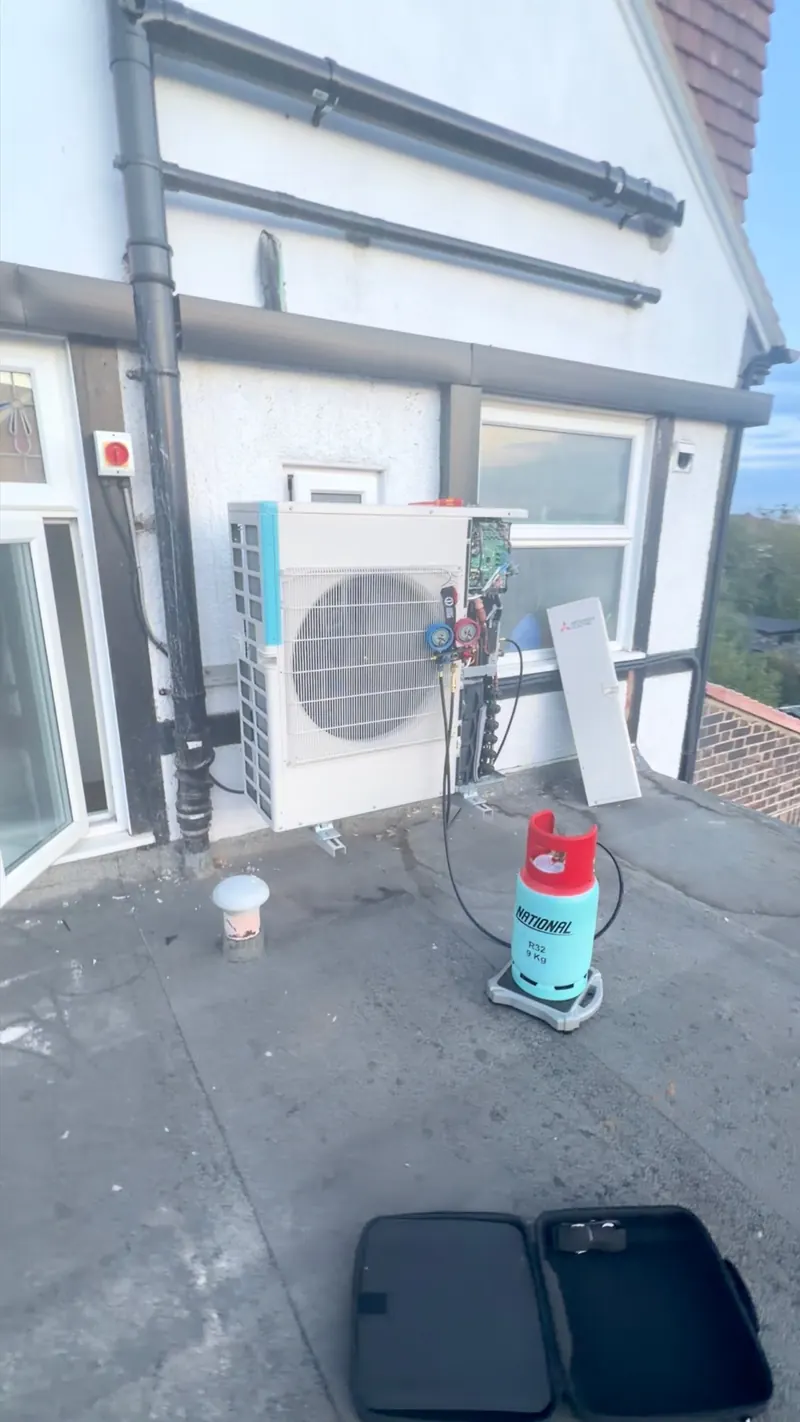 Air conditioning
Rooftop commissioning
Pressure tested and charged on gauges
Air conditioning
Rooftop commissioning
Pressure tested and charged on gauges
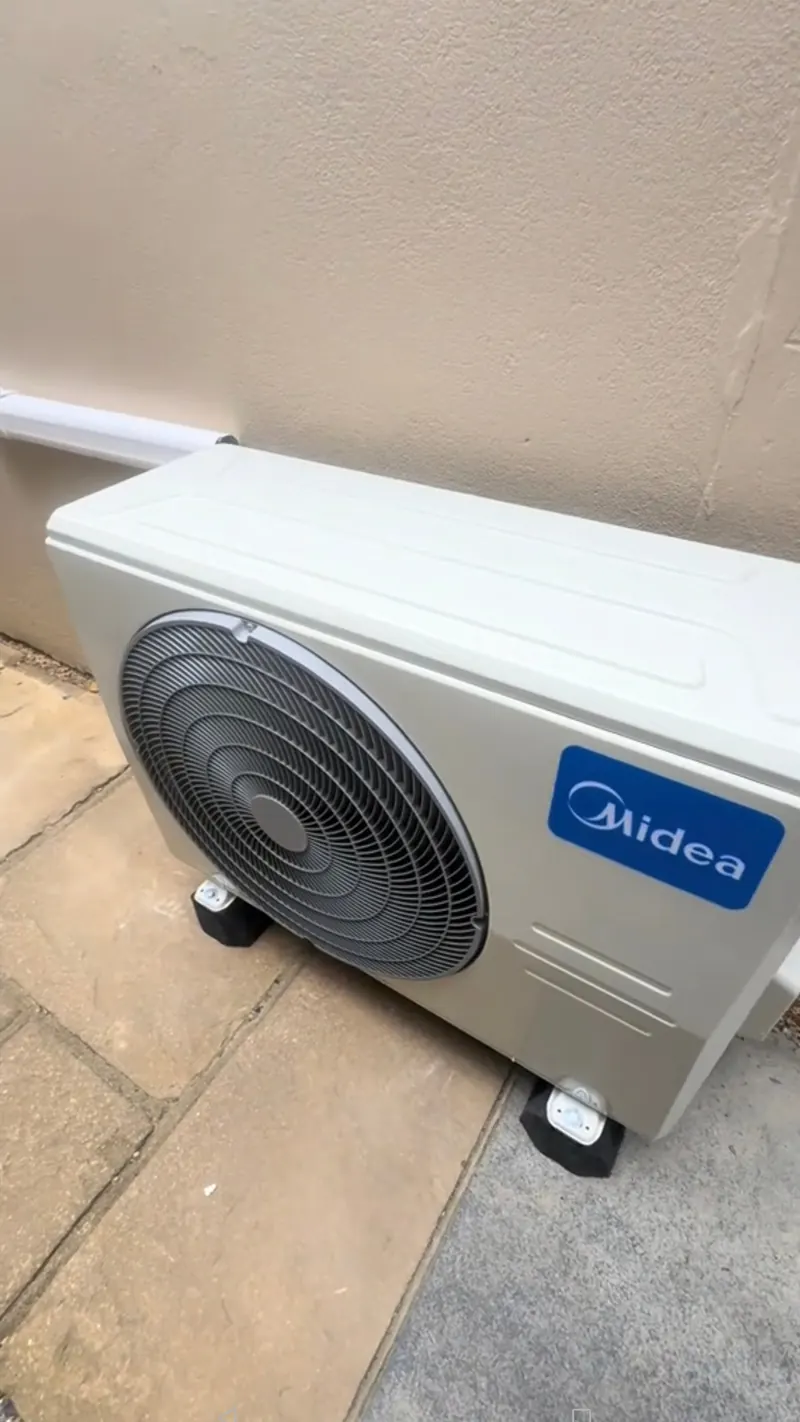 Air conditioning
Outdoor unit at ground level
On paving beside the house, easy to service
Air conditioning
Outdoor unit at ground level
On paving beside the house, easy to service
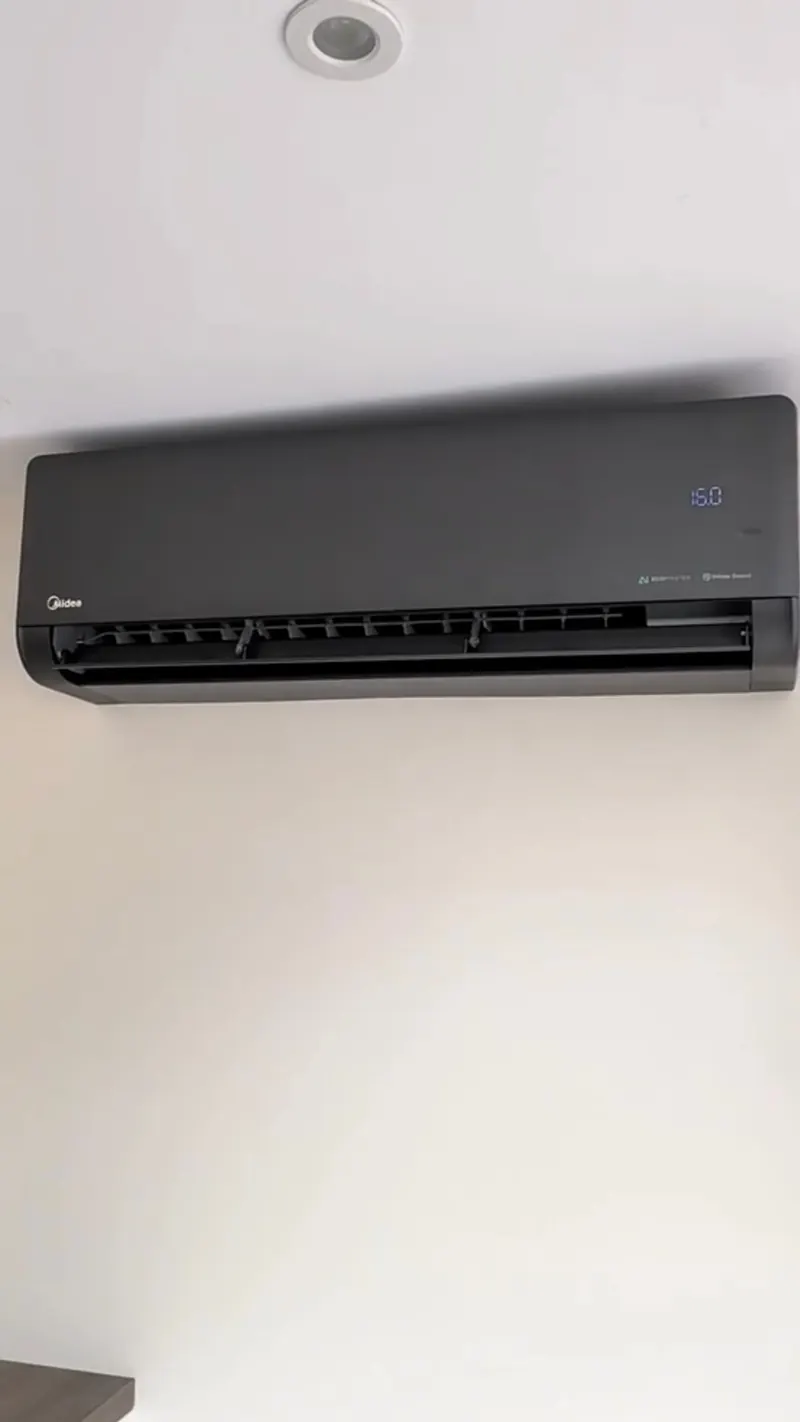 Air conditioning
Black wall unit, running
Quiet enough for a bedroom
Air conditioning
Black wall unit, running
Quiet enough for a bedroom
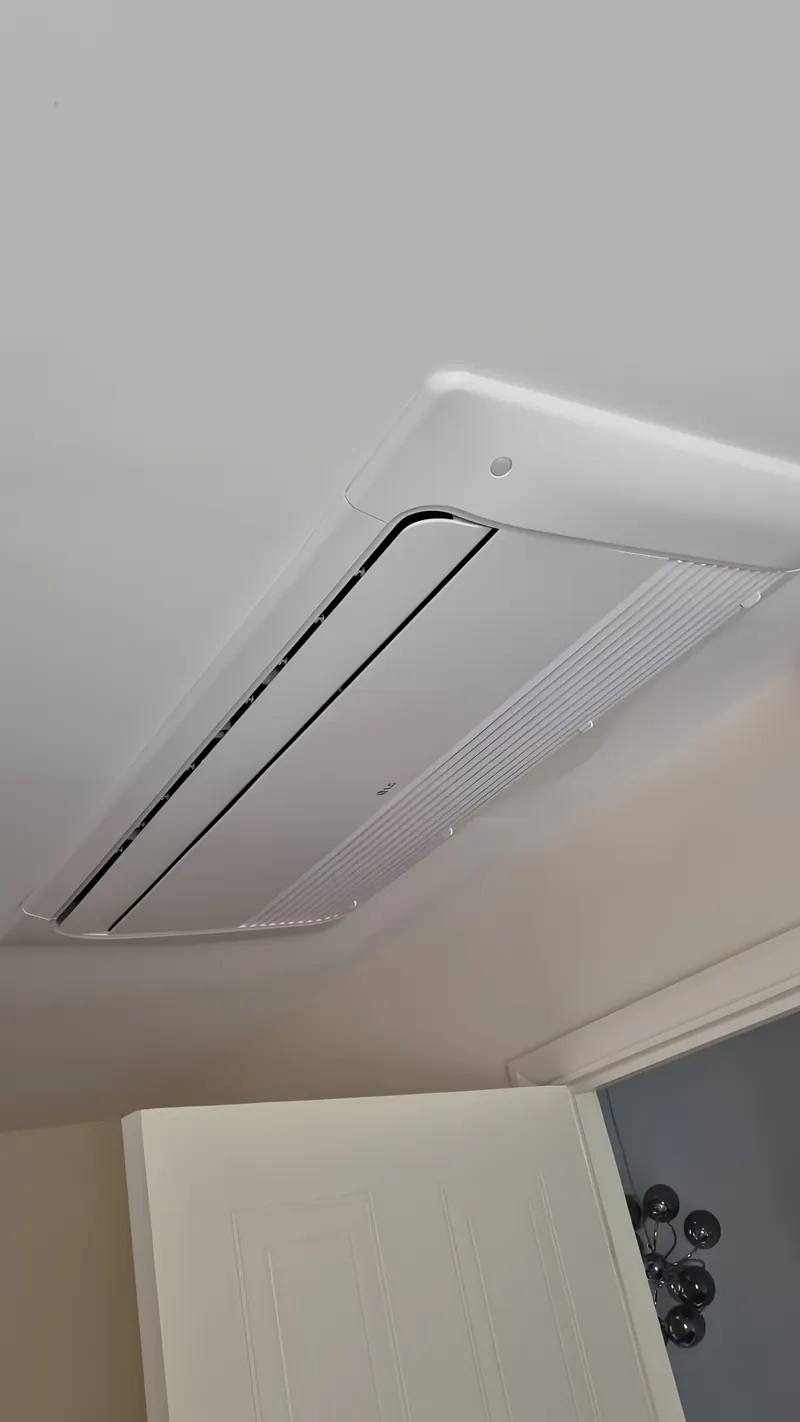 Air conditioning
One-way ceiling cassette
Only the grille shows
Air conditioning
One-way ceiling cassette
Only the grille shows
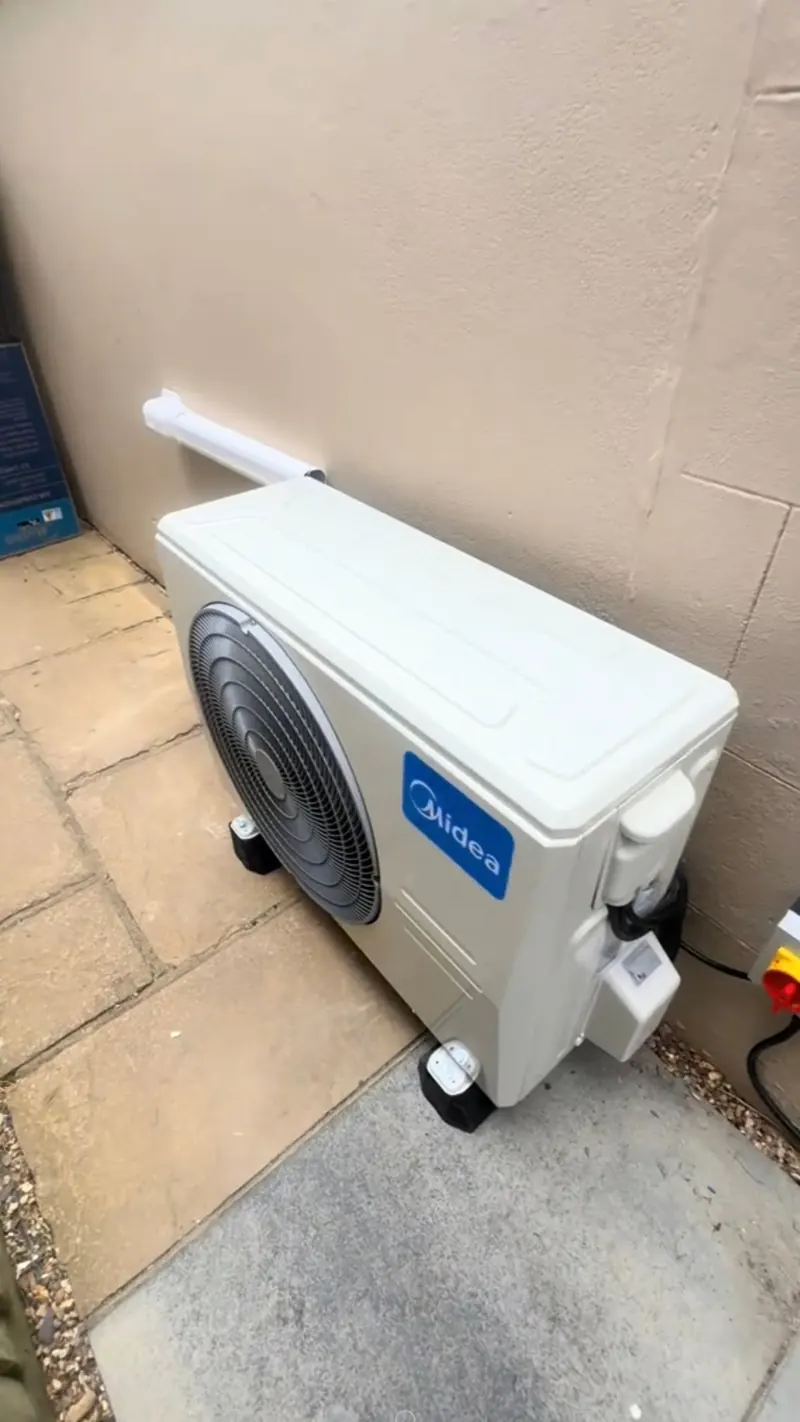 Air conditioning
Outdoor unit on paving
Against render, clear of the boundary
Air conditioning
Outdoor unit on paving
Against render, clear of the boundary
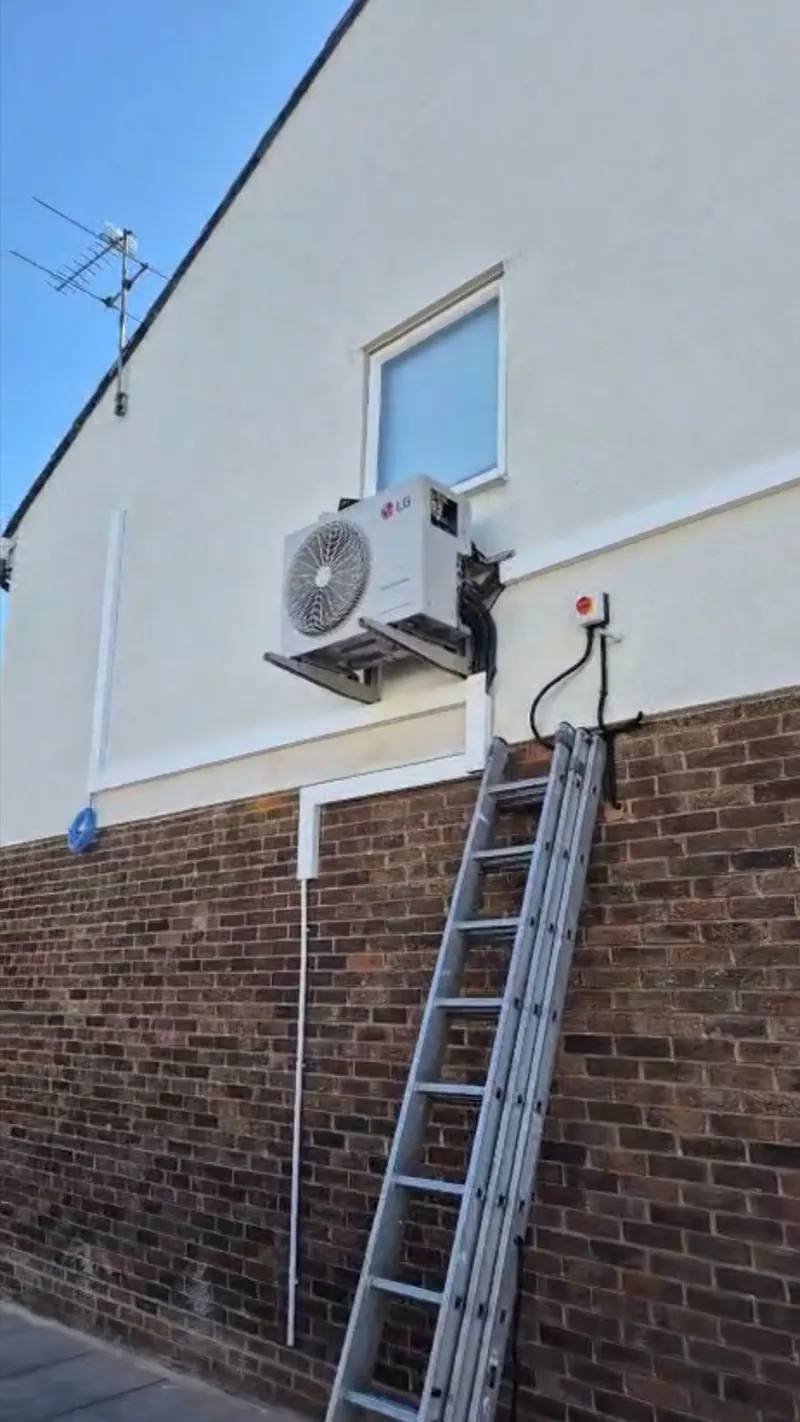 Air conditioning
Condenser high on a wall
On brackets where the ground was not an option
Air conditioning
Condenser high on a wall
On brackets where the ground was not an option
One room of a Victorian house costs 2,700 to 3,800 pounds to air condition, above the 2,400 pound floor because solid walls, longer pipe runs and heritage constraints all add work. Nothing about the fabric makes it impossible.
Five things about a period house change the job, and only one of them is about planning.
Your estimate
£2,400to£3,200
Supplied, fitted, commissioned and certificated. Includes VAT.
Send this on WhatsAppPrice it for this property
Where the outdoor unit can go is the adjustment that moves a price most in this kind of property, so it is the second question.
Last step: what number should we call with your fixed price?
Every figure on this site is an estimate built from the quotations we issued in 2026 and our own installation experience. It is not a quotation. The price you are given after the free survey is the price you pay.
From first call to cool rooms in three steps
-
Free survey
We measure the rooms, find the outdoor position and check permission for your address.
-
A fixed written price
Units, pipework and electrics itemised. The number does not move unless the job does.
-
Fitted in a day
One room a day, tested in every mode, and shown to you before we leave.
Read the full guide: 6 sections, about 4 minutes
What a period house changes, and what it adds
| Feature | What it means | Effect on the installation |
|---|---|---|
| Solid brick walls, no cavity | Core drilling through 215mm or more of solid brick rather than a cavity | Slower, dustier, and it must be cored not hammered |
| Lath and plaster | Internal walls and ceilings that crack if treated like plasterboard | Fixings go into timber, and making good is real work |
| Sash windows | No frame route, and the reveals are usually decorative | The pipe goes through the wall, never past the window |
| Cornice and picture rails | A wall unit cannot sit over a moulding | Position is decided by the plasterwork, not by the furniture |
| Conservation areas | Dense in Camden, Islington and much of inner London | The unit cannot face a highway. Rear or side only |
| High ceilings | Three metres is common, so more volume per square metre | Sizing goes up. Our calculator works on floor area |
Coring a solid wall, which is the part people worry about
A period London wall is one or one and a half bricks thick, solid, with no cavity and often with soft lime mortar. The hole for the refrigerant pipes and the condensate drain is about 65mm, drilled at a slight fall so water runs outward.
It is cored with a diamond core drill rather than hammered through, and the difference matters more here than anywhere. Percussion on soft old brick spalls the face, cracks the lime pointing, and on the inside it takes lath and plaster off in sheets. Coring leaves a clean cylinder and the brick face intact.
Then it is sleeved, sealed inside and out and made good. On an exposed brick interior we will tell you honestly before we start what the made-good hole will look like, because on old brick it will never be invisible.
Where the pipe can run when the building is listed or in a conservation area
Being in a conservation area does not stop an installation on a house. You keep permitted development rights, but the outdoor unit cannot go on a wall or roof slope fronting a highway, which in a period terrace means the rear elevation or a side return if there is one.
A listed building is different and more serious: listed building consent is needed as well as planning permission, and that applies to internal work too, so a pipe route chased into a wall can require consent even where nothing is visible outside.
We check the conservation boundary, any Article 4 direction and the listing register for the specific address before quoting, and we give you the answer in writing whether or not you use us. The conditions are all on the planning page.
The advantage nobody mentions
Period houses are usually easier to cool than they are to heat, and for once the building fabric is on your side. Solid brick has real thermal mass: it absorbs heat through the day and gives it back slowly, which flattens the afternoon peak that makes a modern lightweight extension unbearable by four o'clock.
High ceilings help too. Warm air stratifies upward and a well-positioned high-level unit works with that rather than against it.
What period houses are bad at is retaining the cooling once it is off, for exactly the same reason a solid wall loses heat in winter. So the running pattern that suits them is low and continuous rather than blasting for an hour, which is also the pattern that is cheapest and quietest.
What it costs
| Scope | System | Installed price |
|---|---|---|
| One room, straightforward rear elevation | 2.5 to 3.5kW wall unit | £2,400 to £3,500 |
| One room, coring a thick solid wall | As above, more labour | £2,700 to £3,800 |
| Two rooms, one outdoor unit | 2 unit multi-split | £4,300 to £5,800 |
| Internal pipe boxing and making good | Where a surface run is not acceptable | Add £180 to £600 |
| Scaffold or tower | Three storey rear with no ladder position | Add £480 to £540 |
Every figure on this site is an estimate built from the quotations we issued in 2026 and our own installation experience. It is not a quotation. The price you are given after the free survey is the price you pay.
Other property types
Terraced houses
A terrace gives you one usable elevation and a neighbour close enough to hear everything.
Terraced housesWhole house
Doing the whole house at once is cheaper per room than doing it a room at a time, and it is not always the right answer.
Whole houseNew builds
New homes are built to keep heat in, and plenty of them do it too well: big windows, airtight walls and a top floor that holds the afternoon until midnight.
New buildsListed buildings
London has tens of thousands of listed homes, offices and shops, and most of them can have air conditioning.
Listed buildingsFlats
Two permissions rather than one, the licence pack, and the order that decides whether it is expensive.
Leasehold flatsVictorian and period houses: common questions
Can you install air conditioning in a Victorian house?
Yes, and a large share of our work is exactly that, because most of inner London is Victorian or Edwardian. The fabric changes how the job is done rather than whether it can be.
The three things that decide it are where the outdoor unit can go, whether the pipe can reach it without crossing the front of the building, and whether the property is listed. None of those is answerable from an address alone, which is why it is a survey rather than a phone quote.
Will it damage the walls or the original features?
It should not, and the way to make sure is coring rather than hammering. One 65mm cored hole per indoor unit, sleeved and sealed, is the entire intervention in the fabric.
The genuine risks in a period house are lath and plaster, which cracks if it is treated like plasterboard, and lime pointing, which spalls under percussion. Both are avoided by working slowly with the right tools, and both are why a period house takes longer than a new build.
Do I need permission in a conservation area?
On a house, usually not an application, but a real constraint. You keep permitted development rights inside a conservation area, and the outdoor unit cannot go on a wall or roof slope that fronts a highway.
If the building is listed, that changes: listed building consent is required as well as planning permission, and it can extend to internal work.
Is a period house more expensive to cool?
To install, slightly: solid walls take longer to core and the pipe runs tend to be longer. To run, often less than people expect, because thermal mass flattens the afternoon peak.
What raises the sizing is ceiling height. Our calculator works from floor area, so a room with a three metre ceiling needs a step up from what it suggests, and that is the sort of thing a survey catches.
Free survey, and an honest answer about the building
We look at what the property will actually take before anybody quotes anything, and if the answer is that a room is not worth doing, we will say so.
Monday to Friday 9am to 7pm, Saturday 10am to 3pm, Sunday closed
Page updated