Air conditioning
error codes
Look up your air conditioning error code below, see what it means, and book us to fix it, any make.
- 89 pounds plus VAT to diagnose, waived if we do the repair
- Any make and any age, including other installers' systems
- We will tell you when a repair is not worth doing
Prefer to talk? 020 3393 1331
Accredited, and fitting the brands you know









Air conditioning we have fitted
Our own jobs, photographed on site. Real rooms, real outdoor positions, nothing from a catalogue.
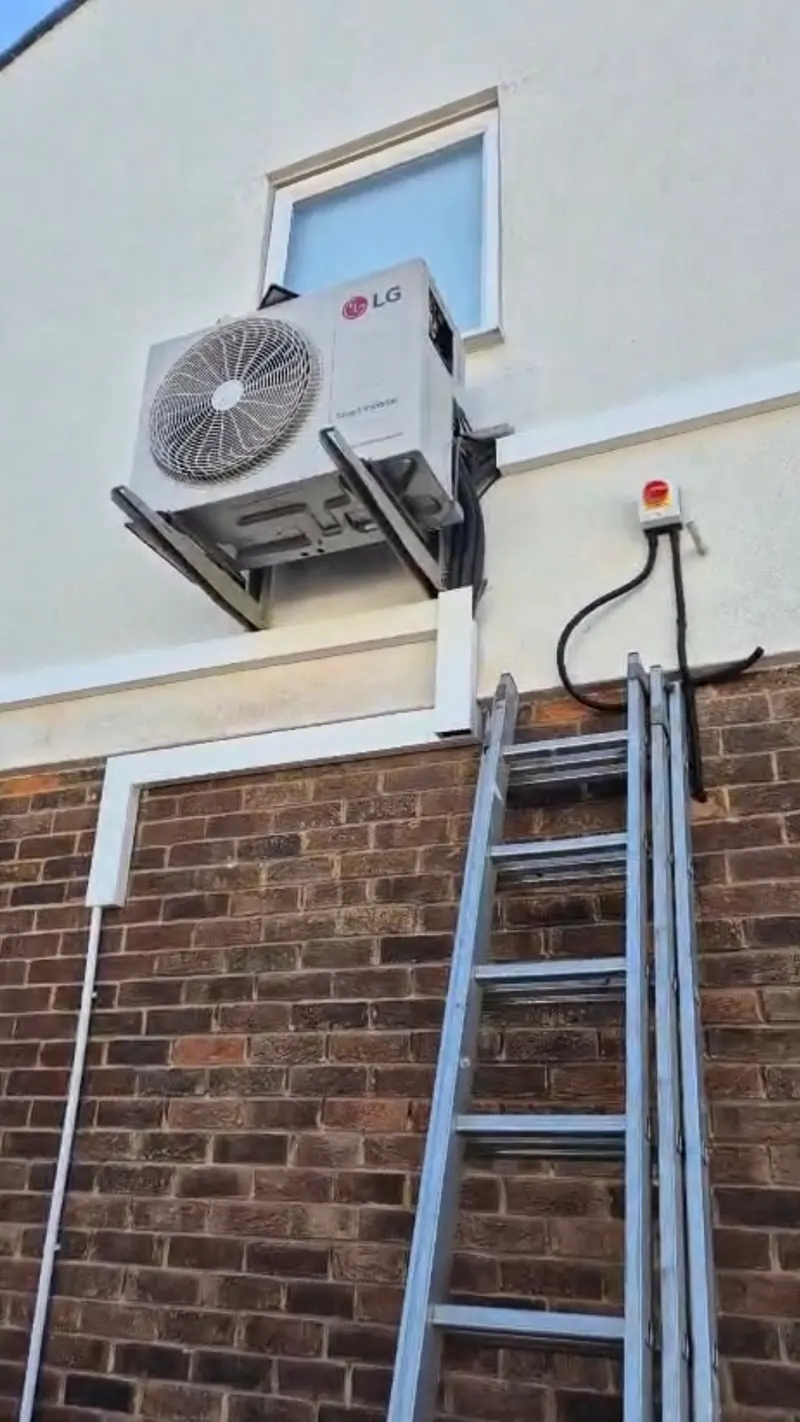 Air conditioning
Outdoor unit on wall brackets
Above brick, isolator and cabling run tidy
Air conditioning
Outdoor unit on wall brackets
Above brick, isolator and cabling run tidy
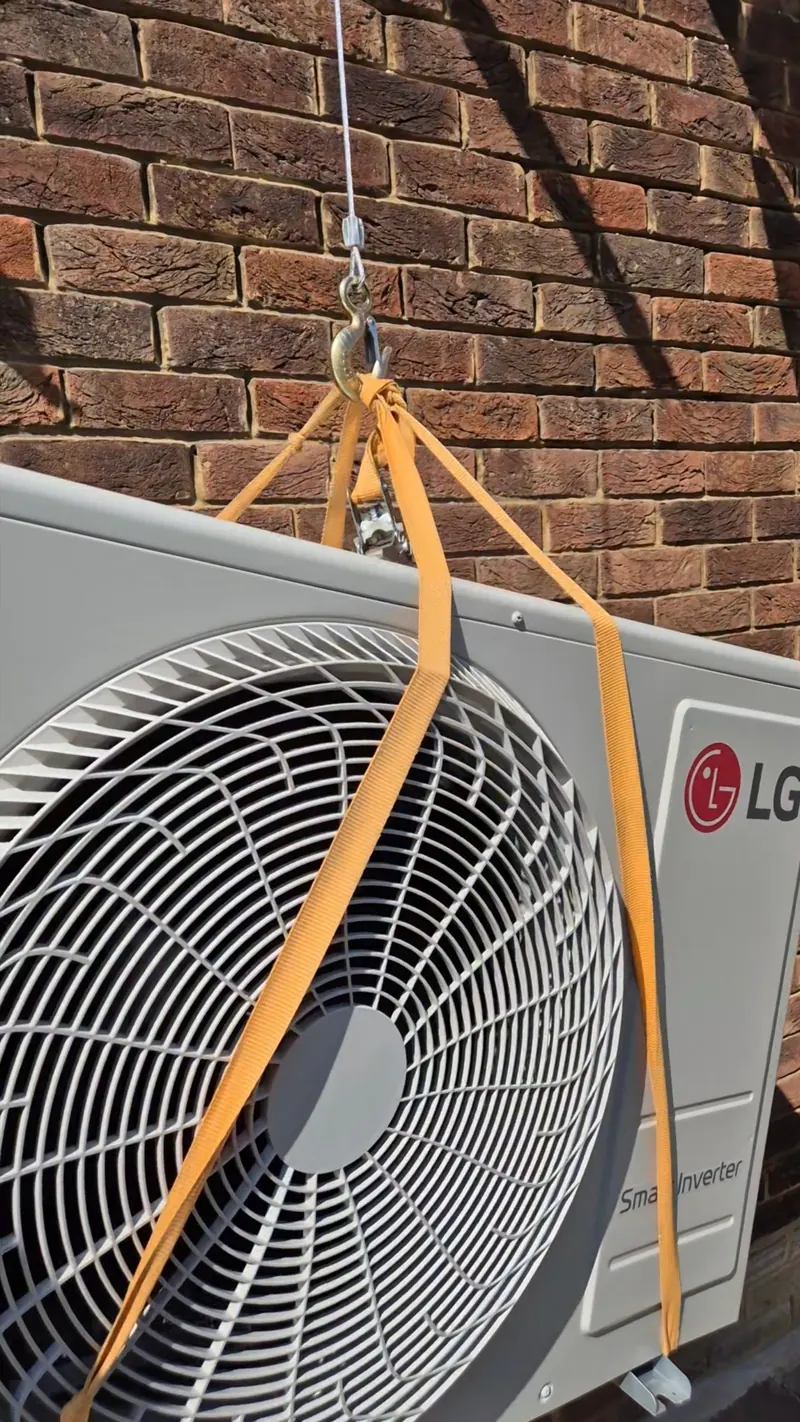 Air conditioning
Condenser going up on straps
Lifted into a wall position, no scaffold
Air conditioning
Condenser going up on straps
Lifted into a wall position, no scaffold
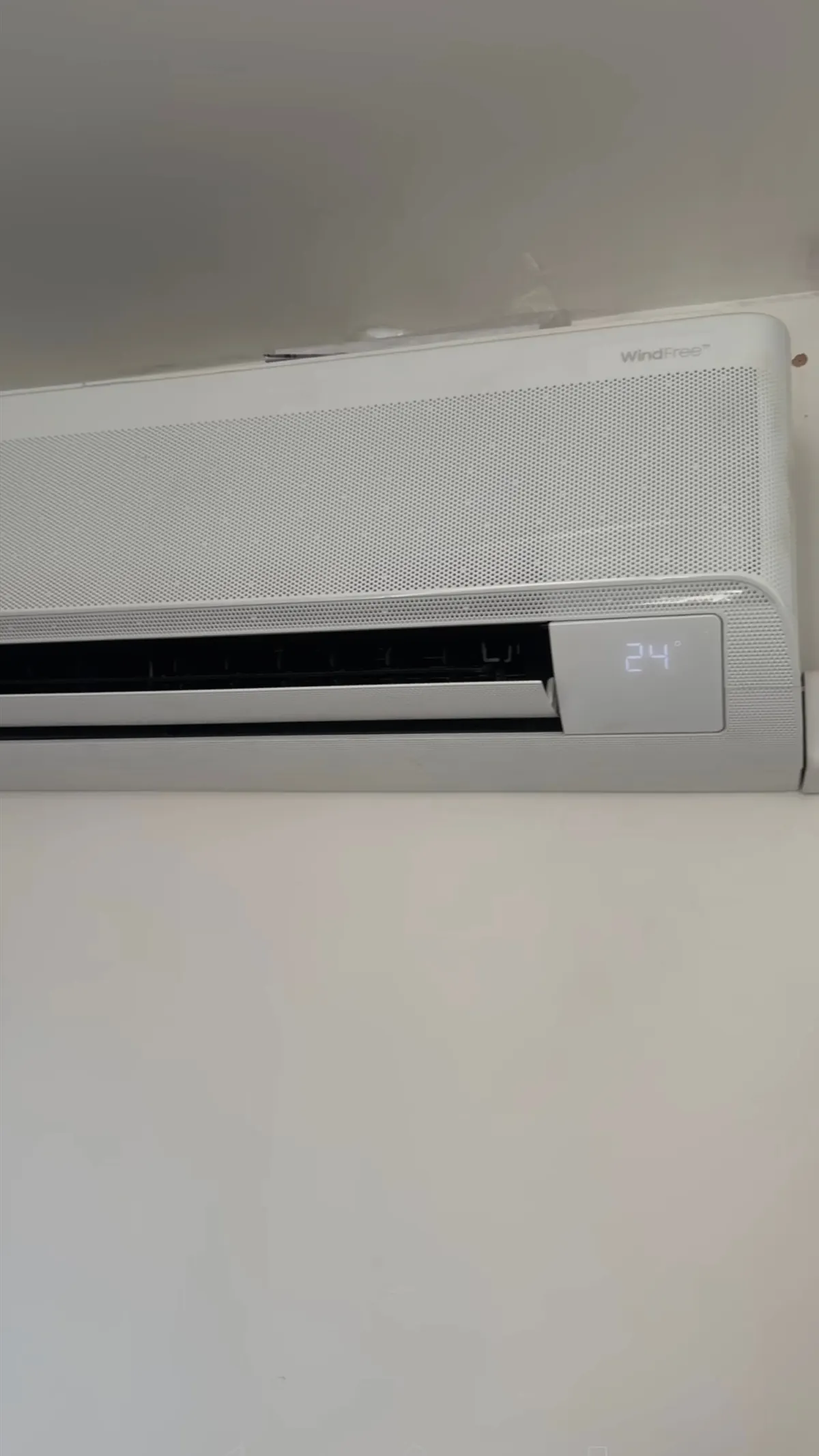
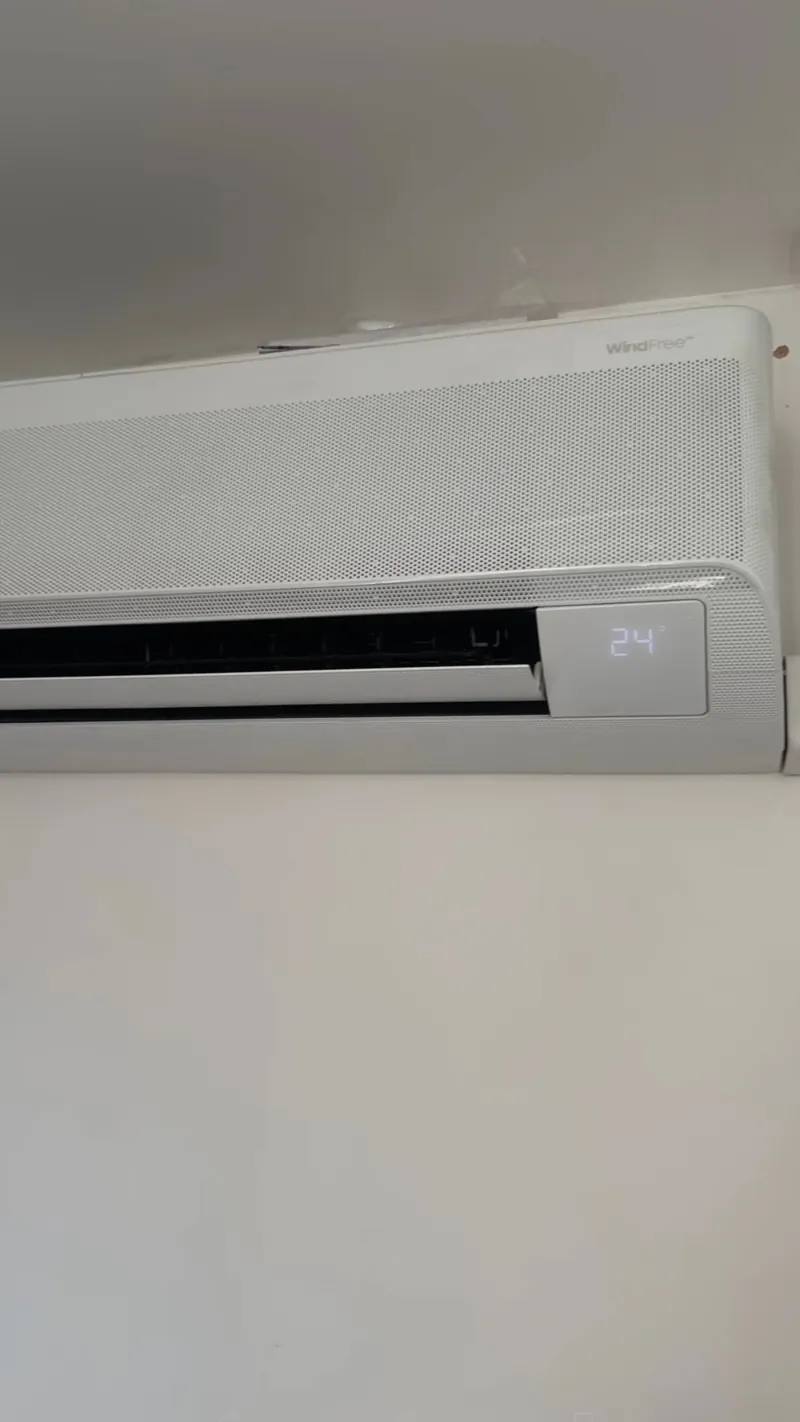 Air conditioning
Wall unit, commissioned
Set to 24 degrees and handed over
Air conditioning
Wall unit, commissioned
Set to 24 degrees and handed over
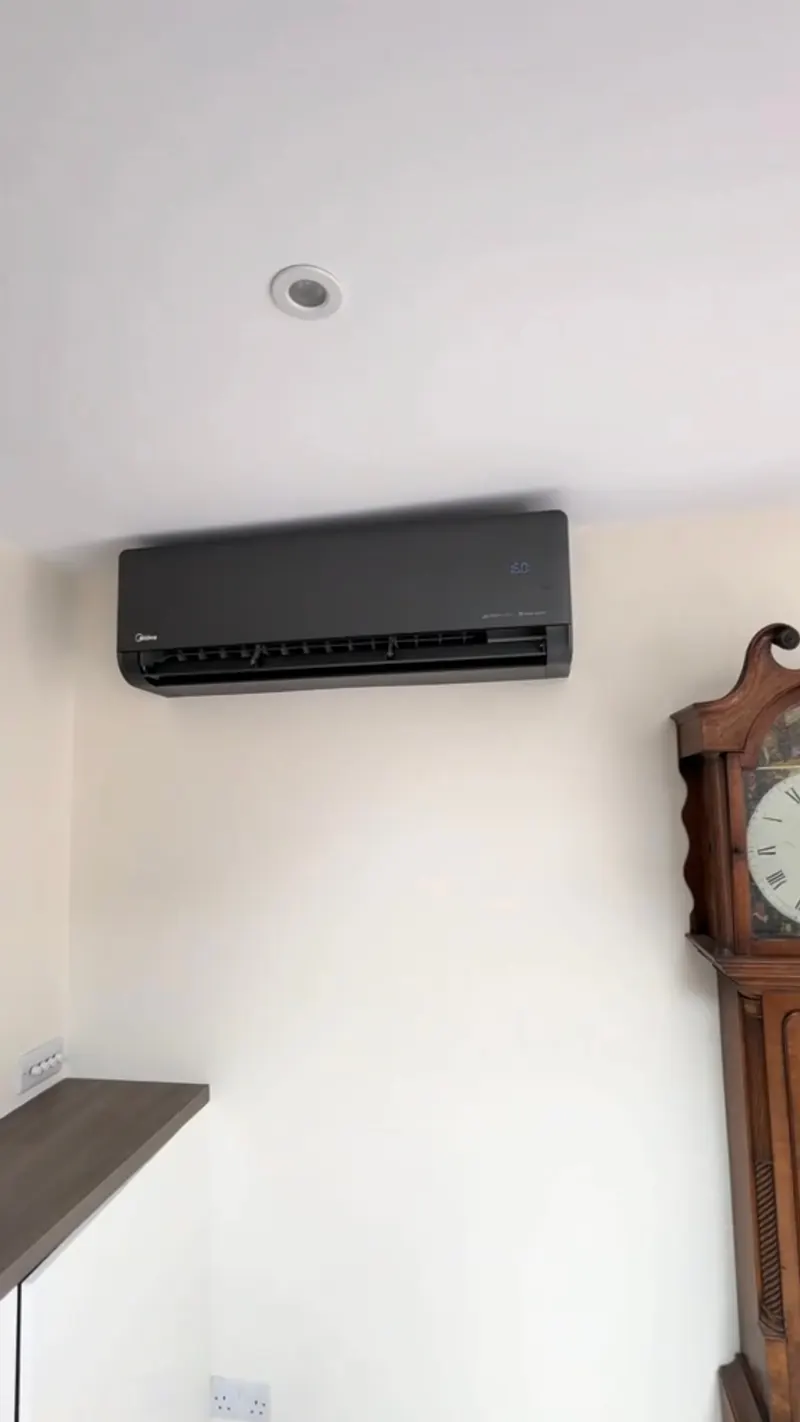 Air conditioning
Black wall unit in a sitting room
Chosen to sit with the room, not against it
Air conditioning
Black wall unit in a sitting room
Chosen to sit with the room, not against it
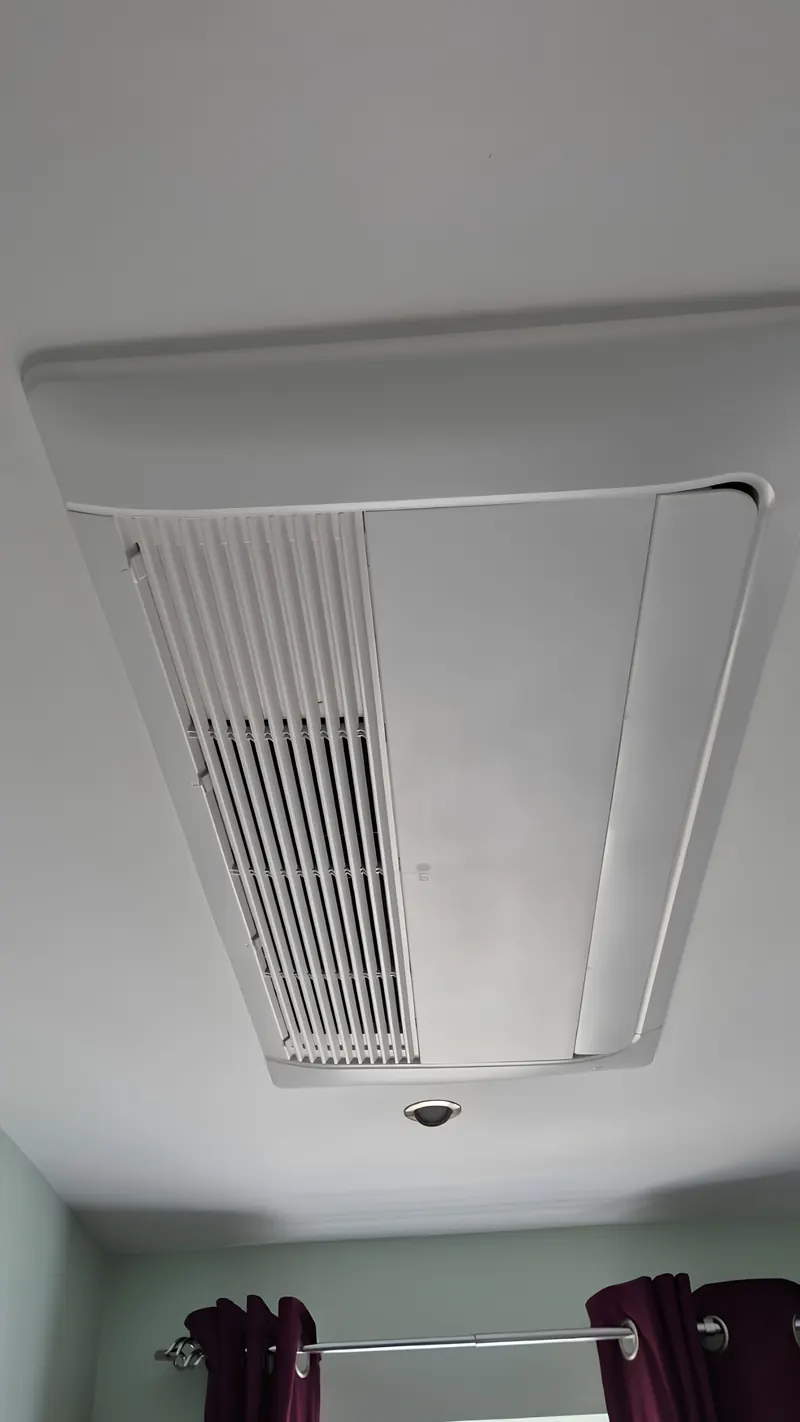 Air conditioning
Ceiling cassette
Recessed flush into the ceiling
Air conditioning
Ceiling cassette
Recessed flush into the ceiling
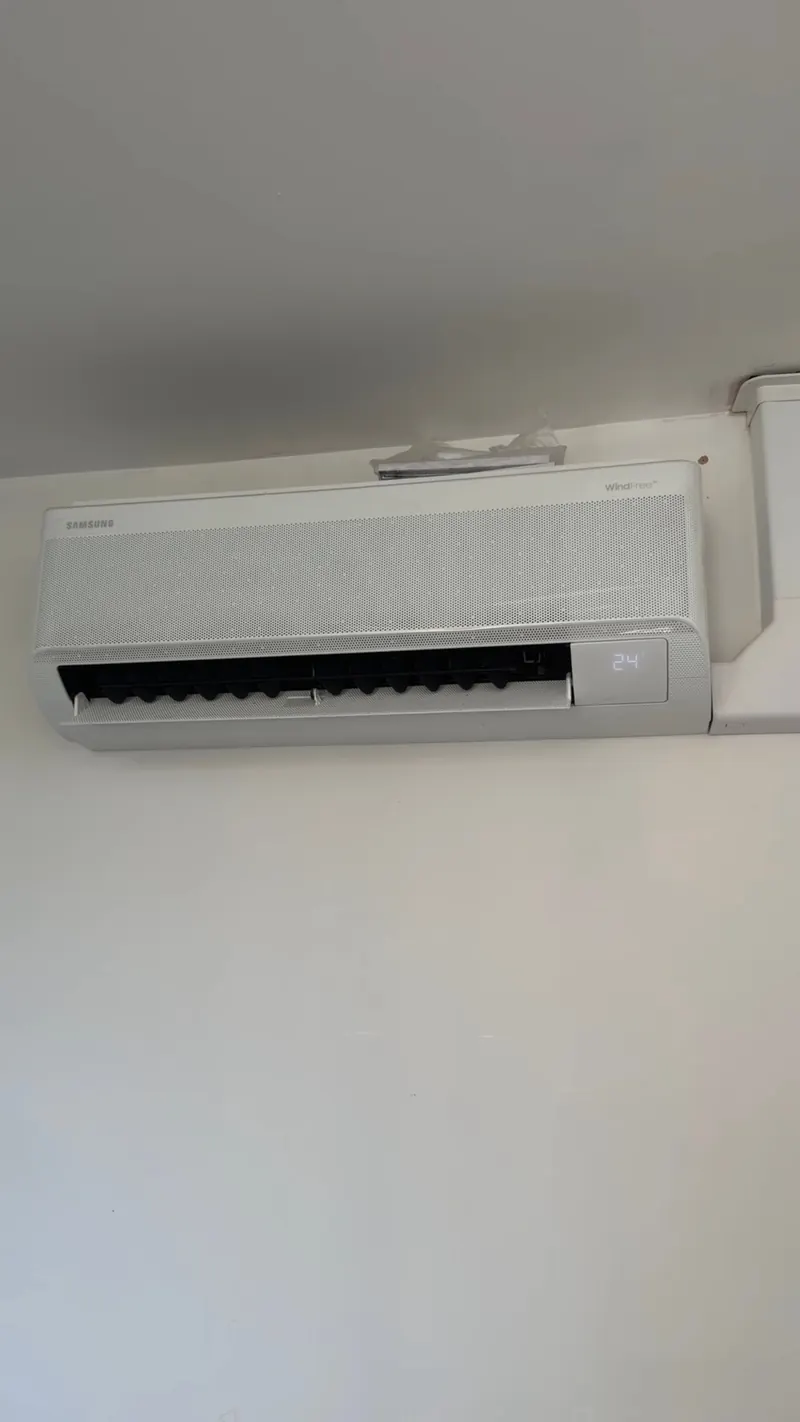 Air conditioning
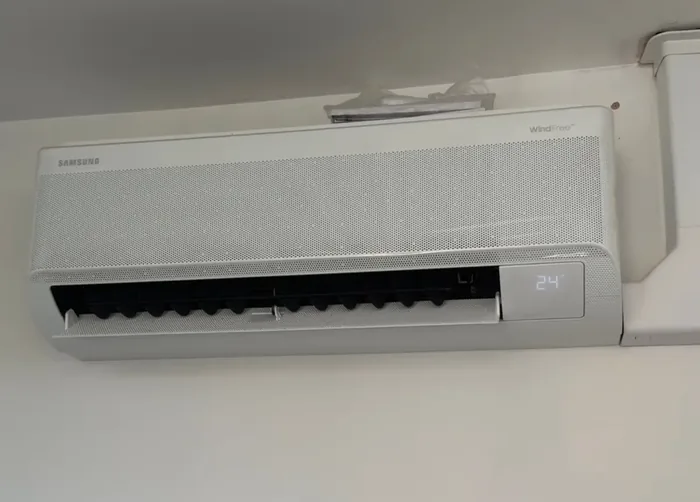
Samsung Wind-Free
Cooling without a draught on the room
Air conditioning
Samsung Wind-Free
Cooling without a draught on the room
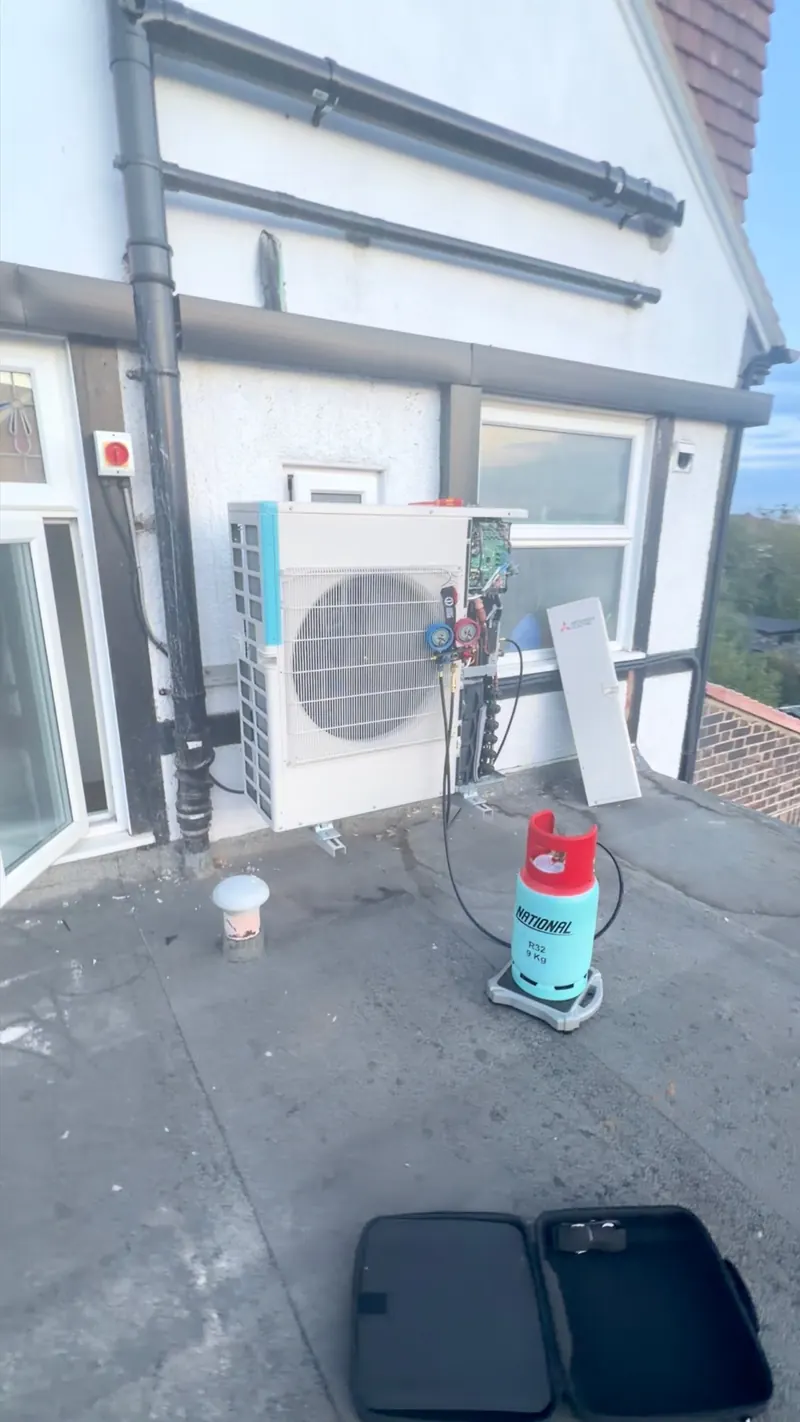 Air conditioning
Rooftop commissioning
Pressure tested and charged on gauges
Air conditioning
Rooftop commissioning
Pressure tested and charged on gauges
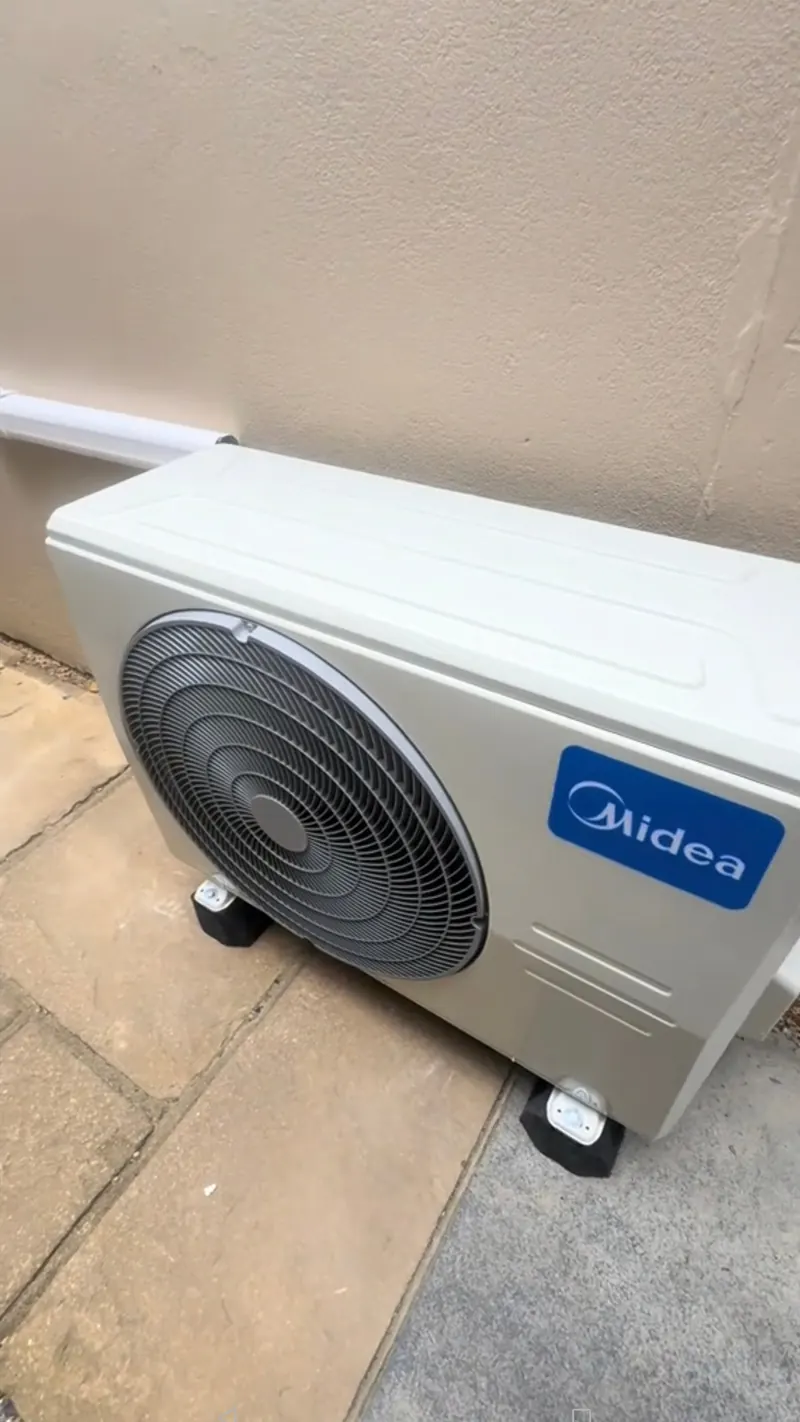 Air conditioning
Outdoor unit at ground level
On paving beside the house, easy to service
Air conditioning
Outdoor unit at ground level
On paving beside the house, easy to service
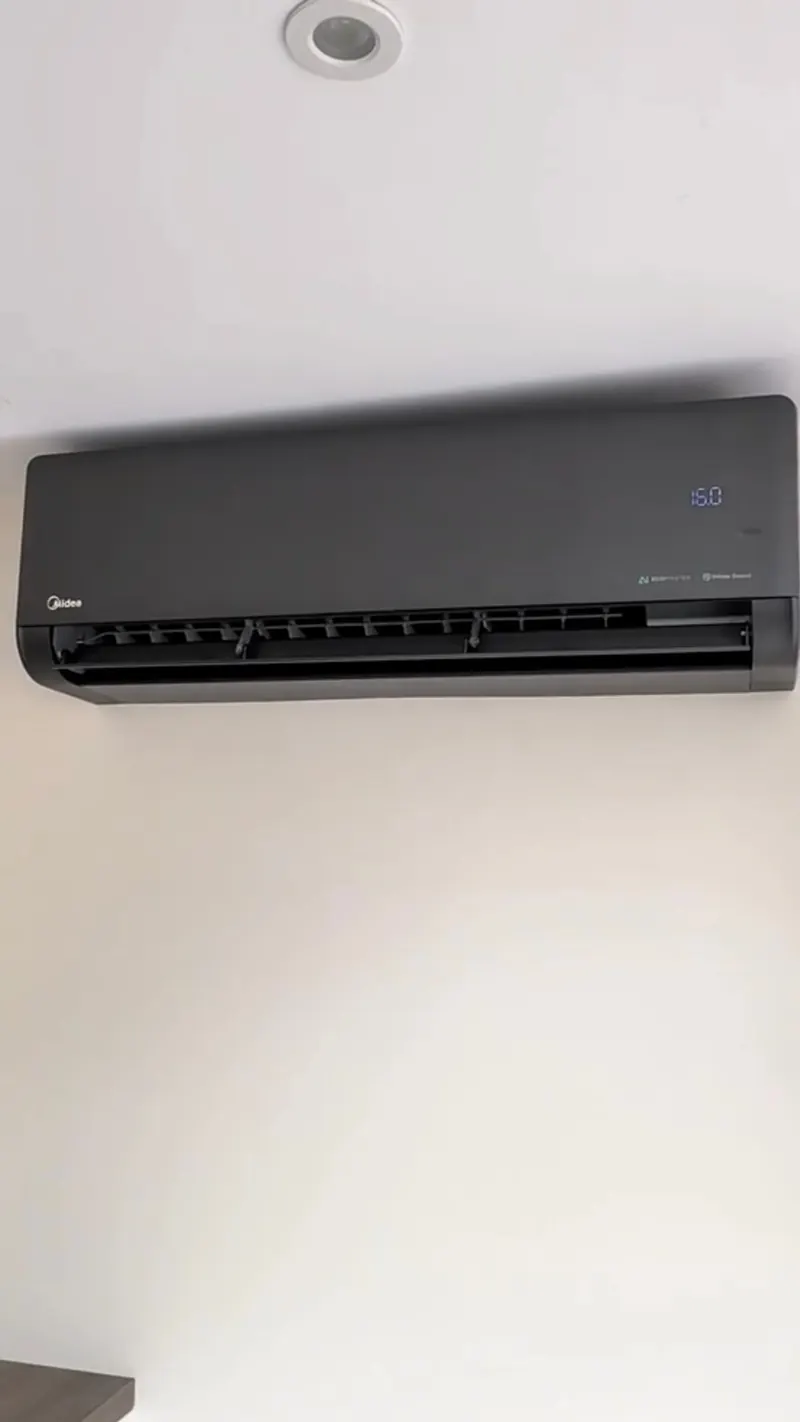 Air conditioning
Black wall unit, running
Quiet enough for a bedroom
Air conditioning
Black wall unit, running
Quiet enough for a bedroom
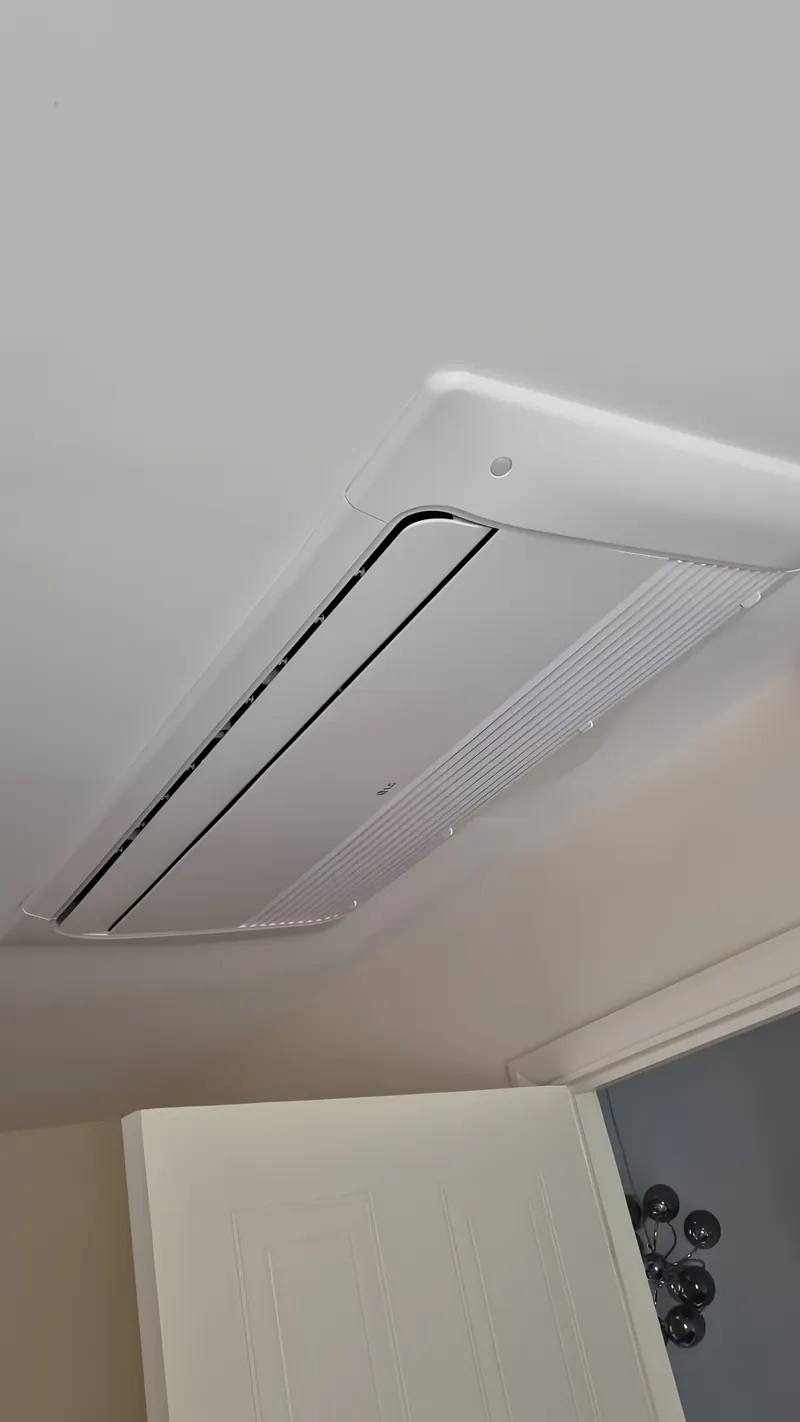 Air conditioning
One-way ceiling cassette
Only the grille shows
Air conditioning
One-way ceiling cassette
Only the grille shows
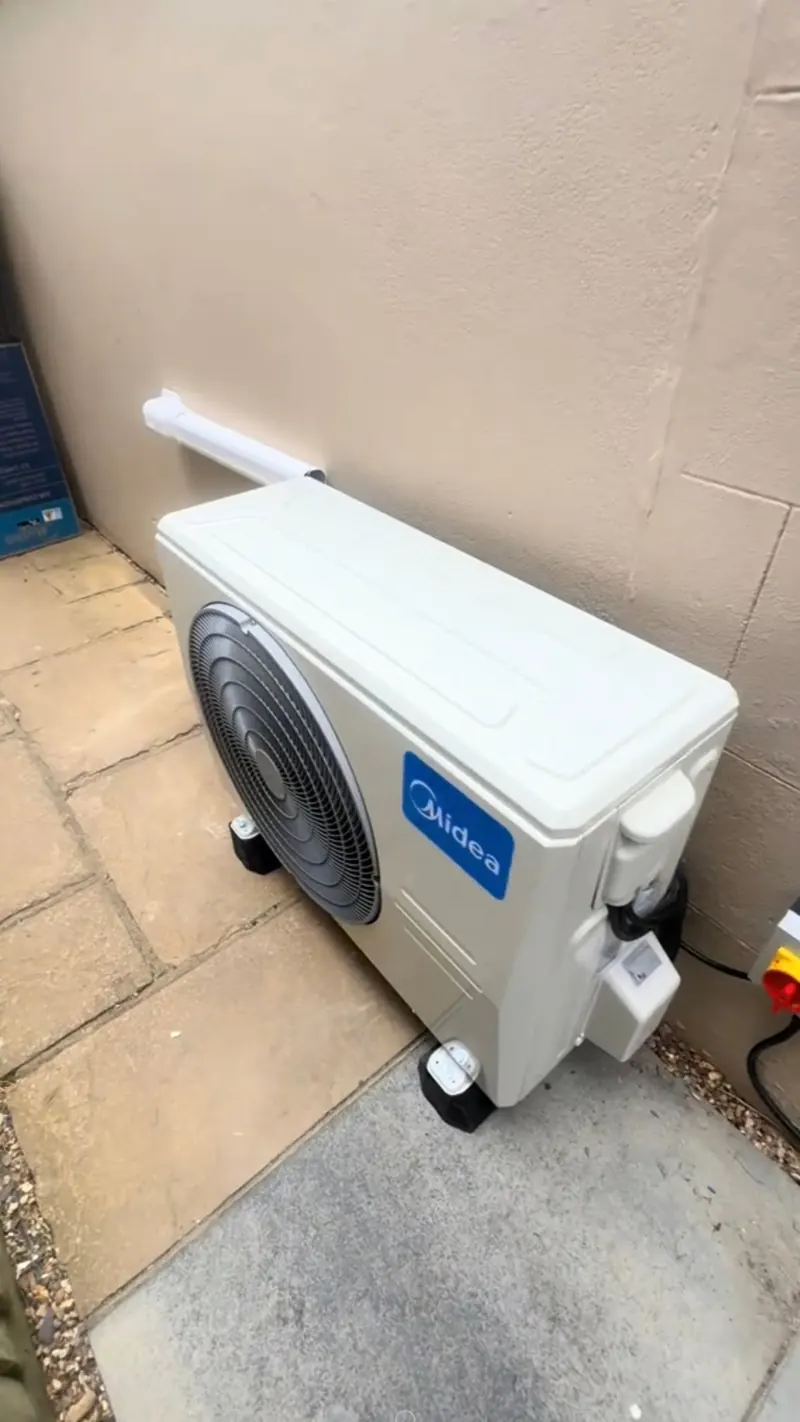 Air conditioning
Outdoor unit on paving
Against render, clear of the boundary
Air conditioning
Outdoor unit on paving
Against render, clear of the boundary
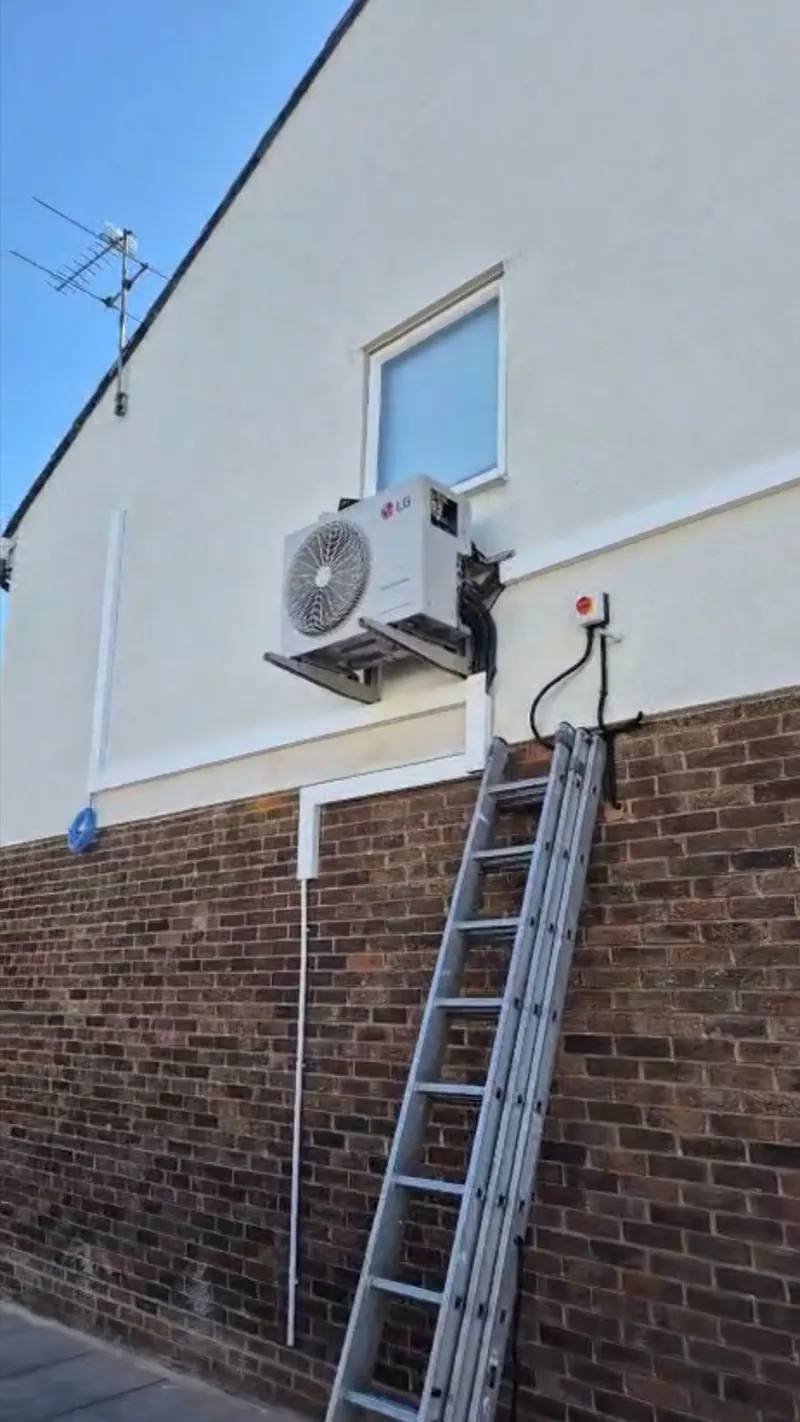 Air conditioning
Condenser high on a wall
On brackets where the ground was not an option
Air conditioning
Condenser high on a wall
On brackets where the ground was not an option
An error code identifies which protection device tripped or which sensor is reading out of range. On Daikin, E-codes are outdoor protection and U-codes are power or communication. On Mitsubishi Electric, P-codes are sensors and drainage, E-codes are communication.
Write the code down exactly, including the letter, before you reset anything. Resetting clears the display and does not clear the fault.
Your estimate
£120to£700
Plus VAT, and the 89 pound diagnosis comes off if we do the work.
Send this on WhatsAppWhat the repair is likely to cost
Diagnosis is 89 pounds plus VAT and it is waived entirely if you go ahead with the repair. What it costs after that depends on what it turns out to be.
Last step: what number should we call with your fixed price?
Every figure on this site is an estimate built from the quotations we issued in 2026 and our own installation experience. It is not a quotation. The price you are given after the free survey is the price you pay.
Fixed in three steps
-
Tell us the symptom
What it is doing, and any error code on the display.
-
Diagnosis on site
£89 plus VAT, and it comes off the repair if you go ahead.
-
Fixed, or an honest no
Most faults are fixed on the day. If a repair is not worth it, we say so.
Read the full guide: 10 sections, about 6 minutes
Two things to do before you call
Write the code down exactly as shown
Including the letter and both characters, and note whether it is on the indoor unit's display, on the remote, or flashing on an LED. A code read as 'something with a P' is worth almost nothing on the phone; P5 and P8 are a blocked drain and a refrigerant leak, which is the difference between 140 pounds and 700.
Then, and only then, try one reset
Switch the system off at the isolator, wait two minutes, and switch it back on. If the code does not come back, it was a transient and you have lost nothing. If it comes back, you now know it is a real fault and you still have the code written down.
Daikin fault codes
| Code | What it means | What it usually is |
|---|---|---|
| A1 | Indoor PCB fault | The board itself. Diagnosis first |
| A3 | Drain level too high | Blocked condensate drain or failed pump |
| A5 | Indoor coil freezing or overheating | Low airflow, dirty filters, or low charge |
| A6 | Indoor fan motor fault | Motor or its capacitor |
| A7 | Swing flap motor fault | The vane motor. Cosmetic but it will keep reporting |
| AJ | Capacity setting error | Wrong setting after a board change |
| C4 | Indoor heat exchanger thermistor resistance abnormal | A sensor, usually cheap |
| C9 | Indoor suction air thermistor abnormal | A sensor, usually cheap |
| CJ | Remote controller thermistor abnormal | The controller |
| E0 | Outdoor protection device activated | Something upstream tripped. Needs diagnosis |
| E3 | High pressure too high | Blocked outdoor coil, fan fault, or overcharge |
| E4 | Low pressure too low | Most often a refrigerant leak, or a restriction |
| E5 | Compressor overheating | Low charge, or the compressor itself |
| F3 | Discharge temperature too high | Low charge or a restriction in the circuit |
| H9 | Outdoor air thermistor abnormal | A sensor |
| J5 | Suction pipe thermistor abnormal | A sensor |
| J6 | Outdoor heat exchanger thermistor abnormal | A sensor |
| P1 | Power voltage imbalance or open phase | Supply side. An electrician question |
| U0 | Suction pipe temperature too high | Insufficient refrigerant, or an expansion valve |
| U1 | Reverse phase | Supply wiring, three phase installations |
| U2 | Open phase or voltage imbalance | Supply side |
| U4 | Communication error, indoor to outdoor | Interconnect cable or a board |
| U5 | Communication error, indoor to remote controller | Controller cable or the controller |
| UA | Combination or PCB setting error | Wrong indoor and outdoor pairing, or a setting |
Mitsubishi Electric fault codes
Note that the same characters mean different things on different makes. A Daikin E4 and a Mitsubishi E-code are not the same fault, which is why these are in separate tables.
| Code | What it means | What it usually is |
|---|---|---|
| P1 | Return air thermistor (TH1) fault | A sensor, usually cheap |
| P2 | Liquid pipe thermistor (TH2) fault | A sensor, usually cheap |
| P4 | Drain sensor fault | The sensor itself, or it is wet for a real reason |
| P5 | High condensate level | Drain pump failure or a blocked drain |
| P6 | Indoor coil freezing or overheating | Reduced airflow through the indoor coil |
| P8 | Abnormal pipe temperature | Most often refrigerant leakage |
| E6 | Indoor to outdoor communication error | Interconnect cable or a board |
| E7 | Indoor to outdoor communication error | Interconnect cable or a board |
| U2 | High discharge temperature or insufficient refrigerant | Usually a leak |
What each family of codes costs to put right
These are the same figures as the rest of the site, so a code that turns out to be a blocked drain costs the same here as it does on the leaking water page.
| Fault family | Typical codes | Typical cost |
|---|---|---|
| A sensor or thermistor | Daikin C4, C9, H9, J5, J6. Mitsubishi P1, P2, P4 | £120 to £280 |
| Drainage | Daikin A3. Mitsubishi P5 | £120 to £260 |
| Airflow or a dirty coil | Daikin A5. Mitsubishi P6 | £95 to £160 |
| Refrigerant leak | Daikin E4, E5, F3, U0. Mitsubishi P8, U2 | £400 to £700 |
| Fan or motor | Daikin A6, A7 | £140 to £340 |
| Communication or wiring | Daikin U4, U5. Mitsubishi E6, E7 | £120 to £280 |
| Supply or phase | Daikin P1, U1, U2 | An electrician, quoted after diagnosis |
| Board | Daikin A1, AJ, UA | Diagnosis first. Sometimes a setting, sometimes a board |
Prices include labour. VAT is extra. If the fault should still be under manufacturer warranty we will tell you and help you claim rather than charging you for it. Every figure on this site is an estimate built from the quotations we issued in 2026 and our own installation experience. It is not a quotation. The price you are given after the free survey is the price you pay.
Why resetting is not fixing
A reset clears the stored code and lets the system try again. On a genuine transient, such as a brownout or a one-off communication glitch, that is the whole repair and nothing else needs doing.
On anything else it removes the evidence and leaves the fault. The protection device that tripped did so because a pressure, a temperature or a current went outside a safe range, and clearing the code does not move any of those back inside it. What usually happens is that it runs for an hour and trips again, having spent that hour doing whatever caused the trip in the first place.
The one that matters most here is a low-pressure code on a leaking system. Repeatedly resetting through E4 or P8 runs a compressor on an inadequate refrigerant charge, and refrigerant is also what carries the oil around the circuit. That is how a 400 pound leak repair becomes a 1,600 pound compressor.
The codes that are cheap, and the ones that are not
Cheap: anything describing a thermistor or a sensor. They are small parts, they are held in stock, and the labour is short. Most of the Daikin C and J codes and the Mitsubishi P1, P2 and P4 are in this group.
Medium: drainage and airflow. A blocked condensate drain or a coated coil is a service visit rather than a repair, and both are prevented by an annual service.
Expensive: anything about pressure, discharge temperature or suction temperature, because those are the circuit telling you refrigerant is missing. Daikin E4, E5, F3 and U0, and Mitsubishi P8 and U2, all point at a leak.
Uncertain: communication and board codes. A U4 can be a loose interconnect terminal found in ten minutes or a failed board, and nobody can tell you which over the phone.
Codes on a system nobody has serviced
A large share of the codes we attend are the predictable end of something that was visible a year earlier. A3 and P5 are a drain that had been slowing for two seasons. A5 and P6 are filters. E3 is an outdoor coil nobody has cleaned.
None of those is a machine failing. They are a machine reporting maintenance that did not happen, and an annual service at 95 pounds plus VAT covers all three of them.
What happens when you call us
- You describe the symptom. Half the time that is enough for us to tell you the likely cause and the likely cost before anyone travels.
- We attend and diagnose properly, with instruments rather than by guessing. That is 89 pounds plus VAT.
- You get the cause, the price and an honest answer on whether it is worth repairing, before anything is touched.
- If you go ahead on the same visit, the diagnosis charge comes off.
Other faults
Not cooling
Running but blowing warm air, and the five things that cause it.
Not coolingLeaking water
Water down the wall from the indoor unit. Nearly always the drain.
Leaking waterSmells when it starts
Musty or mildew at switch-on. Growth on the coil, and what a clean costs.
Smells when it startsMaking a noise
What each noise means, and what to do when a neighbour complains.
Making a noiseRelated
All air conditioning repairs
Every symptom, cause and price in one table, plus when replacing beats repairing.
RepairsAnnual servicing
95 pounds plus VAT. The one thing that prevents most of the faults on this page.
Book a serviceReplacement cost
What a new system costs, for when the repair stops making sense.
See pricesQuestions people ask about this
What does E4 mean on a Daikin air conditioner?
Low pressure too low, which is the low pressure switch protecting the compressor. The commonest cause is a refrigerant leak; the others are a restriction in the pipework or a faulty switch.
It is not a code to keep resetting through. Running a compressor on a low charge is how a leak repair at 400 to 700 pounds turns into a compressor at 900 to 1,600.
What does P8 mean on a Mitsubishi air conditioner?
Abnormal pipe temperature, and on Mitsubishi Electric equipment that most often means refrigerant leakage. Same advice as a Daikin E4: stop resetting it and get the leak found.
Note the trap. P8 on a Mitsubishi and P8 on another make are not the same fault. Always say which make it is when you call.
Can I clear an error code myself?
You can clear the display by switching off at the isolator for two minutes. Whether that fixes anything depends entirely on whether the fault was transient.
Write the code down first. Once it is cleared, the engineer arriving has lost the one piece of free diagnostic information the machine gave you.
My code is not in these tables. What now?
These tables only carry codes that could be verified against published manufacturer references, which is why there are gaps in the sequences and why they are shorter than some lists online. A wrong meaning for a code is worse than no meaning.
Call with the make, the model and the exact code. If it is a make we hold references for we can usually tell you what it is on the phone, and if it is not, we will say so rather than guess.
Tell us the symptom
Describe what it is doing and we will tell you the likely cause and a realistic price before we come out. Diagnosis is 89 pounds plus VAT and it comes off the repair.
Monday to Friday 9am to 7pm, Saturday 10am to 3pm, Sunday closed
Page updated